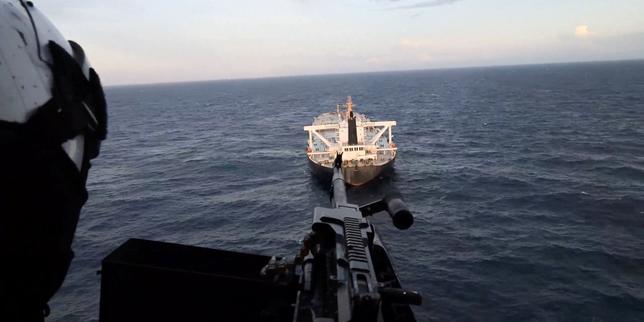
The water in the Strait of Hormuz is a deceptive shade of turquoise. From the deck of a container ship, it looks peaceful. But beneath that calm facade lies the world’s most volatile economic artery. It is a narrow strip of water, just twenty-one miles wide at its tightest point, separating the mountainous coast of Oman from the jagged cliffs of Iran. Through this tiny bottleneck flows one-fifth of the world’s petroleum consumption. It is a geographical vulnerability that keeps central bankers awake at night. When a geopolitical crisis flares up here, insurance premiums skyrocket, captains alter their routes, and the global economy shivers.
Most people see a crisis in Hormuz as an unmitigated disaster. They think of rising gas prices, supply chain delays, and political instability. But in the mirrored glass skyscrapers of Geneva and the sleek trading floors of Singapore, a closed strait means something entirely different.
It means opportunity.
While the world worries about the price of a gallon of fuel, a quiet class of corporate titans thrives on the chaos. Chief among them is Trafigura, one of the largest private commodities trading firms on earth. When the Strait of Hormuz faces a blockade or a severe threat of conflict, the normal flow of energy shatters. In that friction, Trafigura does not just survive. It rakes in record-breaking profits.
To understand how a corporate entity turns global gridlock into billions of dollars, we have to look past the abstract numbers on a financial statement. We have to look at how energy actually moves across a fracturing planet.
The Alchemy of Friction
Consider a hypothetical supertanker named the Oceanic Venture. Under normal circumstances, the Oceanic Venture loads millions of barrels of crude oil in the Persian Gulf, slips quietly through the Strait of Hormuz, and delivers its cargo to a refinery in Europe or Asia. The margins are thin. The logistics are predictable. The profit for the middleman is minimal because everything is running smoothly.
Then, the sirens wail.
Imagine a sudden escalation in regional tensions. Threats are traded across the water. Insurers look at the map and immediately declare the Persian Gulf a high-risk zone. Suddenly, the cost to insure the Oceanic Venture increases tenfold overnight. The ship’s captain is ordered to drop anchor and wait outside the danger zone. The oil is trapped.
This is where the standard narrative of supply and demand falls short. The oil hasn't vanished. The factories in Europe still need to run. The cars in Tokyo still need to move. The demand remains constant, but the bridge connecting the supply to that demand has just been severed.
This structural breakdown creates what traders call "arbitrage." It is a fancy word for a simple, brutal reality: when a resource becomes suddenly unavailable in one specific place, its value somewhere else goes through the roof.
Trafigura does not own the oil wells. They do not gas up your car at a local station. They operate in the dark space between the two. They are logistics masters, risk managers, and financial gamblers rolled into one. When the strait blocks up, Trafigura utilizes its massive fleet of chartered vessels, its global network of storage tanks, and its bottomless lines of credit to buy oil where it is cheap and stranded, bypass the chaos through alternative routes, and sell it to desperate buyers at a massive premium.
Chaos is their fuel. The greater the panic, the wider the price gap. The wider the gap, the larger the profit margin.
The Architecture of the Shadow Giant
The average consumer knows ExxonMobil, Shell, and BP. These names sit brightly on roadside signs. Yet Trafigura, a privately held company owned largely by its own employees, frequently moves more physical material than many of these household names. Founded in 1993 by a group of rebellious traders who split off from the legendary and controversial Marc Rich, the firm has spent decades building an infrastructure designed specifically to exploit volatility.
When you look at the financial reports that trickled out during the latest shipping crisis, the numbers seem almost fictional. Net profits soaring to unprecedented heights. Billions of dollars accumulated in mere months. It is the kind of wealth that alters corporate trajectories permanently.
But how does a single company capitalize on a blocked strait faster than a sovereign nation can react?
The answer lies in agility and appetite for risk. Traditional oil companies are burdened by heavy physical assets like refineries and drilling platforms. They move slowly. Trafigura moves like water. If the Strait of Hormuz closes, Trafigura’s traders do not panic; they open their laptops. They immediately begin rerouting ships around the Cape of Good Hope at the southern tip of Africa. It adds weeks to the journey. It burns thousands of tons of extra fuel. But if you own the oil that is already sitting safely in storage tanks outside the conflict zone, you suddenly hold the golden ticket.
Let's break down the mechanics of this windfall. When shipping lanes are threatened, two things happen simultaneously:
- Freight rates explode: The cost of hiring a vessel capable of moving oil surges because fewer captains are willing to risk the journey. Trafigura, which locks in long-term leases on hundreds of ships when times are quiet, suddenly finds itself subleasing those ships to desperate competitors at astronomical daily rates.
- Time spreads distort: The market enters a state called backwardation, where the price of oil for immediate delivery is drastically higher than oil promised for a future date. If you have physical control of oil right now, you can command almost any price.
It is a high-stakes game of musical chairs played with millions of barrels of combustible liquid. When the music stops, Trafigura is always the one holding the extra seats.
The Human Cost of Abstract Margins
It is easy to get lost in the vocabulary of commodity trading. We speak of derivatives, hedging, spot markets, and liquidity. These terms are sterile. They insulate us from the gritty, physical reality of what is actually happening.
Behind every record profit margin is a human story of stress and endurance. Consider the crew of a tanker waiting on the periphery of a naval standoff. These are merchant mariners, often from developing nations, living on a floating steel island packed with volatile cargo. They watch the horizon for drones and fast-attack boats. They know that a single miscalculation by a regional military could turn their vessel into a fireball.
Meanwhile, thousands of miles away in a climate-controlled room in Geneva, a young trader tracks that same vessel on a digital screen. To the trader, the ship is an icon moving across a pixelated blue expanse. If the ship hesitates, the trader calculates the financial cost of the delay. If the ship pushes through, the trader locks in a bonus that could buy a villa on the lake.
This decoupling of financial reward from physical peril is the defining feature of modern commodity capitalism. The traders are not villains in a movie; they are highly intelligent, intensely driven individuals responding to market incentives. They argue, with some merit, that they provide a vital service. Without them taking the financial risk to move the oil through alternative, expensive routes, the shortages in Western economies would be far worse. They see themselves as the plumbers of a broken world, fixing leaks under immense pressure.
But the profits generated during these crises raise a profound ethical question. Is it sustainable for a handful of private entities to accumulate systemic wealth precisely because the world is fracturing?
A World Built on Razor-Thin Margins
The reality of our globalized existence is that we live at the mercy of geography. We have built a highly advanced, just-in-time economy that assumes peace is the default state of human affairs. We expect our electronics to ship flawlessly from Asia, our fruit to arrive fresh from South America, and our energy to flow uninterrupted from the Middle East.
We forget about the chokepoints.
The Strait of Hormuz is not the only one. The Bab el-Mandeb at the entrance to the Red Sea, the Malacca Strait in Southeast Asia, and the Panama Canal are all fragile links in the chain. When any one of these links stretches to the breaking point, the wealth of nations undergoes a massive, violent redistribution. It flows out of the pockets of ordinary consumers who pay more at the pump, out of the budgets of manufacturing companies struggling with component shortages, and directly into the balance sheets of the trading houses.
This dynamic is not a glitch in the system. It is the system.
The record profits of Trafigura during the Hormuz blockade offer a window into the future of global commerce. We are entering an era defined by deglobalization, regional conflict, and climate disruption. The smooth, predictable trade routes of the early 2000s are fading into history. In this new world, stability is scarce, and scarcity is the ultimate generator of profit.
The corporate giants that trade our raw materials have figured out how to monetize instability itself. They have transformed geopolitical risk into a quantifiable asset class. As long as nations clash and narrow waterways remain the sole corridors for the lifeblood of our civilization, the fortunes of these hidden players will continue to swell.
The next time you read about a standoff in distant waters, look past the naval deployments and the diplomatic statements. Look instead toward the quiet ledger books of the world’s trading capitals. There, the ledger lines tell the truest story of our time: a story where global friction is meticulously converted into pure, unadulterated gold.