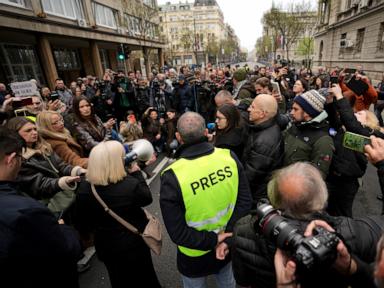
Every election cycle in the Balkans triggers a predictable ritual. International watchdogs roll into Belgrade, clip their badges to expensive lanyards, sip espresso in hotel lobbies, and issue sternly worded press releases demanding the protection of journalists. Then, everyone goes home, the political machine keeps grinding, and nothing changes.
The lazy consensus in mainstream media reporting treats these international advisories as transformative interventions. They are not. They are bureaucratic theater that substitutes performative concern for structural analysis. Relying on foreign bodies to save local journalism is a delusion, and the longer the press corps pretends otherwise, the weaker it becomes.
The Toothless Nature of Periodic Hand-Wringing
Let us define the actual mechanics at play. Organizations like the OSCE Office for Democratic Institutions and Human Rights (ODIHR) and various European press freedom coalitions operate on diplomacy and consensus. They can document infractions, highlight unequal campaign environments, and count instances of intimidation, but they possess zero enforcement mechanisms.
When a watchdog calls for the protection of journalists ahead of an election, it assumes a baseline of good faith from the governing apparatus. That assumption is mathematically and historically flawed. Authoritarian and semi-authoritarian regimes do not violate media freedoms out of administrative oversight; they do so by design. Media capture is an integrated system of economic starvation, regulatory weaponization, and state-backed tabloid smear campaigns. A press release from Vienna or Brussels does not alter an incumbent's survival calculus.
I have watched international grants flow into the region for years, ostensibly to build independent newsrooms. Much of that money evaporates into bloated NGO overhead or temporary projects that vanish the moment the donor cycle shifts. Meanwhile, local reporters facing physical threats, strategic lawsuits against public participation (SLAPPs), and targeted economic boycotts receive plenty of sympathy and precisely zero practical defense against structural ruin.
The Flawed Premise of the Watchdog Model
The core question reporters ask during every crisis is how international pressure can force local authorities to respect the press. This is the wrong question entirely. It frames the survival of independent journalism as something granted from above by benevolent external actors or repentant politicians.
History shows that freedom of the press is never gifted; it is extracted through market innovation, legal grit, and sheer audience trust. When a newsroom relies on foreign diplomatic shielding for its legitimacy, it immediately hands its adversaries an easy weapon: the narrative of foreign interference.
Governments across the region masterfully exploit this dynamic. The moment an international body issues a report criticizing media conditions, state-aligned media outlets weaponize that report to paint independent journalists as foreign agents. The watchdog's intervention, intended to protect, often deepens the polarization and isolates local reporters further from the mainstream electorate.
The Uncomfortable Truth About Financial Survival
If international watchdogs want to help Serbian journalism, they should stop writing reports and start funding structural resilience. But that requires admitting an ugly reality: traditional advertising markets are entirely captured. State-linked enterprises and massive corporate monopolies route ad revenue exclusively to loyalist tabloids, starving critical outlets of commercial oxygen.
Independent newsrooms cannot survive on moral superiority and press freedom awards. They need sustainable monetization models that bypass local state patronage and foreign grant dependency alike. Subscription models, member-funded cooperatives, and diversified digital revenue streams are the only shields that actually work against economic coercion.
Imagine a scenario where every independent outlet in the region completely ignored what the next international monitoring mission had to say about them, redirecting that energy entirely toward building unbreakable direct relationships with their readers. The noise would drop, but the resilience would skyrocket.
Moving Beyond Performative Solidarity
The obsession with pre-election warnings creates a false timeline of crisis and relief. It implies that media freedom is an election-specific phenomenon—something that only needs adjustment during a campaign. In reality, the suppression of information is a 365-day-a-year operational strategy.
Waiting for watchdogs to save the news industry is a recipe for irrelevance. The protection of journalists will not come from a diplomatic briefing or a European Parliament resolution. It will come when independent newsrooms treat themselves as independent economic entities rather than charity cases waiting for rescue.
Stop waiting for the international community to ride to the rescue. They are too busy drafting their next report.
Watch international election observers present findings on Serbia elections
This video provides a firsthand look at the official press briefings held by international monitors following elections in Serbia.