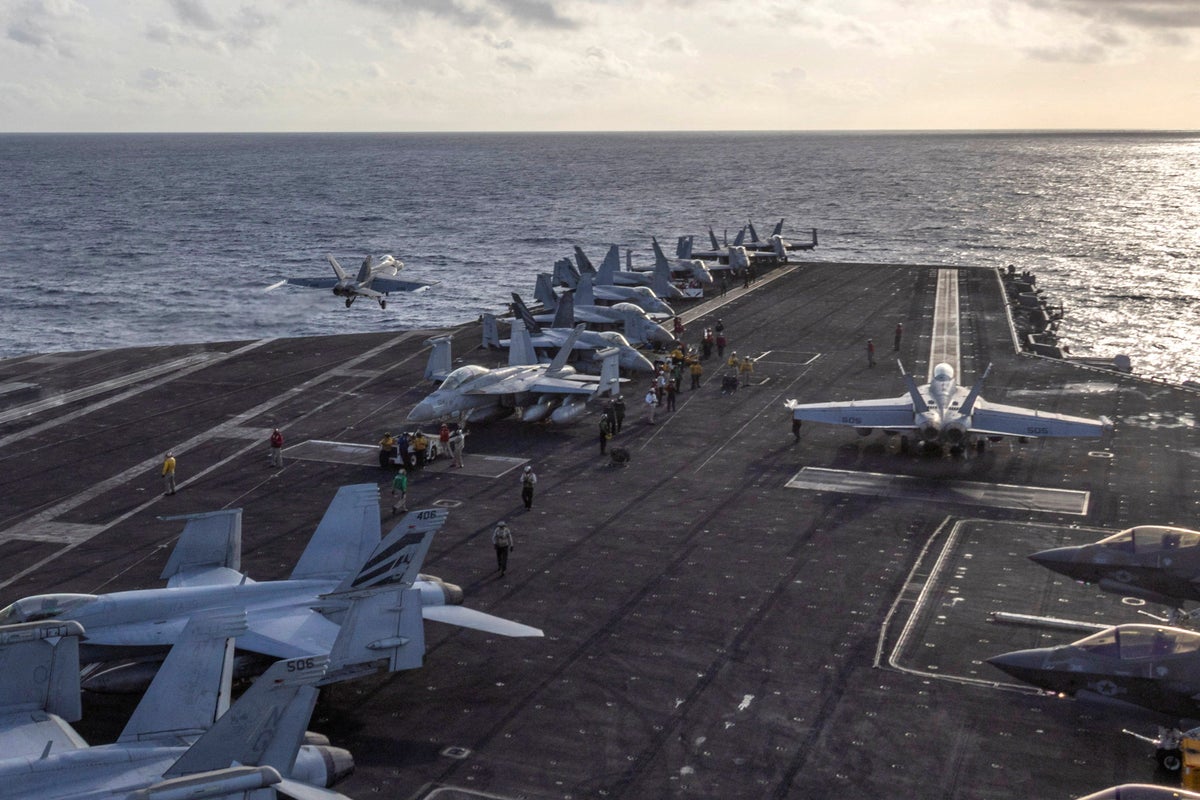
The USS Abraham Lincoln is finally coming home. After months of grinding operations in the Middle East, the Nimitz-class aircraft carrier and its strike group are scheduled to pull back into port, closing out one of the most grueling extended deployments in recent naval history.
For the families waiting on the piers in San Diego and Coronado, the return means a temporary end to an agonizing waiting game. For the Pentagon, however, the arrival marks the conclusion of a high-stakes deployment that exposes systemic cracks in how the United States projects military power across the globe.
Extended deployments have become the default setting for the United States Navy. When a carrier strike group stays at sea far beyond its standard six-to-eight-month window, the hidden costs mount rapidly. Maintenance schedules fracture. Equipment suffers from accelerated wear. Sailors face chronic exhaustion. Yet the public narrative usually glosses over these structural realities, focusing instead on the emotional homecomings and the strategic necessity of keeping a massive flight deck parked off volatile coastlines.
We need to look past the brass bands and the homecoming banners. The story of the USS Abraham Lincoln is not just about a ship completing a long mission. It is a case study in force overextension, structural fatigue, and the mounting toll of a fleet running on borrowed time.
The Mathematics of Overstretch
Every warship has a finite operational lifespan dictated by engineering cycles and hull fatigue. The Navy operates on the Optimized Fleet Response Plan, a cycle designed to train, deploy, maintain, and sustain carriers in a predictable rhythm. In theory, this keeps ships ready without breaking the machine.
In practice, reality intervenes. When geopolitical crises flare up in the Red Sea, the Gulf of Oman, or the Indo-Pacific, the White House needs a multi-billion-dollar floating airbase on station immediately. The closest available carrier gets the call to extend. Then, the extension gets extended.
The USS Abraham Lincoln deployment highlights how routine these stopgap measures have become. When a carrier stays at sea for well past the traditional threshold, the math turns brutal. Every extra week at sea steals time from the designated maintenance period waiting at the naval shipyard.
- Shipyard Backlogs: Public naval shipyards are already choked with maintenance overhauls running months or years behind schedule.
- Scheduling Cascade: Delaying one carrier's maintenance period pushes back the entire fleet rotation, forcing the next ship to work harder to cover the gap.
- Component Failure: Saltwater, high-tempo flight operations, and continuous machinery use accelerate corrosion and mechanical breakdowns.
This creates a vicious circle. Ships stay out longer because other ships are stuck in repair queues, which in turn damages the ships currently at sea, ensuring they will need even longer repairs when they finally return.
The Human Element Behind the Flight Deck
Hardware breaks down, but people break down first. Modern aircraft carriers are floating cities operating under extreme pressure, where sleep deprivation is a constant hazard and the margin for error is measured in inches.
During an extended deployment, the psychological toll on the crew changes character. Morale shifts from a manageable challenge to an acute operational risk. When sailors are told they are heading home, only to have their orders changed mid-ocean because a regional crisis demands their presence, the psychological impact is profound. Retention rates plummet. Experienced technicians, nuclear operators, and aviation ordnancemen choose to leave the service rather than face another rolling extension.
The Navy spends millions of dollars recruiting and training technical specialists. Losing a seasoned nuclear reactor operator or an elite avionics technician because of burnout creates a capability gap that a fresh recruit cannot fill.
- Institutional Brain Drain: When veteran sailors walk away, ships lose invaluable collective knowledge regarding damage control, complex troubleshooting, and emergency response.
- Junior Overload: Remaining personnel must absorb the workload of missing billets, increasing the daily hours required to keep the ship operational.
- Quality of Life Erosion: Constant connectivity issues, limited access to mental health resources, and canceled port visits degrade the fundamental resilience of the crew.
Operational commanders understand these pressures intimately, but they answer to civilian leaders who view aircraft carriers as diplomatic chess pieces. If a carrier moves, the political signal is sent. If a carrier stays, deterrence is maintained. The cost of that deterrence is paid almost entirely by the junior enlisted personnel scrubbing corrosion off the flight deck in the middle of the night.
The Strategic Gamble in a Multi-Threat Environment
The deployment of the USS Abraham Lincoln also forces a hard question about global posture. By tethering a premier carrier strike group to a single volatile theater for an extended duration, the Navy accepts risk elsewhere.
Strategic planners call this force management bankruptcy. If a fleet relies on breaking its own rules to maintain a constant presence in one region, it lacks the surge capacity to respond to sudden emergencies in another.
The defense industrial base cannot churn out new warships overnight. Building a Ford-class carrier takes years and billions of dollars. The existing inventory of eleven operational carriers is all the United States has. Pushing them past their engineering limits is a dangerous gamble, akin to driving a car with the oil light blinking because you cannot afford to miss an appointment. Eventually, the engine seizes.
The geopolitical environment has changed dramatically over the past decade. Peer competitors are watching how the United States manages its naval assets. They note the strain on supply chains, the delays in dry dock schedules, and the visible signs of wear on returning hulls.
What Comes After the Pier
When the lines are finally thrown ashore and the crew of the USS Abraham Lincoln reunites with their families, the immediate crisis will fade from the headlines. The politicians will issue statements praising the dedication of the sailors, and the command structure will highlight the mission success in deterring regional adversaries.
Yet the underlying structural problem remains completely unaddressed. The next carrier is already preparing to relieve them, facing the exact same pressures, the same maintenance backlogs, and the same impossible expectations.
Until Washington confronts the mismatch between foreign policy ambitions and naval industrial capacity, extended deployments will remain the norm. The ships will keep sailing past their return dates. The sailors will keep absorbing the strain. And the nation will continue pretending that a fleet running on fumes is a sustainable way to police the globe.
The Lincoln is docking. The operational debt, however, is only coming due.