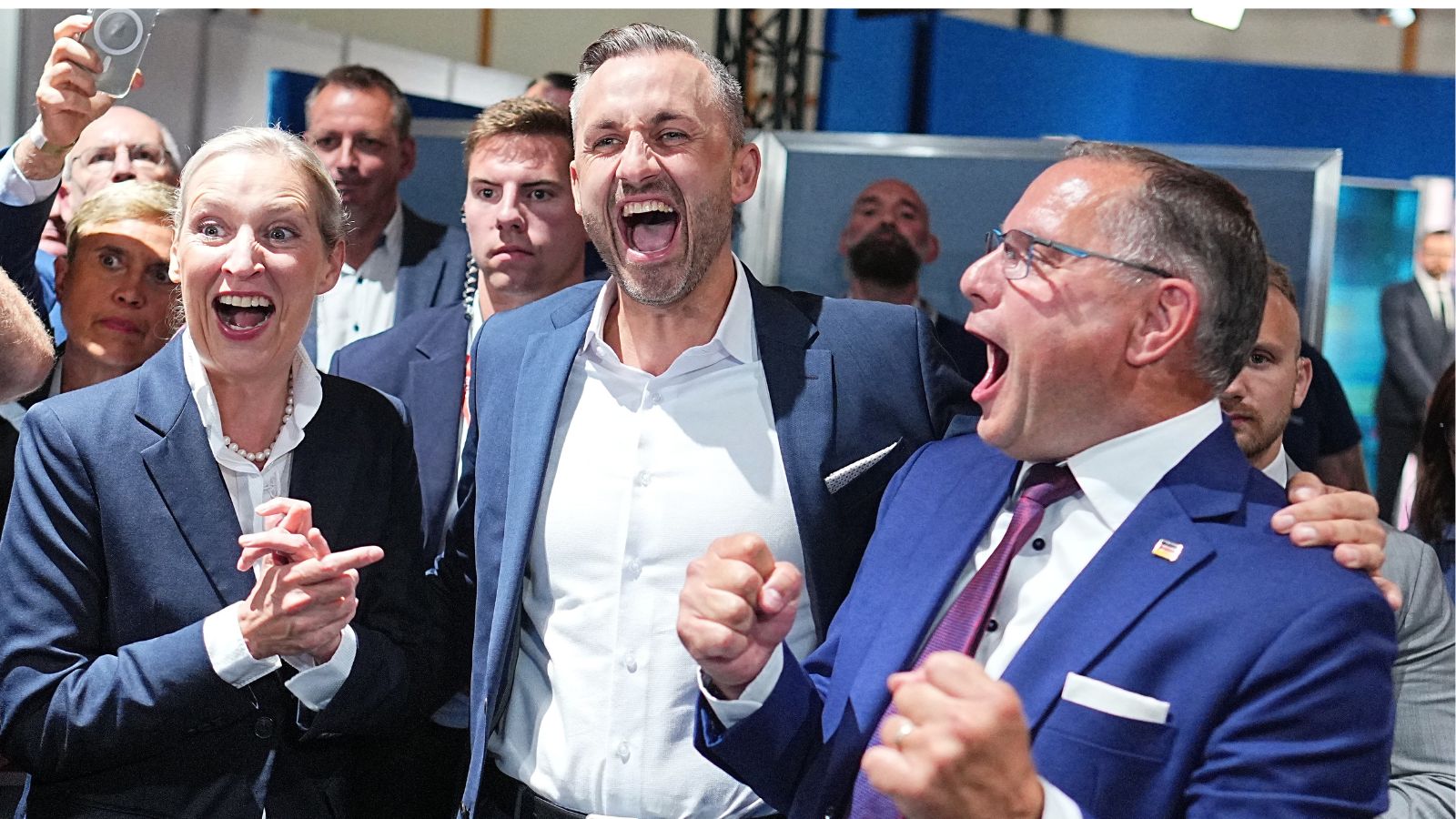
The traditional political establishment in Berlin is waking up to an uncomfortable reality. Ulrich Siegmund, a 35-year-old former fragrance salesman turned digital populist, has propelled the Alternative for Germany (AfD) to a historic victory in the eastern state of Saxony-Anhalt. Securing roughly 44 percent of the vote, the regional party chapter—officially classified by domestic intelligence as right-wing extremist—has broken through the long-standing firewall maintained by mainstream parties. This earthquake is not merely a regional fluke. It is a calculated restructuring of political gravity in Europe's economic powerhouse.
Understanding this rise requires looking past the standard hand-wringing from centrist capitals. For decades, the political playbook relied on institutional exclusion and moral condemnation. That playbook is broken. Siegmund and his peers recognized that modern political mobilization functions less like a town hall meeting and more like a high-retention social media feed. Bypassing traditional broadcasters entirely, Siegmund built an army of nearly 800,000 followers on TikTok, projecting an approachable, modern image that stands in stark contrast to the stiff, academic cadence of mainstream German politicians.
The mechanics of this victory are rooted in deep economic anxieties and geographic divides that have festered since reunification. Saxony-Anhalt remains one of Germany's economically disadvantaged regions. Decades of capital flight, demographic aging, and a persistent sense among eastern Germans of being treated as second-class citizens created fertile ground for systemic dissent. Rather than offering technocratic incrementalism, Siegmund leaned heavily into regional grievances, blending anti-immigration hardlines with a calculated dose of nostalgia for the former East Germany.
Consider the imagery. Arriving to cast his ballot on a vintage East German-era Simson moped alongside his wife, Siegmund performed a masterclass in identity politics. Every prop, every rally, and every digital clip was engineered to communicate a single core message: the establishment has abandoned you, but we are of you. It is a populist strategy that mirrors transatlantic movements, drawing open appreciation from international figures while sending shockwaves through the administration of Chancellor Friedrich Merz.
Yet, capturing a plurality of votes does not automatically translate into an absolute majority. Falling just short of the seats required to govern entirely alone, the party faces the hard wall of legislative arithmetic. Other factions refuse to enter a formal coalition, leaving the regional parliament in a state of institutional paralysis. Siegmund has publicly dismissed minor coalition games, noting that the party is prepared to force repeated showdowns until it achieves uncompromised executive control.
The broader implications for the federal republic are severe. Business leaders and economic institutes have warned that the party's hardline stance on immigration and labor could throttle regional growth in a state heavily reliant on foreign workers. Meanwhile, cultural institutions face an uncertain future as the AfD pushes to reshape school curricula, restrict multicultural displays, and pivot state identity toward traditional nationalism.
As the dust settles in Magdeburg, the illusion of German political exceptionalism has vanished. The architecture of the post-war consensus is straining under the weight of digital-age populism, and the political establishment has yet to find an effective counter-strategy to a movement that treats institutional resistance as fuel for its next surge.
The next federal cycle looms large on the horizon, and the shockwaves radiating from the east will dictate the terms of engagement for years to come.
Ulrich Siegmund brings the German far-right closer to power in Saxony-Anhalt