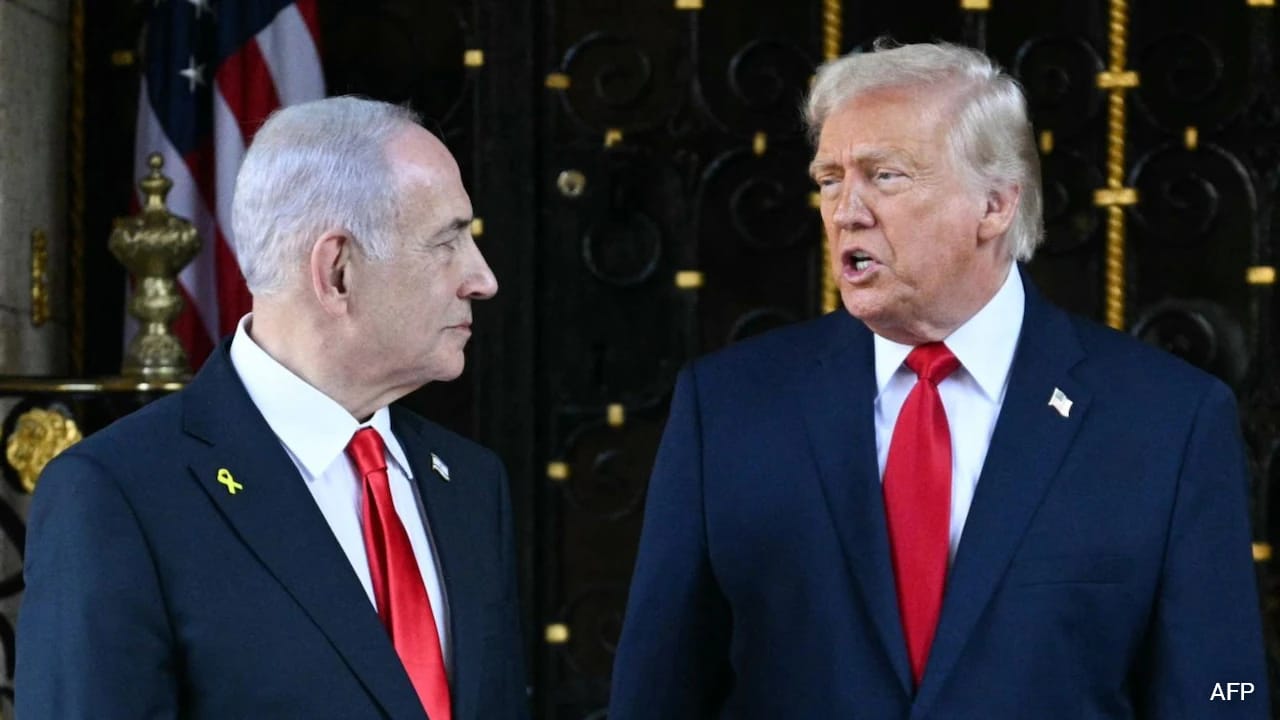
The fragile diplomatic architecture engineered to end the three-month war in the Middle East nearly collapsed Sunday morning under the weight of three Hezbollah projectiles and a retaliatory flight of Israeli F-15s. Within hours, a furious backchannel drama between Washington and Jerusalem spilled into the open, exposing a profound strategic rift between U.S. President Donald Trump and Israeli Prime Minister Benjamin Netanyahu.
At the center of the dispute is a preliminary U.S.-Iran peace memorandum of understanding, which mediators hoped to sign on Sunday. When Israeli airstrikes hit Beirut’s southern suburbs in retaliation for minor cross-border fire, Trump leveled an expletive-laden tirade against Netanyahu during private consultations and on social media, accusing the Israeli premier of having no judgment.
The confrontation reveals that the White House and the Israeli government are no longer operating from the same script. While Washington views a grand bargain with Tehran as the ultimate prize to stabilize global commerce and suppress energy costs, Jerusalem sees the proposed terms as a catastrophic containment strategy that strips away its military freedom of action.
The Sunday Blowup in Beirut
The immediate catalyst for the crisis was a localized skirmish that escalated with dizzying speed. On Sunday morning, Hezbollah launched three projectiles into northern Israel. The Israel Defense Forces reported that the weapons hit the middle of nowhere, causing no casualties or structural damage.
Netanyahu and Defense Minister Israel Katz quickly ordered a retaliatory strike on a Hezbollah command center in the Dahiyeh district of Beirut. The five-story apartment building targeted in the strike collapsed, killing three people and wounding sixteen others.
The strike occurred roughly an hour before U.S. and Iranian negotiators were scheduled to finalize the preliminary peace agreement. Trump, observing the escalation from Washington, was described by aides as livid. Speaking to reporters and publishing on Truth Social, the president made little effort to mask his fury at the timing of the Israeli operation.
"This morning's attack on Beirut should not have happened, particularly on a special day when we are so close to a Peace Deal with Iran," Trump stated. "Israel has the right to defend itself against threats, but the attack it was responding to was very small and meaningless, nobody was hurt, injured or killed and should not disrupt this important process."
In private conversations leaked to reporters, Trump went significantly further, complaining that Netanyahu had delayed the signing of a historic accord by a few hours because of minor border friction. The public scolding left Israeli officials stunned and signaled an unprecedented low point in the relationship between the two leaders.
The Secret Terms Stalling the Iran Deal
The real source of friction is not a single airstrike, but the sweeping scope of the memorandum of understanding Washington is hammering out with Tehran. According to Israeli intelligence and diplomatic sources, the agreement negotiated via Pakistani mediators contains provisions that would fundamentally change the security landscape of northern Israel.
Tehran has maintained a rigid prerequisite throughout the talks: any formal truce with the United States and the reopening of the Strait of Hormuz requires a total cessation of Israeli military operations inside Lebanon.
- The Beirut Ban: While Israel initially believed the restrictions would only apply to the Lebanese capital, the text of the agreement covers the entirety of Lebanon.
- The Southern Withdrawal: During recent secure phone calls, Trump floated a proposal requiring Israeli ground forces to physically withdraw from positions they captured in southern Lebanon over the last three months.
- The Enforcement Gap: The deal offers American assurances to prevent Iranian attacks on Israel, but fails to provide a verifiable mechanism to disarm Hezbollah or stop its cross-border rocket infrastructure.
Netanyahu rejected the physical withdrawal proposal outright, arguing that leaving southern Lebanon would allow Hezbollah to reoccupy its launchpads along the border. The Israeli security establishment views the U.S.-Iran deal as a diplomatic trap that paralyzes the IDF while leaving the northern Galilee region permanently vulnerable to militant fire.
Two Conflicting Wartime Agendas
The breakdown in communication stems from a fundamental divergence in political and strategic objectives. For Trump, the priority is domestic and macroeconomic. The three-month war has rattled global energy markets, driven up shipping insurance rates, and created domestic economic uncertainty that threatens his party's prospects in the upcoming midterm elections. A comprehensive deal with Iran lowers oil prices, stabilizes global supply lines, and delivers a massive foreign policy victory.
Trump operates on a transactional timeline. He perceives Netanyahu’s ongoing military operations as tactical stubbornness rather than existential necessity. "I call the shots," Trump recently told associates regarding the negotiations. "He doesn't call the shots."
Netanyahu, conversely, operates under intense domestic political pressure. His coalition government relies on right-wing ministers who view any compromise with Iran or Hezbollah as an act of capitulation. Accepting a U.S.-mandated ceasefire that leaves Hezbollah intact on Israel's northern border could trigger the collapse of his cabinet.
Furthermore, the April 16 ceasefire collapsed precisely because it lacked clear enforcement mechanisms. Israeli military leaders are loath to enter another diplomatic pause without achieving their primary objective: the permanent degradation of Hezbollah’s short-range missile capability.
| Strategic Parameter | United States Agenda | Israeli Government Agenda |
|---|---|---|
| Primary Objective | Regional stability, open shipping lanes, lower energy prices. | Eradication of border threats, long-term deterrence. |
| Lebanon Policy | Total cessation of hostilities, complete Israeli military withdrawal. | Freedom of action to strike Hezbollah assets anywhere in the country. |
| Iran Approach | Diplomatic containment through an immediate freeze-for-freeze agreement. | Continued military and economic pressure until proxy networks are dismantled. |
The Mechanics of a Broken Alliance
The friction has altered how Washington and Jerusalem share operational intelligence. While the IDF notified U.S. Central Command shortly before the F-15s hit Dahiyeh on Sunday, the notification was a formality rather than a consultation.
American diplomats have spent the hours following the strike pressure-testing Israel’s political leadership, demanding guarantees that the IDF will not launch a broader air campaign if Iran follows through on its threats of an imminent military response. The White House message to Jerusalem has been unyielding: even if targeted by Iranian assets, Israel must refrain from any counter-strike that could permanently derail the memorandum of understanding.
This demand marks a radical departure from traditional U.S.-Israel security arrangements. Historically, Washington has provided diplomatic cover for Israeli retaliatory strikes under the umbrella of self-defense. By explicitly labeling a Hezbollah rocket attack as "meaningless" because it caused no casualties, the White House has effectively rewritten the rules of engagement, signaling that minor cross-border aggression no longer justifies a significant military response.
The Fragile Path Forward
As night fell in the Middle East, the immediate threat of a regional escalation remained acute. Iranian military commanders announced they had their fingers on the trigger, while the IDF counter-warned that its air defense units were preparing for incoming rocket barrages.
Trump’s public intervention managed to pause the immediate cycle of escalation, forcing both sides to weigh the consequences of defying a direct American directive. "This could be the beginning of a long and beautiful peace—Let's not blow it," Trump warned.
Yet the underlying systemic flaws of the proposed peace architecture remain unresolved. A deal signed by Washington and Tehran that ignores Jerusalem's core security requirements carries an expiration date. If Hezbollah continues to fire sporadic projectiles across the border to test the limits of the new agreement, Netanyahu will eventually be forced by domestic political realities to strike back, regardless of the expletives directed at him from the Oval Office.
The crisis of judgment is not a product of personal animosity between two mercurial leaders. It is the logical outcome of a flawed diplomatic process that treats the security anxieties of a frontline state as a secondary detail in a grand geopolitical transaction.