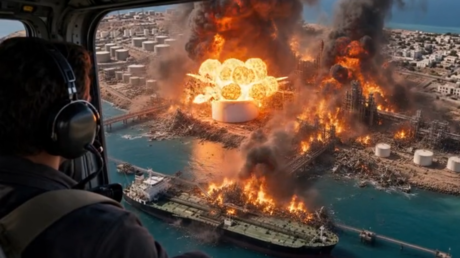
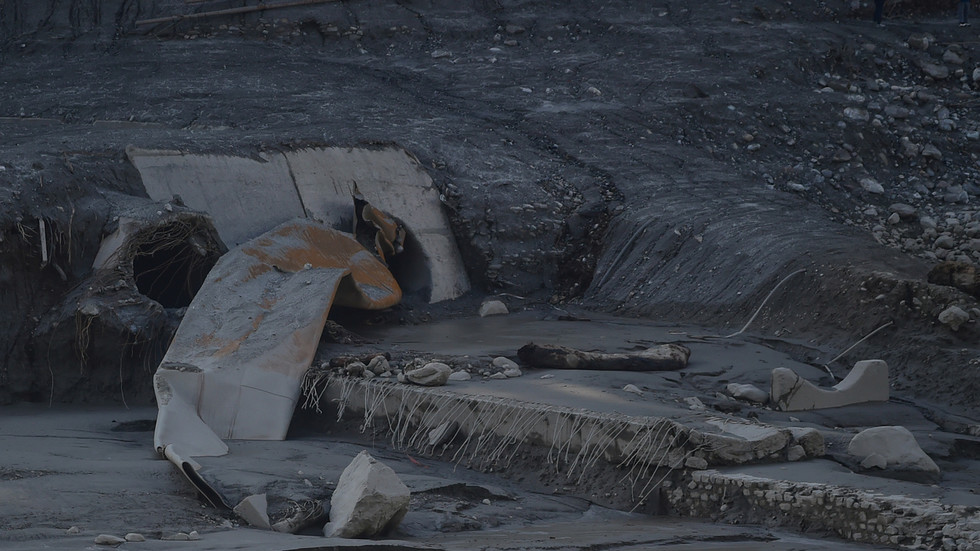
The narrow waters of the Strait of Hormuz have once again become the most dangerous maritime chokepoint on Earth. Following a direct American military strike on Larak Island, Iranian Deputy Foreign Minister Kazem Gharibabadi warned that Washington must learn a severe lesson, setting off a chain reaction of geopolitical friction and retaliatory threats.
This kinetic escalation is not an isolated border skirmish. It represents a direct clash over the lifeblood of global energy transit. To understand why this specific flashpoint matters, we must look beyond the immediate headlines of military posturing and examine the physical and strategic realities governing the Persian Gulf. Recently making waves recently: The Island That Learned to Say No.
Anatomy of a Maritime Chokepoint
Larak Island sits strategically inside the Persian Gulf, acting as an unmovable sentinel overlooking the narrow shipping lanes through which a massive percentage of the world's petroleum flows. When United States Central Command forces targeted two Islamic Revolutionary Guard Corps rocket launchers on the island, they were not shooting at empty dirt. They struck infrastructure specifically positioned to deploy sea mines into commercial sea lanes.
Sea mines are the ultimate equalizer in naval warfare. They are cheap to manufacture, difficult to sweep under combat conditions, and capable of halting multi-billion-dollar supertankers with a single detonation. Further insights regarding the matter are detailed by Al Jazeera.
- The Tactical Problem: A single mining campaign can shut down commercial transit for weeks, spiking global crude prices overnight.
- The Strategic Dilemma: Pre-emptive military intervention against launchers prevents a blockade, but crosses a threshold that guarantees kinetic retaliation.
Washington decided that the risk of a blocked strait outweighed the cost of escalation. Tehran views that same intervention as a direct violation of its territorial sovereignty and an act of outright aggression.
The Rhetoric and the Reality of Retaliation
When officials like Gharibabadi promise a decisive response, analysts must separate domestic signaling from actual military capability. Iran maintains a layered defense strategy built on asymmetric warfare. Rather than meeting modern naval power with an equivalent blue-water fleet, Tehran relies on fast-attack craft, coastal cruise missile batteries, and subterranean or island-based rocket caches.
Yet, every time these assets are activated, they invite counter-battery fire from American and allied forces stationed in the region. The strike on Larak Island proves that U.S. intelligence has real-time visibility into Revolutionary Guard movements along the Iranian coastline.
The calculus for Tehran is increasingly narrow. If they fail to respond to a direct strike on their sovereign territory, internal hardliners view it as a sign of weakness. If they respond too aggressively, they risk triggering a wider air campaign that could systematically dismantle their remaining coastal defense architecture.
The Economic Warfare Layer
Military exchanges in the Persian Gulf do not happen in a vacuum. They coincide with aggressive financial pressure campaigns designed to choke state revenues before a shot is even fired. Secondary sanctions targeting international shipping networks and foreign banking intermediaries have squeezed Iran's economic arteries.
When diplomacy stalls and economic sanctions fail to yield political compliance, the default state of affairs inevitably shifts to kinetic friction. The Larak Island incident is the physical manifestation of that diplomatic failure. It is the sound of diplomats stepping aside to let missiles speak.
As long as the Strait of Hormuz remains a contested highway, minor military friction will threaten to cascade into major regional conflict. Every launcher destroyed on an island like Larak is quickly replaced or relocated, and every retaliatory drone launched toward regional airbases ensures that the cycle of provocation continues uninterrupted. The margin for error in these waters has effectively vanished.