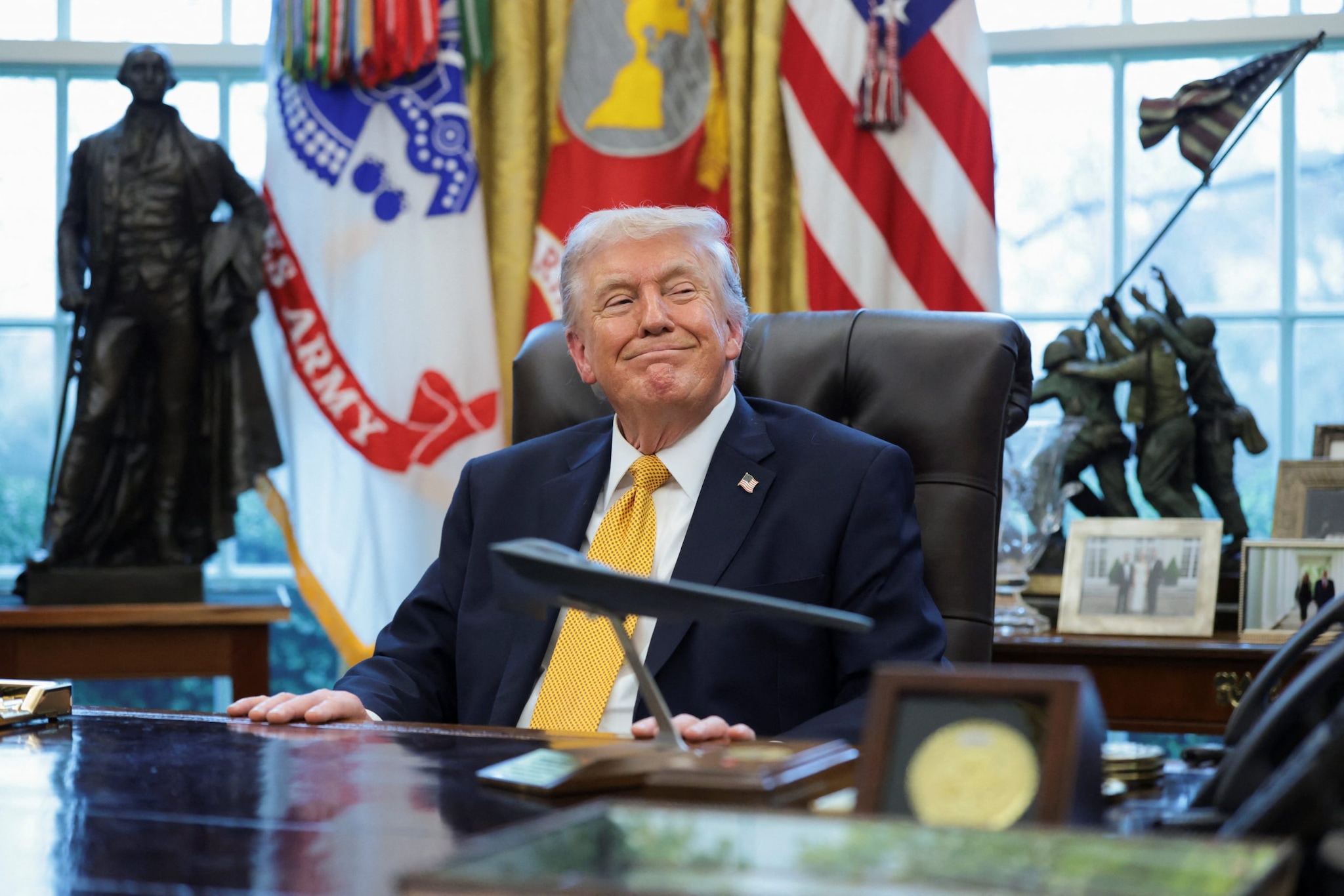
The corporate machinery behind America's 250th birthday celebration is imploding because the White House tried to turn a historically bipartisan milestone into a hyper-partisan campaign rally. Within forty-eight hours of unveiling the initial lineup for the Great American State Fair on the National Mall, seven of the nine featured musical acts abruptly walked away, forcing President Donald Trump to step in as his own headliner while declaring himself the greatest president in history. What was engineered as a nonpartisan showcase of national unity has instantly collapsed into a cultural warfare frontline.
The mass exodus of talent leaves an official government-backed semiquincentennial project exposed as a purely political venture. For legacy touring acts, the risk of alienating half their audience outweighed the prestige of playing the National Mall.
The Booking Trap That Backfired
Organizers at Freedom 250, a public-private nonprofit launched by Trump and run by a former State Department appointee, attempted to secure mainstream credibility by pitching the summer series to talent agencies as an entirely neutral, civic celebration of all fifty states. The pitch worked initially. Country icon Martina McBride, R&B legends the Commodores, rock frontman Bret Michaels, and hip-hop veteran Young MC all signed contracts.
The illusion broke when the public marketing campaign dropped. Artists discovered they were the vanguard for an event heavily backed by the administration and framed by right-wing media as a triumph for the president. Fans immediately revolted on social media, prompting the performers to read the fine print they had been handed.
McBride broke the silence first, explaining she had asked explicit questions about partianship before agreeing to perform. Her team had been assured the event would remain neutral. When reality deviated from the script, she pulled out, stating the setup had become deeply misleading. Within hours, the dominoes fell. Freedom Williams of C+C Music Factory blasted his own representatives for blinding him to the political nature of the gig. Morris Day declared his rumored involvement a complete fiction. Bret Michaels dropped out next, citing explicit safety concerns and ugly back-stage threats generated by the compounding controversy.
By the time the dust settled, the only remaining names on the marquee were legacy acts Vanilla Ice and Fab Morvan of Milli Vanilli.
The Financial Reality Behind the Performers' Flight
Major touring artists do not abandon high-visibility dates on the National Mall over casual disagreements. They run from them when the financial data shows a clear threat to their primary revenue streams. Modern musical acts operate on razor-thin margins heavily reliant on live touring revenue, corporate sponsorships, and private festival bookings.
Aligning with a polarizing political brand carries an immediate, quantifiable penalty.
+-------------------+-----------------------+-----------------------+
| Revenue Stream    | Nonpartisan Booking   | Politicized Booking   |
+-------------------+-----------------------+-----------------------+
| Live Touring      | Broad market appeal   | Substantial ticket    |
|                   | across demographics   | boycotts in blue states|
+-------------------+-----------------------+-----------------------+
| Corporate Gigs    | Safe for Fortune 500  | Immediate blacklisting |
|                   | private events        | by brand managers     |
+-------------------+-----------------------+-----------------------+
| Merchandising     | Steady baseline sales | Slashed demand among  |
|                   | at all venues         | alienated fan segments|
+-------------------+-----------------------+-----------------------+
When a performer's brand becomes associated with a lightning-rod political figure, corporate event planners drop them to avoid controversies at shareholder meetings. For a country star like McBride, who sings to a politically mixed coalition, or legacy R&B groups like the Commodores, who rely on broad goodwill, the math was simple. Staying on the bill meant sacrificing future long-term earnings for a single evening of toxic exposure.
From Birthday Bash to Campaign Rally
Rather than attempting to repair the damage or book alternative talent, the White House instantly pivoted, turning the organizational failure into fresh political fuel. On Truth Social, Trump dismissed the departing musicians as third-rate performers who had come down with a case of the yips. He then announced that he would personally take over the opening slot on June 24, suggesting that a giant Make America Great Again rally would easily draw a larger crowd than any overpriced singer.
This shift reveals the actual purpose of the Freedom 250 initiative. The administration has systematically moved away from traditional, inclusive anniversary frameworks to lean heavily into aggressive spectacle.
On the South Lawn of the White House, construction crews are already erecting a massive steel cage to host an ultra-violent mixed martial arts fight card scheduled for June 14, an event purposefully timed to coincide with the president's 80th birthday.
By replacing mainstream pop and country stars with political speeches and cage matches, the administration has abandoned any pretense of appealing to the wider American public. The national birthday is no longer a shared historical milestone. It has been reimagined as an exclusive celebration of the administration's populist brand, daring anyone outside that ecosystem to object.
The Structural Breakdown of Freedom 250
The root of this systemic failure lies in how the organizing committee was structured from its inception. Historical milestone celebrations, such as the 1976 Bicentennial, succeeded because their leadership bodies were insulated from the immediate partisan battles of the day. They operated with balanced, cross-party boards and distinct funding models that kept corporate sponsors comfortable.
Freedom 250 discarded that precedent. By installing loyalists at the top of the executive hierarchy and leveraging public resources to push a specific ideological message, the organizers guaranteed that mainstream brands and premier talent would treat the entity with intense suspicion. Corporate donors, horrified by the prospect of boycotts, pulled back their funding mechanisms, leaving the organization dependent on a smaller, highly politicized donor network.
The resulting talent lineup reflects this isolation. While legacy festivals pull top-tier contemporary charts, the Semiquincentennial is left relying on Vanilla Ice to carry its musical program. This is not a strategy. It is the natural consequence of an organizational structure that values ideological alignment over broad cultural competence.
A Legacy of Fractured National Milestones
This current chaos is not an isolated incident, but the continuation of a long-standing pattern where cultural events break under the pressure of political demands. The administration has spent years clashing with the entertainment industry over unauthorized song usage at political events, alienating major pop acts and rock bands.
The weaponization of the Semiquincentennial simply takes this friction to its logical conclusion. When national symbols are claimed exclusively by one political faction, the shared civic spaces required to host a genuine national celebration evaporate. The artists who walked away from the Great American State Fair recognized this reality early. They chose to protect their businesses and their fan bases from a polarizing environment rather than serve as window dressing for a political rally.
As the National Mall prepares for the opening ceremonies, the empty spaces on the stage stand as a stark testament to the deep fracture lines running through American culture. The celebration will go on, but it will look nothing like the unifying moment its planners originally promised to deliver to the public.


