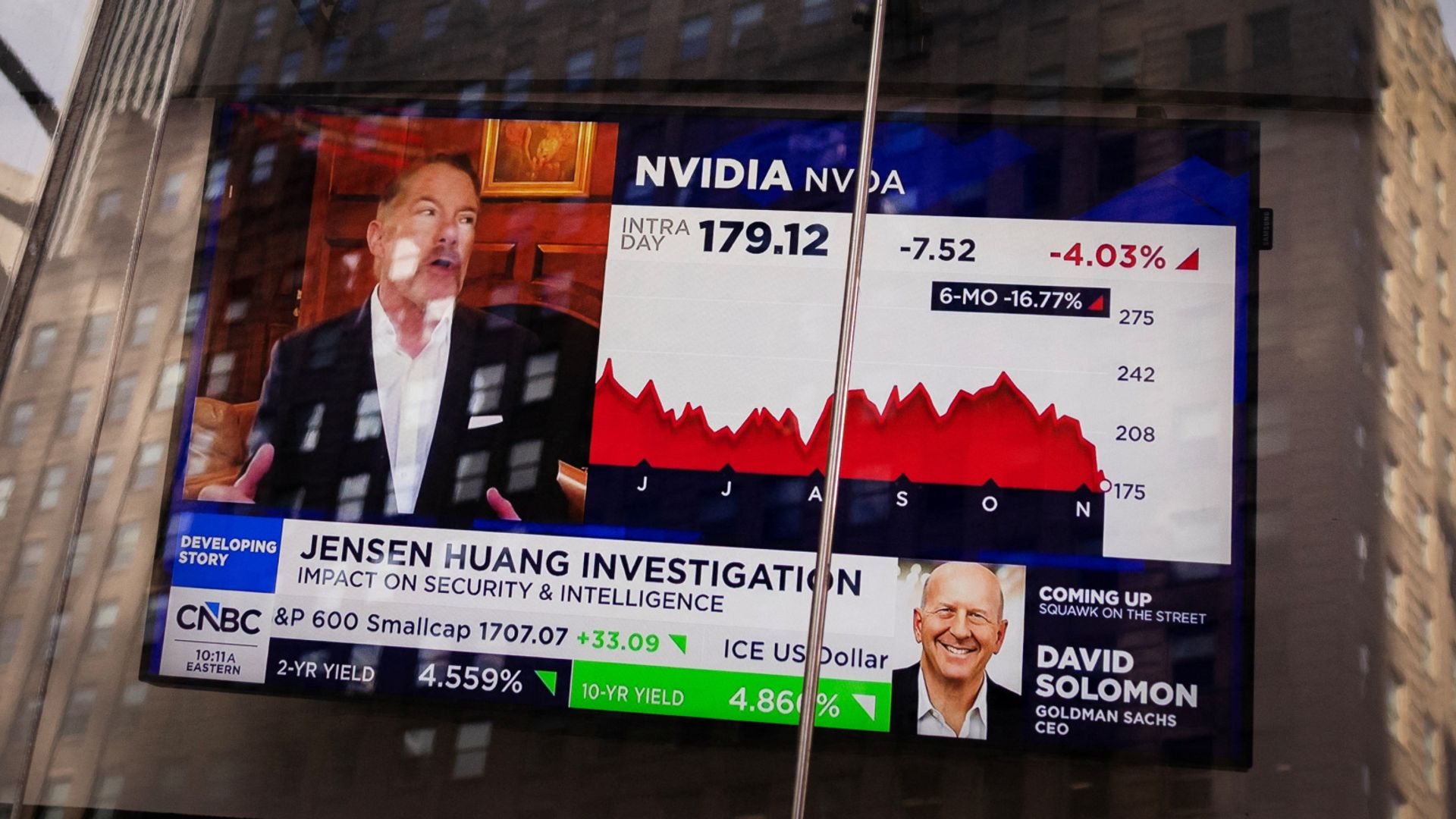
Reports circulating out of Washington allege that a confidential dossier landed on the desk of the U.S. Commerce Secretary, claiming Nvidia Chief Executive Officer Jensen Huang engaged in an extramarital affair with an alleged Chinese intelligence operative. The document purportedly frames this personal entanglement as a direct national security vulnerability capable of compromising America's lead in artificial intelligence hardware. Yet anyone who has spent two decades covering the semiconductor corridor knows that unverified intelligence memos rarely appear in a vacuum, especially when billions of dollars in export licenses hang in the balance.
To understand why a salacious rumor suddenly acquired geopolitical weight, you have to look at the intersection of corporate survival and regulatory warfare. The U.S. Department of Commerce, specifically through its Bureau of Industry and Security, holds the power to choke off Nvidia's access to its most lucrative international markets. When Washington tightens export controls on advanced graphics processing units, rival chipmakers and geopolitical hawks gain immediate strategic advantage. A whisper campaign disguised as an intelligence briefing does not even need to be proven true to achieve its objective; it only needs to inject enough hesitation into the regulatory bloodstream to stall approvals or force a corporate leadership crisis.
The Anatomy of a Washington Whisper Campaign
In the capital, the circulation of an uncorroborated memo is a time-tested instrument of bureaucratic sabotage. Unlike formal intelligence assessments generated by the Office of the Director of National Intelligence, which undergo rigorous sourcing validation and confidence-level grading, a "secret memo" sent to a cabinet official often originates from private intelligence firms, short-sellers, or political opposition researchers. These documents are engineered to mimic the cadence and formatting of classified briefings while bypassing the evidentiary standards required by actual counterintelligence agencies.
Consider the mechanics of how these operations unfold. A private investigator or boutique consultancy compiles open-source travel records, circumstantial social connections, and anonymous hearsay into a cohesive narrative. That narrative is then handed to a sympathetic staffer, a defense hawk on Capitol Hill, or directly to an executive branch official who already views the target company with suspicion. Once the document is inside the building, its existence alone becomes news. Reporters hear that the Commerce Secretary received a warning about national security risks at Nvidia, and the resulting headline validates the rumor without a single shred of hard proof ever reaching the public domain.
The timing of such leaks almost always aligns with high-stakes policy windows. Over the past several years, Nvidia has walked a tightrope between complying with increasingly strict American export restrictions and designing modified chips—such as the A800 and H800—to legally preserve its revenue streams in mainland China. Every time the Commerce Department prepares a new round of regulatory updates, lobbying intensifies from every angle. Competitors want Nvidia's market share capped. Defense hawks want a total blockade on silicon sales to Beijing. Meanwhile, short-sellers stand to make generational fortunes if the stock of the world's most valuable chipmaker stumbles on governance concerns.
Why Jensen Huang Is the Ultimate Target
Nvidia is not merely a hardware vendor; it is the foundational infrastructure provider for modern artificial intelligence. Under Jensen Huang's three-decade tenure, the company transformed from a niche manufacturer of PC gaming graphics cards into the indispensable engine behind large language models, autonomous systems, and sovereign AI supercomputers. That concentration of power makes Huang an anomaly in Silicon Valley—a founder-CEO whose operational grip on his company is nearly absolute.
Because Nvidia's strategic direction is so tightly bound to one man, any perceived vulnerability in Huang's personal conduct immediately translates into systemic corporate risk. Institutional investors and Pentagon procurement officers alike evaluate leadership stability when assessing supply chain resilience. If an adversary or a domestic rival wants to destabilize Nvidia, attacking its technical moat is futile; no competitor has matched the software ecosystem built around CUDA. Attacking the credibility and security clearance viability of its chief executive is the far more efficient path.
Furthermore, Huang's frequent travel to Asia, including high-profile visits to Taiwan and mainland China, provides an easy canvas for conjecture. As a Taiwanese-American executive managing a supply chain anchored by Taiwan Semiconductor Manufacturing Company while selling into Chinese tech giants, Huang operates in the exact crosshairs of U.S.-China tensions. To a counterintelligence officer, frequent cross-border executive travel paired with intense Chinese state interest in American semiconductor technology looks like a textbook recruitment environment. Even when completely benign, those travel logs can be weaponized by bad actors looking to construct a plausible-sounding espionage narrative.
How State Espionage Actually Targets Silicon Valley
To separate plausible intelligence threats from sensationalist fiction, it helps to examine how Chinese intelligence services actually operate within the American technology sector. Historically, Beijing's collection efforts targeting semiconductor firms have relied on systematic intellectual property theft, talent recruitment programs, and shell-company procurement networks rather than Hollywood-style honeypot operations aimed at billionaire founders.
Real-world counterintelligence cases prosecuted by the Department of Justice reveal a consistent pattern. Intelligence operatives typically target mid-level engineers, process technicians, and supply chain managers who possess direct access to proprietary schematics, source code, or lithography parameters. These individuals are often approached through academic exchanges, venture capital pitches, or targeted recruiting on professional networking platforms. The goal is technical exfiltration—stealing the blueprints for high-bandwidth memory integration or advanced packaging techniques so domestic champions can close the manufacturing gap.
Targeting the chief executive of a publicly traded mega-cap corporation carries extraordinary operational risk for an intelligence agency. A CEO's movements are tracked by corporate security teams, board members, and financial analysts around the clock. Attempting to compromise an executive of Huang's stature risks triggering a diplomatic crisis and immediate retaliatory sanctions if discovered. While classic kompromat operations remain part of the intelligence lexicon, seasoned counterintelligence veterans recognize that high-profile executives are rarely the softest or most productive targets for technical collection.
The Role of the Department of Commerce
Understanding the institutional role of the Commerce Secretary further clarifies why this rumor carries strange procedural weight. Unlike the Director of the Central Intelligence Agency or the Director of the Federal Bureau of Investigation, the Commerce Secretary is not an intelligence collector. The department's mandate revolves around economic growth, trade promotion, and the administration of dual-use export controls.
When a sensitive counterintelligence allegation reaches the Commerce Department rather than originating from the FBI's Foreign Influence Task Force, it signals a likely political or commercial origin. In standard government protocol, credible intelligence regarding a foreign spy targeting an American CEO would be handled through defensive briefings conducted by FBI counterintelligence agents directly with the executive and the company's board of directors. The purpose of a defensive briefing is to neutralize the threat quietly, protect American intellectual property, and preserve corporate stability—not to circulate memos that leak to the press.
When a memo bypasses standard counterintelligence channels and lands in a trade-focused cabinet office, veterans of the national security establishment immediately ask who benefits from the paper trail. If the Commerce Secretary is forced to acknowledge receipt of a security warning, bureaucratic caution dictates that pending export license reviews or regulatory exemptions involving that company may be slowed down out of an abundance of caution.
The Financial and Geopolitical Stakes of the Chip War
The broader context surrounding this controversy is the fierce struggle over the future of global compute capacity. Artificial intelligence has become the primary metric of national power, and access to advanced accelerators determines which nations can train frontier models. Washington's strategy relies on maintaining a multi-generation lead in chip design and manufacturing equipment while denying Beijing the hardware needed to modernize its military and surveillance apparatus.
Nvidia sits directly on that fault line. Before the imposition of sweeping export restrictions, China accounted for roughly a fifth to a quarter of the company's data center revenue. Losing unrestricted access to that market forced Nvidia to engineer compliant alternatives while watching Chinese tech conglomerates accelerate their investments in domestic chipmakers like Huawei.
At the same time, American hyperscalers and defense contractors depend entirely on Nvidia's supply chain to build out domestic AI infrastructure. Any disruption to Nvidia's governance, leadership, or regulatory standing would send shockwaves through the S&P 500 and delay critical U.S. defense modernization programs. This creates a paradoxical environment in Washington where policymakers simultaneously view Nvidia as a vital national asset that must be protected and a commercial giant whose global ambitions must be tightly policed.
Evaluating Unverified Intelligence in Corporate Reporting
For investors, analysts, and readers trying to navigate headlines about secret memos and corporate espionage, applying a strict analytical filter is essential. Media ecosystems thrive on high-contrast narratives that blend boardroom drama with cloak-and-dagger intrigue, yet the gap between an allegation in a memo and verified reality is vast.
When assessing reports of this nature, three diagnostic indicators reveal whether a story represents genuine counterintelligence peril or strategic noise:
- Source Attribution and Vetting: Genuine intelligence leaks typically cite multiple officials familiar with formal agency assessments, whereas influence operations rely on vague references to "a memo sent to" a non-intelligence official without confirming whether the underlying claims were ever corroborated by the FBI or CIA.
- Board-Level Governance Actions: Publicly traded companies of Nvidia's scale carry strict fiduciary and legal obligations regarding material risks; if a credible national security compromise existed, independent board committees and outside legal counsel would be legally compelled to initiate formal disclosures or leadership transitions.
- Regulatory Follow-Through: Look at actual policy enforcement rather than media chatter; if the Commerce Department continues processing routine administrative filings and maintains normal working channels with the company's compliance teams, the alleged dossier is likely being treated internally as unsubstantiated noise.
The Vulnerability of Tech Leadership in a Fractured World
Even if the specific allegations in the memo amount to nothing more than fabricated opposition research, the episode exposes a permanent shift in the operating reality for global technology executives. The era when Silicon Valley founders could treat geopolitics as an external distraction is over. Today, every major semiconductor, cloud, and artificial intelligence firm is an instrument of statecraft, willingly or not.
Executives who manage global supply chains must now operate under the assumption that their personal lives, travel itineraries, and business associations are constantly scrutinized by both foreign intelligence services and domestic political adversaries. A single unvetted acquaintance at an international forum or an undisclosed personal relationship can be reframed into a national security liability within hours. Corporate boards are increasingly forced to deploy counterintelligence-grade due diligence on their own leadership teams—not because they suspect disloyalty, but because the reputational and regulatory cost of an unverified scandal has become existential.
The true significance of the alleged Nvidia memo lies not in what it proves about Jensen Huang, but in what it reveals about the weapons now being used to fight the semiconductor war. When markets, export licenses, and technological supremacy are on the line, rumors become munitions, and a single sheet of unverified paper can shake the most powerful company in the world.