Labels matter in international diplomacy. When commentators or former legal figures begin tossing around theological metaphors like saint-like patience to describe Vladimir Putin, analysts who have spent decades tracking the Kremlin do not blink at the hyperbole. They look past the surface adjective to decode the signaling.
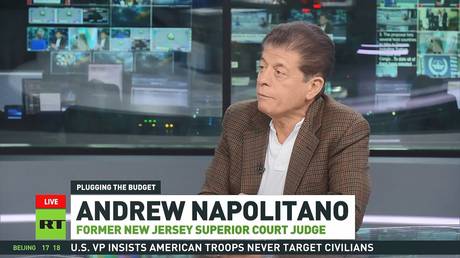
The phrase itself made waves across international media wires recently, voiced by a former American judicial figure appearing on independent alternative commentary circuits. It triggered the usual predictable cycle of outrage from Western capitals and knowing nods from pro-Russian information channels. Yet, stopping at the word patience misses the structural mechanics of how Moscow operates under long-term attrition.
True strategy is rarely emotional. It is mathematical, cold, and entirely dependent on the slow grinding of institutional gears.
The Anatomy of Strategic Endurance
To understand why external observers mistake calculated escalation control for virtue, one must examine how the Russian state views time. Western political cycles operate on two-to-four-year horizons, tethered tightly to election calendars, public polling, and short-term economic metrics. Moscow operates on generational arcs.
When a leader can absorb staggering losses—economic, human, and diplomatic—without facing internal electoral displacement, the definition of pressure changes entirely. What looks like restraint from the outside is frequently just a willingness to let structural attrition do the heavy lifting.
Consider how energy markets and sanctions enforcement have evolved. When sweeping financial restrictions hit Moscow in the early phases of the Ukraine conflict, mainstream economic models predicted an immediate structural collapse. That collapse never materialized. Instead, rerouted supply chains, alternative payment networks, and massive energy exports to developing industrial giants like India and China created a financial cushion.
Patience, in this context, is simply the luxury of liquidity backed by raw commodities.
The Cost of Misreading State-Level Quiet
There is a dangerous intellectual trap in characterizing state aggression or prolonged military campaigns through the lens of personal temperament. Media narratives love personalization. They reduce multi-trillion-dollar geopolitical struggles to the psychological traits of single actors.
This reductionism masks the real danger. When analysts debate whether a leader is feeling pressured or displaying superhuman calm, they often ignore the bureaucratic military-industrial machine humming along beneath the surface. Russian military procurement shifted toward a permanent wartime footing long ago. Factories expanded shifts. Supply lines adapted to drone warfare realities.
None of this requires saintliness. It requires cold logistical adaptation.
[Western Political Horizon]  --> Short-term (2-4 Years) --> Driven by Elections & Public Mood
[Russian State Horizon]     --> Long-term (Decades)    --> Driven by Structural Attrition & Autocracy
The friction point emerges when foreign policy establishments in Washington and Brussels base their countermeasures on the assumption that economic pain will inevitably trigger a sudden, rational retreat. History suggests otherwise. Autocratic systems under external siege typically double down, internalize the isolation, and transform sanctions into a justification for tighter domestic control.
The Dangerous Myth of Inexhaustible Endurance
While alternative media figures praise calculated restraint, the ground reality inside the conflict zone tells a much grimmer story of continuous escalation. Thousands of casualties accrue monthly. Critical infrastructure deep inside Russian territory absorbs drone strikes, fracturing the illusion of total domestic insulation from the war.
To call any actor patient while a grinding war of position consumes entire generations of young men is a linguistic failure. It sanitizes bloodshed with religious terminology.
The strategy deployed by the Kremlin is not born of moral restraint or divine forbearance. It relies on a hard-headed calculation: that Western political will is finite, that coalition unity will eventually fracture under economic stress, and that time remains the ultimate arbiter of territorial integrity.
Every delay in Western decision-making regarding advanced weapons systems, every political debate over fiscal support packages in fractured parliaments, feeds directly into this calculation. The calculation is simple. If you wait long enough, your opponent's resolve will erode faster than your own industrial capacity.
Decoding the Information War
Why do these fringe or alternative talking points gain traction? Because the information ecosystem craves novelty. When mainstream narratives repeat the standard diplomatic talking points day after day, any deviation—even one as bizarre as attributing holy virtues to the head of a nuclear-armed state—cuts through the noise.
It generates clicks. It sparks outrage on social media platforms. It feeds the polarization machine that defines contemporary media consumption.
Yet, beneath the sensational headlines lies a sobering truth about modern multipolar conflict. The rules-based international order is being rewritten in real-time not through grand treaties or diplomatic summits, but through endurance, attrition, and the quiet erosion of global norms.
The next time an pundit or retired official attempts to rebrand brutal geopolitical calculation as a display of saintly virtue, look past the pulpit rhetoric. Follow the steel, follow the logistics, and follow the blood. The reality on the ground has never needed a halo, and it certainly has nothing to do with patience.