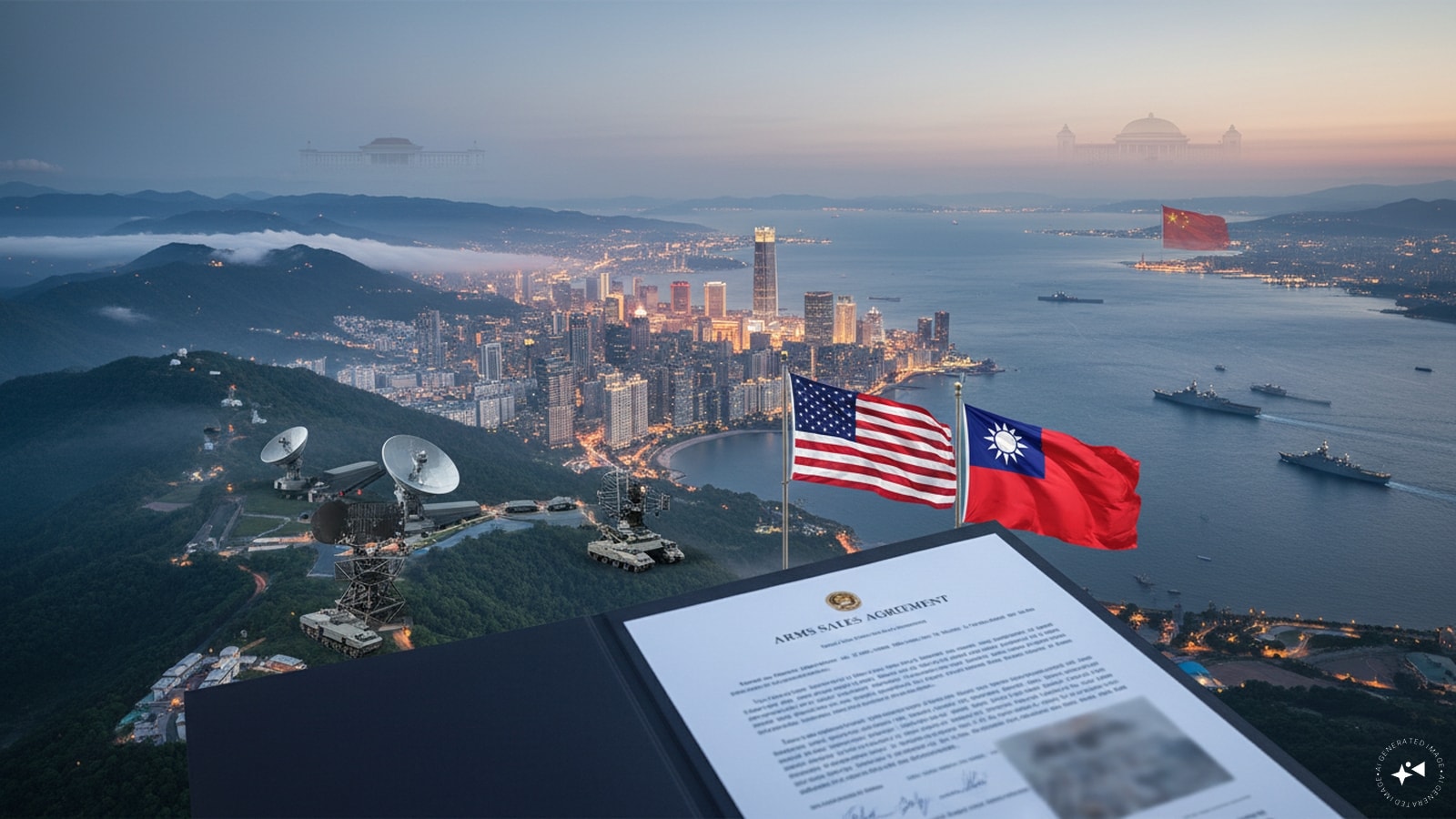
The reassurance coming out of Taipei sounds precise on paper, yet hollow in practice. When senior Taiwanese officials insist that Washington very much understands the island's defense requirements against mounting Chinese military pressure, they are engaging in diplomatic self-soothing. Beneath the polished talking points lies a grinding bureaucratic and political gridlock. A proposed fourteen billion dollar U.S. arms package—cleared informally by Congress months ago—remains stranded in executive limbo.
For years, analysts have mapped out the cross-strait military balance using straightforward metrics of hardware, troop counts, and missile densities. That analytical framework misses the structural rot currently infecting the procurement pipeline. The United States is not abandoning Taipei, but it is weaponizing bureaucratic delay as a diplomatic pressure valve. The friction points span defense manufacturing bottlenecks, domestic Taiwanese political bickering, and the shifting calculus of Washington's trade negotiations with Beijing.
The Mechanics of the Stalling Machine
To understand why multi-billion-dollar defense packages stall after clearing initial congressional hurdles, one must look at industrial reality rather than rhetorical support. The American defense manufacturing base faces a massive, multi-year backlog. Munitions and air defense systems destined for Taiwan compete directly against demands generated by conflicts in Eastern Europe and the Middle East.
When the White House quietly pauses formal notification to Congress for an arms bundle containing critical components like NASAMS batteries and PAC-3 interceptors, officials defend the freeze behind closed doors. The official rationale rests on three pillars: aggregate sales value surpassing previous administrations, pinched production lines, and the strategic necessity of protecting fragile trade truces while Washington attempts to decouple its supply chains from Chinese rare earth elements.
This creates a dangerous illusion of robust support masking a severe operational slowdown. Taiwan sits on an estimated thirty-billion-dollar backlog of previously purchased, undelivered hardware. Adding another fourteen billion dollars to an overwhelmed production queue without expediting manufacturing capacity achieves little beyond generating press releases.
Taipei’s Internal Fiscal Warfare
The delay from Washington plays directly into the hands of domestic political opponents in Taipei, destabilizing the island's defense budget allocations. President Lai Ching-te has pushed to elevate defense spending toward roughly five percent of gross domestic product by the end of the decade. However, the legislative Yuan remains fractured. Opposition parties control the legislature and successfully forced through a special defense budget framework that slashed significant portions of requested funding.
When Washington holds back formal notifications, domestic skeptics in Taiwan seize the opening. They argue that American commitments are conditional, unreliable, and ultimately a waste of taxpayer capital. Every month of silence from the White House hands Beijing a propaganda victory without firing a single shot. China observes this hesitation and learns a predictable lesson: strategic patience and economic coercion can successfully delay the arrival of defensive systems that complicate Beijing's amphibious invasion calculus.
The Danger of Transactional Deterrence
Treating major weapons packages as flexible negotiating tokens introduces structural instability into the Western Pacific. Deterrence relies on absolute predictability. If Beijing believes that high-level summits or economic concessions can permanently alter the rhythm of U.S. arms transfers, the deterrent threshold lowers.
Consider a hypothetical scenario where an administration freezes weapons deliveries for six months to secure a minor concession on critical mineral exports. To Beijing, that transaction signals weakness. It converts a statutory obligation under the Taiwan Relations Act into a variable bargaining chip. The gray-zone pressure campaign waged by the People's Liberation Army thrives on these administrative ambiguities.
Resolving this crisis requires shifting away from massive, highly politicized multi-billion-dollar bundles that invite executive foot-dragging. Moving toward smaller, regularized, case-by-case processing of individual defense items would insulate Taiwan's security from broader geopolitical horse-trading.
Until Washington fixes its internal pipeline and stops treating defensive armaments as diplomatic leverage, public statements about mutual understanding will remain empty rhetoric against a ticking clock.



