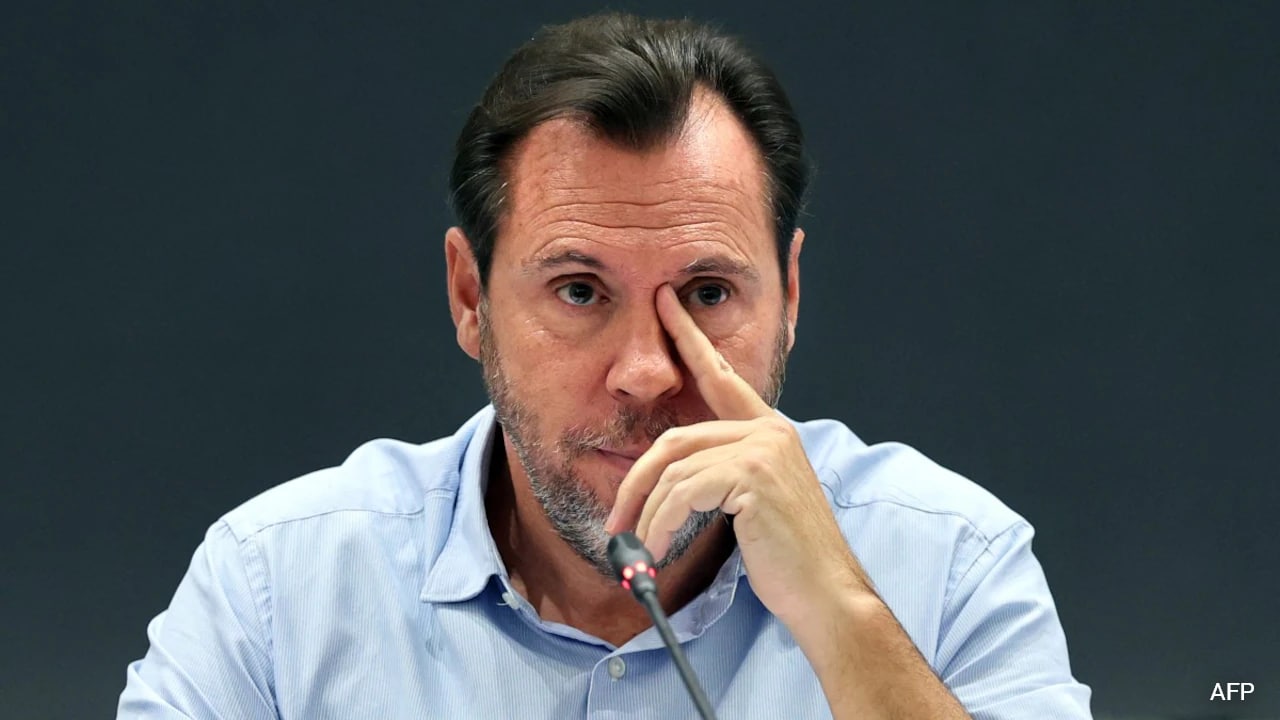
When Spain’s Transport Minister stepped down days after a fatal rail disaster, the resignation was framed in Madrid as an act of institutional accountability. It was not. Stepping aside after a mass-casualty transit failure is a time-tested political pressure valve, designed to absorb public fury before investigators can trace systemic rot back to the broader administration.
The departure immediately shifted headlines from broken infrastructure to palace intrigue. Yet the core question for commuters, freight operators, and taxpayers remains unanswered. A single resignation does not repair fatigued steel, modernize outdated signaling networks, or resolve decades of uneven capital allocation across Europe’s second-largest high-speed rail footprint. You might also find this similar article interesting: What Most People Get Wrong About James Talarico Winning a Texas Senate Seat.
The Anatomy of a Political Exit
Cabinet resignations following infrastructure disasters follow a predictable script. First comes the solemn visit to the crash site, complete with promises of transparency and a full, independent investigation. Next comes the leaking of preliminary technical findings—usually pointing toward human error or localized equipment failure—followed swiftly by the minister's departure to "avoid politicizing the tragedy."
By exiting early, the minister achieves two objectives. First, the ruling coalition insulates the Prime Minister from direct parliamentary interrogation over budget priorities and regulatory oversight. Second, the outgoing official avoids sitting in the witness chair months later when black-box data, maintenance logs, and union warnings inevitably become public record. As discussed in latest articles by USA Today, the effects are significant.
Accountability in European transport ministries rarely travels downward into the bureaucratic machinery that actually manages track safety. The mid-level administrators who approve maintenance deferrals, the procurement officers who award contracts to the lowest bidders, and the state-owned rail operators balancing commercial revenue against preventative downtime usually remain in place. The face at the podium changes, while the institutional incentives stay identical.
Spain's Two-Tier Rail Reality
To understand why Spain's rail network faces acute operational stress, you have to look past the glossy brochures of the AVE high-speed rail network. Spain spent tens of billions of euros over three decades building one of the world’s premier bullet train systems, connecting Madrid to provincial capitals at speeds exceeding 300 kilometers per hour.
That prestige came at a steep, quiet cost. Capital expenditure heavily favored ribbon-cutting high-speed corridors while conventional regional and commuter lines—known locally as Cercanías and Media Distancia—suffered from chronic underinvestment.
- Signaling disparities: While flagship high-speed lines operate under the European Rail Traffic Management System (ERTMS), which automatically enforces speed limits and braking curves, significant stretches of conventional track still rely on older, legacy systems like ASFA (Anuncio de Señales y Frenado Automático). Legacy systems place a far heavier cognitive burden on train drivers, leaving thinner margins for human error during adverse weather or mechanical anomalies.
- Rolling stock aging: In several regions, commuter fleets operate well past their intended mid-life refurbishment windows, leading to cascading mechanical delays and strained maintenance depots.
- Trackbed degradation: Freight and regional passenger trains share aging infrastructure where drainage, ballast stability, and switch mechanisms require constant manual inspection rather than automated sensor monitoring.
When a system runs on a two-tier funding model, safety becomes unevenly distributed. Passengers paying premium fares on intercity corridors ride behind multiple layers of automated fail-safes. Daily workers commuting on regional lines often travel on infrastructure built for a different era, patched together by stretched maintenance crews.
Liberalization and the Strain on Infrastructure
The timing of this crisis also collides with a massive structural shift in European rail. Under European Union liberalization mandates, Spain opened its passenger rail market to private competition, breaking the decades-long monopoly of the state operator Renfe. Foreign state-backed competitors—such as France’s Ouigo and the Italian-Spanish consortium Iryo—flooded major corridors with low-cost tickets and high-frequency schedules.
Liberalization delivered lower fares and surging passenger numbers. It also pushed track utilization to historic highs.
Infrastructure manager Adif (Administrador de Infraestructuras Ferroviarias) suddenly had to coordinate vastly denser timetables across shared tracks. More trains mean faster rail wear, tighter overnight maintenance windows, and higher electrical loads on overhead catenary wires. When track access is sold aggressively to maximize revenue and prove the success of market liberalization, the time allotted for physical track inspection shrinks.
Consider a hypothetical scenario common across heavily utilized European corridors. A maintenance crew has a scheduled three-hour overnight window to inspect switches and ultrasonically test rails for micro-fractures. A late-running freight train and an unscheduled equipment transfer eat ninety minutes of that window. The crew conducts a visual check instead of a full diagnostic sweep, signs off on the section so morning commuter traffic isn't disrupted, and the cycle repeats. Nobody broke a law, yet risk quietly compounds.
The Regulatory Blind Spot
Spain’s institutional structure further complicates genuine oversight. Both the primary train operator (Renfe) and the infrastructure manager (Adif) are public entities operating under the umbrella of the Ministry of Transport. Furthermore, the CIAF (Comisión de Investigación de Accidentes Ferroviarios), the body tasked with investigating rail accidents, has historically faced sharp criticism from the European Union Agency for Railways over its lack of true independence from the ministry it investigates.
Following the devastating 2013 Angrois derailment near Santiago de Compostela—which killed 80 people—European regulators repeatedly warned Madrid that its accident investigation board was too closely tied to state rail executives and ministry officials. Reform moved at a glacial pace.
When the regulator, the infrastructure owner, and the dominant operator all answer to the same political hierarchy, transparency becomes a structural casualty. Whistleblowers inside maintenance depots or driver unions face an uphill battle when raising alarms about signal visibility, braking distances, or staffing shortages. Their warnings are routinely categorized as labor disputes or union posturing until a fatal accident validates their technical complaints.
What Real Reform Requires
Replacing a cabinet minister is theater. Fixing a compromised rail system requires unglamorous, expensive, and politically unrewarding structural changes that take years to bear fruit.
- Ring-fenced maintenance budgets: Capital allocation must legally separate prestige high-speed expansion from baseline safety and maintenance on conventional networks. Maintenance funds cannot be raided to cover cost overruns on new construction projects.
- Accelerated ERTMS deployment: Spain must establish binding, transparent timelines to phase out legacy cab-signaling systems on all passenger-carrying routes, eliminating single-point-of-failure reliance on driver reaction times.
- True investigative independence: The accident investigation commission must be severed entirely from the Transport Ministry, reporting directly to parliament with full subpoena power over internal maintenance logs and budget correspondence.
- Mandatory maintenance windows: Track access agreements with private and public operators must subordinate timetable density to non-negotiable engineering inspection blocks.
The outgoing minister’s resignation speech emphasized honor, duty, and respect for the victims. Those words cost the state nothing. True accountability will only be visible in next year’s national budget—specifically, in whether Madrid quietly cuts infrastructure maintenance to fund tax breaks and ribbon-cuttings, or finally pays the bill to keep its trains on the rails.