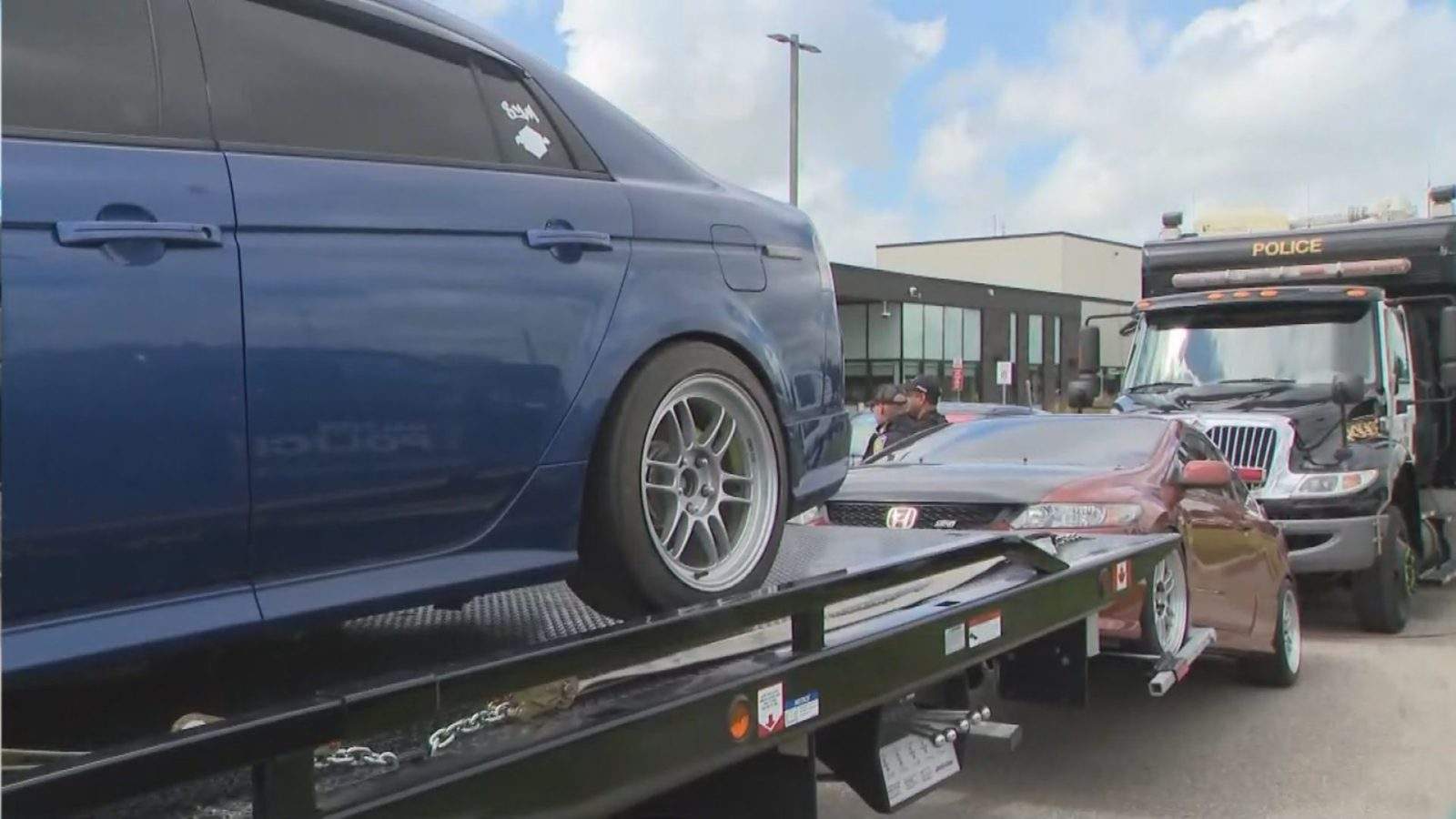
The annual conclusion of the Project ERASE campaign in Ontario arrives with a familiar ritual. Police forces gather to present impressive enforcement figures, local media outlets print the numbers verbatim, and the public experiences a brief moment of reassurance before the next modified exhaust note echoes down a suburban boulevard at midnight. This summer, the multi-jurisdictional task force announced a haul of 2,438 charges under the Highway Traffic Act and 118 Criminal Code infractions.
Yet, beneath the triumphalist press releases lies a stark reality. The enforcement surge is a temporary finger in a collapsing dam. Despite decades of escalating fines, roadside vehicle seizures, and immediate license suspensions, the culture of high-speed reckless driving across the Greater Toronto Area and surrounding regions is expanding rather than contracting. The numbers do not signal a victory over street racing. They show an ecosystem that has normalized extreme risk as a cost of doing business.
To truly understand why Ontario roads remain a playground for dangerous driving, one must look beyond the raw numbers provided by the Ontario Provincial Police and regional services in Peel, York, and Toronto. The real crisis is rooted in a toxic mix of structural gaps, digital organization, and a punitive framework that fails to deter the core demographic driving the phenomenon.
The Mirage of the Statistical Victory
The headline figure of over 2,400 charges sounds devastating to the illegal racing community. It implies an organized, systemic dismantling of underground networks.
A closer examination of the data reveals a different story. Of those thousands of infractions, only a fraction actually represent targeted street racing or stunt driving arrests. In Peel Region, which sits at the absolute epicenter of the province's car-rally subculture, officers laid roughly 1,400 charges during the two-month blitz. Of those, 107 were specifically for stunt driving, and 52 were for unnecessary noise. The vast majority of the remaining tickets were standard traffic violations caught in the wider dragnet.
The distinction matters. By bundling everyday speeding infractions with organized street racing, law enforcement creates an illusion of massive disruption. The actual street racers, those who coordinate mass takeovers of intersections or stage high-speed runs on the 400-series highways, view these campaigns as seasonal weather patterns. You lay low, you monitor police frequencies, or you simply move to a different jurisdiction until the heat dies down.
“Street racing does not stop at municipal boundaries,” observed Peel Regional Police Deputy Chief Mark Andrews during the post-campaign press briefing.
He was attempting to highlight police cooperation. What he inadvertently highlighted was the fundamental agility of the offenders. When Peel police tighten the screws on hotspots around Hurontario Street and Steeles Avenue, the crowds simply migrate into Halton, Hamilton, or Waterloo within thirty minutes.
The Digital Architecture of the Modern Takeover
The traditional image of street racing involves two muscle cars lining up on a deserted industrial road at midnight. That era is dead. Today, dangerous driving in Ontario is crowdsourced, highly organized, and hyper-monetized through social media networks.
Organizers use encrypted messaging apps and private Instagram accounts to coordinate "takeovers" or "car meets." A single account can mobilize hundreds of vehicles to a specific intersection in Mississauga or Vaughan within fifteen minutes. By the time the first cruiser arrives, the intersection is blocked by hundreds of spectators filming a circle of modified sedans spinning drifts, completely paralyzing local transit and emergency services.
This layout creates an asymmetrical warfare dynamic for law enforcement. A dozen officers cannot safely disperse a crowd of five hundred volatile spectators, many of whom view confrontation with the police as premium content for their social media feeds. The digital infrastructure ensures that the community stays one step ahead of traditional patrol routes.
The Profit Behind the Horsepower
There is a lucrative economy underpinning this behavior. It is not just about personal adrenaline.
- Social Media Monetization: High-definition footage of illegal maneuvers generates millions of views on short-form video platforms, translating directly into ad revenue and sponsorship deals for influencers.
- Underground Garages: A specialized network of automotive modification shops operates in the gray market, installing illegal emissions deletes, straight-pipe exhausts, and ECU tunes designed specifically to evade detection or maximize speed.
- Ticket Defense Mills: A booming industry of legal firms specializes almost exclusively in exploiting loopholes in the Highway Traffic Act, turning a stunt driving charge into a manageable cost of vehicle ownership.
The Limits of the Current Legal Framework
Ontario possesses some of the strictest stunt driving laws in North America. Under current legislation, an individual caught traveling 50 kilometers per hour or more over the speed limit (or 40 kilometers per hour over on roads with a limit under 80) faces immediate consequences.
| Penalty Type | First Offense Consequences | Subsequent Offense Consequences |
|---|---|---|
| Roadside License Suspension | 30 days immediate | 30 days immediate |
| Vehicle Impoundment | 14 days immediate | 14 days immediate |
| Monetary Fines | $2,000 to $10,000 | $2,000 to $10,000 |
| Post-Conviction Suspension | 1 to 3 years | 3 to 10 years (Lifetime on 3rd offense) |
| Jail Time | Up to 6 months | Up to 6 months |
On paper, these penalties are draconian. In practice, they are failing to curb the behavior.
The issue is systemic. The immediate 14-day vehicle impoundment hurts, but for a demographic backed by significant disposable income or parental resources, it is a temporary inconvenience. The vehicles are retrieved, the fines are paid, and the legal battle begins. Because the Ontario court system faces immense backlogs, many of these high-profile charges are routinely pled down to lesser offenses like careless driving or simple speeding just to clear the docket. The teeth of the law are blunted by administrative reality.
Furthermore, the threat of increased insurance rates—often cited by authorities as the ultimate deterrent—has created an underground market of uninsured or improperly insured operators. Drivers register vehicles under relatives' names or use falsified out-of-province addresses to maintain low premiums while operating high-performance vehicles on Ontario asphalt.
The Human Toll and the Missing Infrastructure
The conversational focus on horsepower and legal technicalities often obscures the lethal consequences of this subculture. Last year, excessive speed contributed to 75 road deaths on OPP-patrolled highways alone. In a recent ten-day stretch in Peel Region, four people lost their lives, and two suffered life-altering injuries due to aggressive driving behaviors.
The victims are rarely the racers themselves. They are families returning from dinner, delivery drivers earning a living, and pedestrians crossing at marked intersections.
The public response to this carnage has been a demand for more speed cameras and heavier policing. This approach ignores a fundamental psychological reality of the racing community: the desire for speed will always find an outlet. If municipalities do not provide a controlled environment for automotive enthusiasm, the streets will remain the default venue.
Southern Ontario has seen a steady decline in accessible, affordable drag strips and track-day venues over the last two decades. Historic tracks have been sold off to developers to build sprawling subdivisions or logistics warehouses. The remaining facilities are expensive, require membership fees, or are located hours away from the urban centers where the racing demographic actually resides.
This is not an excuse for criminal behavior on public roads. It is an observation of a structural deficit. Without affordable, sanctioned spaces where young drivers can push their vehicles to the limit safely, punitive police crackdowns will continue to be a reactive, circular game of whack-a-mole.
Why Enhanced Enforcement Cannot Fix a Cultural Problem
You cannot arrest your way out of a cultural shift. The drivers participating in these rallies do not view themselves as criminals; they view themselves as part of a misunderstood subculture defined by mechanical skill and rebellion against an oppressive urban design.
The design of Ontario’s suburban infrastructure actively encourages the very behavior the police are trying to suppress. Wide, multi-lane arterial roads in regions like York and Peel are engineered to look and feel like highways. During late-night hours, these empty, well-lit corridors present an irresistible invitation to anyone looking to test the limits of a modified engine. The built environment itself acts as an accelerator.
Until municipal planners alter road designs to include physical traffic calming measures on known racing corridors, and until the province addresses the digital coordination of these events, the annual wrap-up of campaigns like Project ERASE will remain an exercise in public relations. The 2,400 charges laid this season are not a deterrent. For the hardcore street racing community, they are simply the price of admission for another summer on Ontario’s roads.