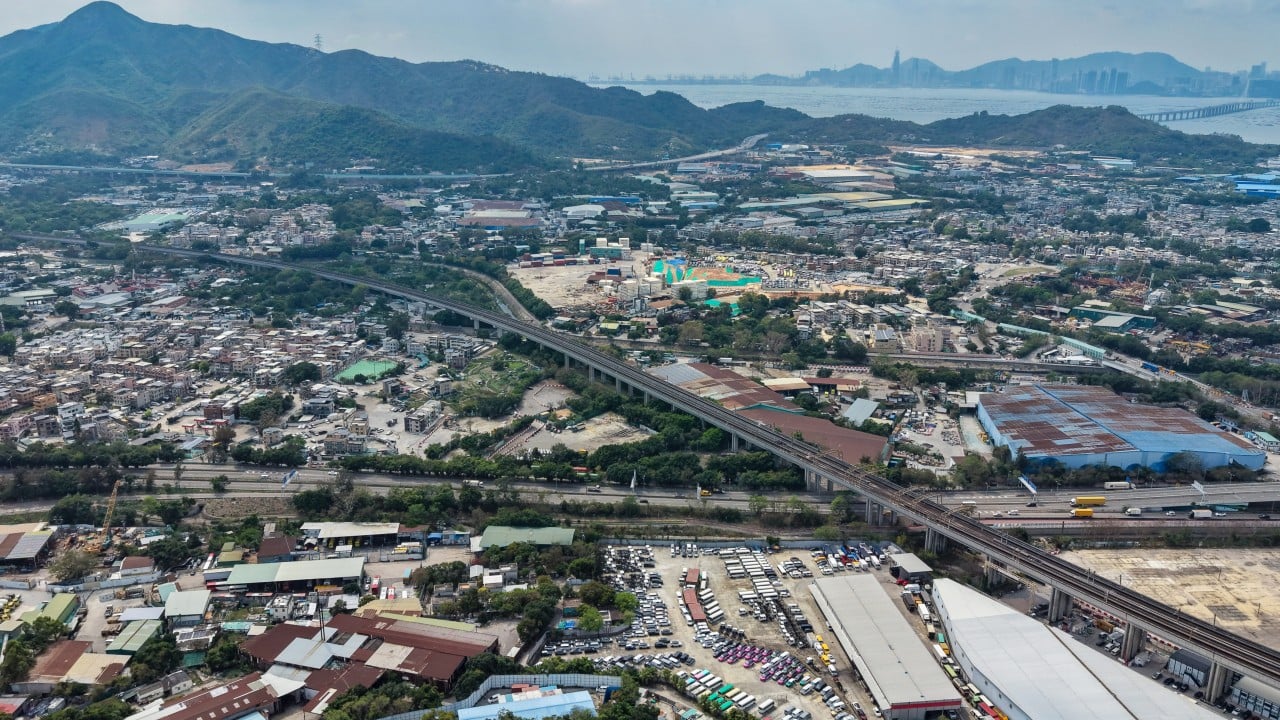
Hong Kong has officially invited market expressions of interest for selected land parcels dedicated to a modern logistics cluster within the Hung Shui Kiu and Ha Tsuen New Development Area. This move marks another phase in the ongoing push to transform the 30,000-hectare Northern Metropolis into a cross-border economic engine. Yet beneath the official announcements and policy paperwork lies a cold financial reality. Private conglomerates are responding to these government overtures with extreme caution. The massive capital outlays required for primary site formation, paired with a sluggish local property market, have created a wide chasm between bureaucratic ambition and commercial appetite.
Years of planning have gone into drafting the blueprint for Hong Kong's northern frontier. The grand vision relies on an industry-driven and infrastructure-led model designed to tie the special administrative region closer to Shenzhen. Officials hope to replicate past economic miracles by carving out specialized zones for modern logistics, professional services, and high-tech manufacturing. But blueprints do not construct roads, and policy documents do not lay underground cables. The administration faces the immediate task of financing billions of dollars in infrastructure while public coffers feel the pinch of lower-than-expected land premium revenues.
The High Cost of Private Participation
To bypass traditional fiscal constraints, the government rolled out a large-scale land disposal approach. Under this framework, winning bidders take on heavy responsibilities that traditionally fell to the public sector. Developers are expected to handle site formation, construct essential community infrastructure, and build multi-storey industrial complexes before handing portions back to the state.
For example, in a hypothetical scenario mirroring the current tender framework, a single consortium might win a multi-hectare parcel only to find itself legally bound to spend millions on road networks and public open spaces before realizing any return on investment from residential or commercial components.
Financial analysts point out that this risk-shifting strategy misjudges current market sentiment. Major property groups are nursing high debt-to-equity ratios and dealing with stagnant commercial office rentals across the broader metropolitan area. Committing billions of capital upfront to unproven frontier districts with multi-year development horizons is a tough sell to corporate boardrooms answerable to skittish shareholders.
Logistics Realities Versus Cross-Border Ambitions
The designated logistics cluster in Hung Shui Kiu and Ha Tsuen is meant to absorb brownfield operators displaced by urban renewal and modernize the region's supply chain capabilities. Proximity to the Shenzhen border gives the location natural advantages on paper.
However, modern supply chains demand more than raw acreage. They require specialized automated warehousing infrastructure, predictable cross-border customs clearance protocols, and deep labor pools capable of managing advanced tech systems. Traditional godown operators who previously occupied cheap brownfield land now face a steep financial cliff. Moving into multi-storey industrial buildings managed under strict government covenants changes their operational cost structures permanently.
Furthermore, competition from just across the border is fierce. Shenzhen and neighboring Guangdong cities feature hyper-efficient, highly automated logistics parks that often operate at a fraction of Hong Kong's operating costs. Convincing logistics giants to pay premium rents or take on equity stakes in Hong Kong's northern frontier requires clear economic incentives that current tender rules struggle to provide.
The Structural Funding Gap
The underlying tension in the entire Northern Metropolis strategy stems from a classic structural mismatch. Previous major railway and new town projects relied heavily on the Rail plus Property model. The MTR Corporation would build the transit line, capture the land value uplift along the alignment, and use residential property sales above stations to fund the capital-intensive rail infrastructure.
That engine has stalled. With land auctions yielding depressed bids and residential inventory sitting unsold in various districts, future land price subsidies cannot reliably backstop the hundreds of billions needed for the northern rail links and road networks.
When the government recently closed tenders for pilot parcels, the modest turnout demonstrated that developers are no longer willing to write blank checks based on long-term promises. Consortia are demanding greater risk-sharing, more flexible premium payment schedules, and reduced infrastructural burdens just to stay at the negotiating table.
Without fundamental adjustments to how risks and rewards are divided between public authorities and private balance sheets, the ambitious logistics hub risks becoming a monument to planning overreach. The government's willingness to listen to market feedback through ongoing expression-of-interest exercises shows an awareness of these friction points. Yet adjusting tender weightings or extending building covenants by a few years may not bridge a multi-billion-dollar confidence gap.
The next few months will test whether bureaucratic deadlines can bend to the sobering discipline of private capital markets. As authorities sift through submissions for the latest logistics parcels, the outcome will signal whether Hong Kong's new economic engine can actually attract the fuel it needs to move forward.