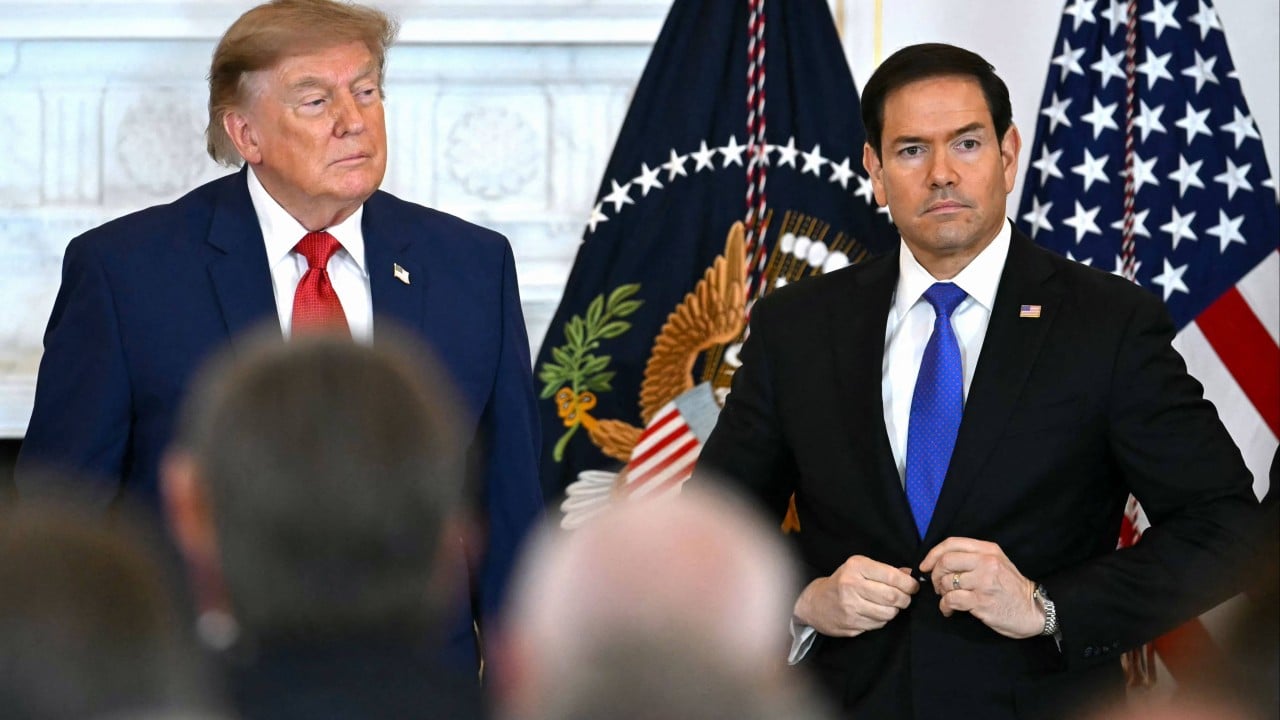
The border between the United States and Canada has long been celebrated as the longest undefended boundary in the world, an open economic corridor built on mutual trust and deeply integrated supply chains. That architecture is fracturing in real time. Following the dramatic collapse of bilateral trade negotiations in Washington, the White House imposed a punishing fifty percent tariff on roughly twenty billion dollars worth of Canadian goods, targeting everything from regional forestry products to cultural exports and manufacturing inputs.
President Donald Trump took to social media to demand that Canada fall in line or face even steeper economic penalties, pointing to rising unemployment north of the border and framing the dispute as a necessary correction to decades of perceived trade imbalances. Prime Minister Mark Carney rejected what he characterized as demands for structural subordination, setting the stage for dollar-for-dollar retaliatory measures that threaten to pull both economies into a prolonged spiral.
Behind the fiery public rhetoric lies a complex collision of domestic political pressures, shifting industrial strategies, and deep structural vulnerabilities that neither capital city can easily paper over.
The Anatomy of a Breakdown
Trade negotiations do not typically disintegrate over a single weekend without months of underlying friction. The friction point this time centered on automobiles, dairy quotas, and provincial restrictions on American alcoholic beverages. Washington insisted on terms that Canadian officials viewed as an attempt to hollow out domestic manufacturing capacity, while American trade representatives argued that Ottawa had spent years shielding protected sectors from genuine competition.
When the final compromise proposals hit the table, the gulf proved insurmountable. Carney walked away from the talks, asserting that the administration's last-minute demands would have permanently compromised Canadian sovereignty over industrial policy and trade autonomy. The immediate consequence was the activation of sweeping tariffs designed to inflict maximum political and economic pain.
Economists caution that the fallout will not respect national boundaries. While the White House maintains that domestic industries will thrive behind high tariff walls, supply chains in the automotive and manufacturing sectors cross international borders multiple times before a finished product ever reaches a showroom floor. Imposing punitive duties on these components introduces friction that inevitably drives up costs for consumers in Michigan and Ohio just as much as it does in Ontario and Quebec.
Asymmetric Vulnerabilities
The central argument emanating from Washington is built on a blunt premise of economic asymmetry. Proponents of the tariff strategy emphasize that Canada sends the vast majority of its exports southward, making the northern neighbor profoundly dependent on access to the American consumer market.
Yet this view overlooks the dense web of physical interdependencies that tie American infrastructure directly to Canadian resources. To understand the limits of pure coercion, one must examine the regional supply realities. Consider a hypothetical scenario where regional energy restrictions take effect: several northern American states rely entirely on Canadian hydropower for baseline grid stability, and Midwestern refineries are specifically engineered to process heavy crude sourced from western Canadian fields.
Cutting off or heavily taxing these inputs creates immediate bottlenecks inside the United States. Ontario Premier Doug Ford underscored this reality by noting that provincial authorities retain powerful countermeasures, including the potential restriction of critical minerals essential for technology and defense manufacturing. Coercion, it turns out, runs in multiple directions.
Furthermore, Canada's political leadership faces an unforgiving domestic calculus. Giving in to unilateral demands of this magnitude would shatter any administration's credibility, ensuring that political survival now depends on standing firm against external pressure. Prime Minister Carney has committed to rolling out targeted retaliatory tariffs covering American steel, agricultural equipment, and electronics.
The Broader Economic Toll
The macro-level metrics tell a story of escalating strain. Canadian unemployment figures have ticked upward, and business investment has faced severe headwinds as executives try to model a shifting regulatory environment. At the same time, American consumers are beginning to see price tags creep upward across a diverse basket of imported retail goods, from hardware and appliances to recreational equipment.
Markets hate uncertainty above all else. Long-term capital projects, particularly within the integrated automotive corridor of the Great Lakes region, require years of predictable planning horizons. When tariffs shift by fifty percentage points overnight, corporate boardrooms freeze. Investment capital flows toward jurisdictions where trade rules remain stable, leaving North American competitiveness vulnerable to external competitors in Europe and Asia who are watching the dispute unfold with intense interest.
The broader architecture of continental trade pacts is now on life support. The framework designed to govern commerce between the United States, Canada, and Mexico faces an imminent review cycle under an atmosphere of profound hostility. Trust, once squandered, is exceedingly difficult to legislate back into existence.
As September approaches and Canada's retaliatory duties prepare to take effect, the standoff enters a more dangerous phase. Both administrations have staked their political prestige on refusing to blink first, narrowing the runway for diplomatic off-ramps. The rhetoric from the top suggests that the pressure campaign has only just begun, even as industries on both sides of the border scramble to brace for impact.