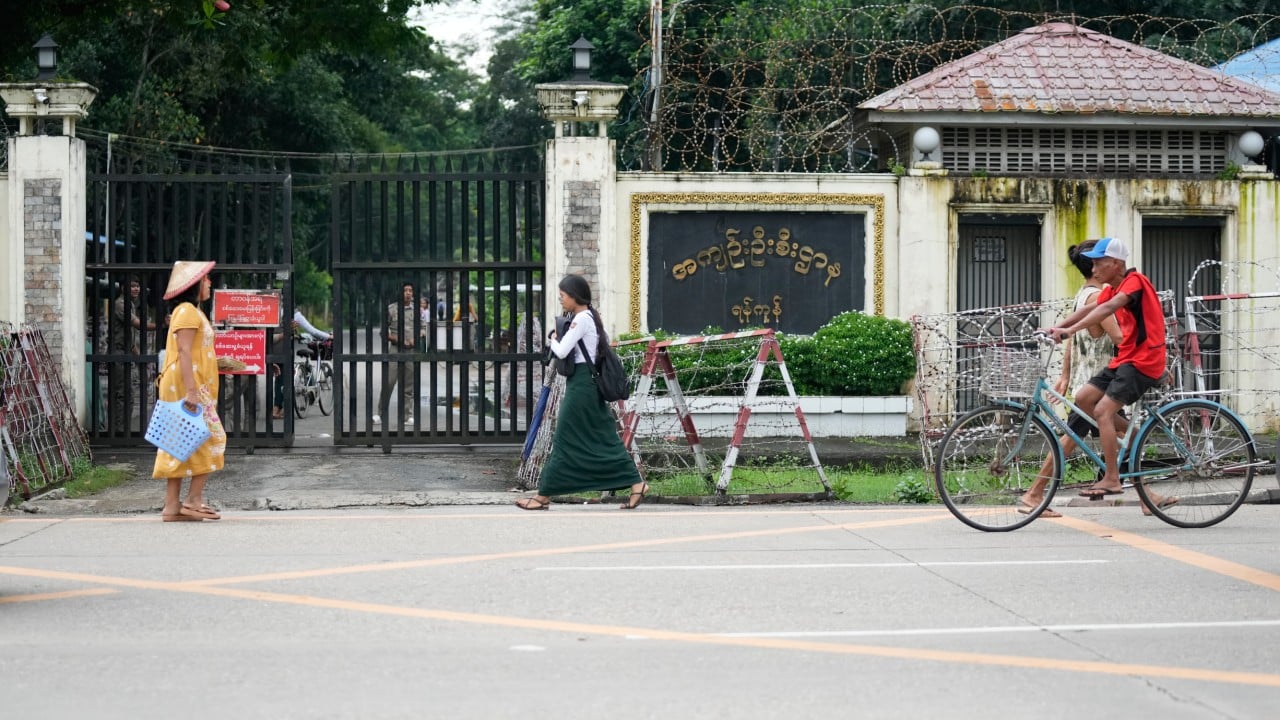
The iron gates of Insein Prison do not just lock away political dissidents; they seal off an archipelago of institutionalized brutality that has expanded exponentially since the February 2021 military coup. Behind the crumbling colonial-era walls and within the newer, clandestine interrogation centers scattered across Myanmar, a systematic campaign of gender-based violence and torture is operating with absolute impunity.
Human rights investigators, legal monitors, and escaped detainees paint a grim picture. Women make up a significant portion of the thousands detained since the generals ousted the civilian government. Far from being random acts of rogue guards, the abuse deployed against female political prisoners, activists, and ordinary citizens follows a calculated methodology designed to break morale, extract false confessions, and silence resistance across the nation. Meanwhile, you can find similar stories here: When Donald Trump Told CNN to Leave the Room at the UN.
The Architecture of Repression
Understanding how Myanmar's penal system transformed into a torture machine requires looking past the individual guards and examining the structural decay of the judiciary. Following the military takeover, the junta dismantled what little civilian oversight remained within the correctional apparatus. Military tribunals replaced standard courts, handing down decades-long sentences in secret trials without legal representation.
Prisons like Insein in Yangon, Obo in Mandalay, and dozens of provincial detention facilities became overcrowded overnight. Cells designed for single occupants now hold a dozen individuals. Ventilation is restricted, food is meager and often inedible, and medical access is virtually nonexistent. To understand the complete picture, check out the detailed analysis by BBC News.
Within this pressure cooker, women political prisoners face distinct vulnerabilities. Interrogators utilize physical and psychological tactics specifically tailored to target gender. Beatings with iron rods, sleep deprivation, and stress positions are routine. More insidiously, sexual violence—ranging from severe verbal harassment and forced strip searches to rape and electrocution of sensitive body parts—is deployed as an instrument of state terror.
Survivors who managed to flee the country or secure release through periodic amnesty decrees describe interrogation centers as spaces where rules cease to exist. The goal is simple: total psychological dismantling. Detainees are forced to watch the torture of fellow inmates, deny their political affiliations under duress, and sign pre-written confessions acknowledging crimes they never committed.
The Economic and Geopolitical Blind Spot
While international bodies issue periodic condemnations, the enforcement mechanism remains paralyzed. The State Administration Council, as the military junta styles itself, relies on a web of economic evasions to sustain its operations. Revenues from natural gas extraction, gemstone mining, and state-managed enterprises flow into foreign accounts, providing the hard currency necessary to purchase aviation fuel, surveillance technology, and military hardware from international suppliers.
Neighboring states and regional blocs like ASEAN have attempted diplomatic engagement, yielding minimal results. The junta views international pressure through a lens of existential survival, doubling down on internal repression rather than yielding to external demands. Consequently, documentation efforts led by local civil society groups and international NGOs serve as the primary lifeline for preserving accountability.
These investigative groups face immense risks. Operating underground inside Myanmar means risking immediate execution or long-term imprisonment if caught documenting abuses. Yet, networks of lawyers, former prisoners, and medical personnel continue to smuggle out witness testimonies, medical records, and photographic evidence.
The Long Tail of Impunity
The systematic abuse of women in Myanmar's prisons threatens to leave scars that will outlast the current military administration. Generations of activists are emerging from detention centers dealing with severe post-traumatic stress disorder, chronic physical disabilities, and social stigma. In a conservative society, women who survive sexual violence in custody often face marginalization, compounding the trauma inflicted by their captors.
Accountability mechanisms are grindingly slow. The International Criminal Court and the Independent Investigative Mechanism for Myanmar are building files for future prosecutions, but justice feels distant for those currently enduring the daily reality of the cells. The institutional culture of the military, which views dissent as treason and civilian populations as combatants, ensures that the torture chambers remain active.
The crisis inside Myanmar's penal system is not an internal administrative failure. It is the core operational strategy of a regime fighting to maintain control over a population that refuses to submit. As long as the financial networks supporting the junta remain intact and diplomatic leverage stays weak, the walls of Insein and Obo will continue to conceal the systematic dismantling of human rights.