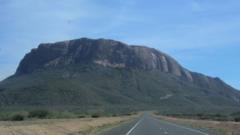
Seven people, including six tourists and a pilot, died when a Eurocopter EC130 B4 helicopter crashed at the base of Mount Ololokwe in Samburu County, Kenya. Operated by Lady Lori and registered as 5Y-GYM, the aircraft went down at approximately 9:13 a.m. local time while flying from the Loisaba wildlife conservancy toward Ewasonyiro. The tragedy has sent shockwaves through East Africa's tourism and aviation sectors, exposing the hidden vulnerabilities of flying through the country's remote northern circuit.
The Anatomy of a Remote Disaster
The flight path between Loisaba and Samburu's rugged interior demands absolute precision. Mountainous terrain, erratic local wind currents, and rapidly shifting weather patterns create a treacherous environment for low-altitude visual flight rules operations.
Mount Ololokwe, locally known as Ol Donyo Sabache, rises dramatically nearly 2,000 meters above sea level. Its sheer granite faces and massive plateau trap thermal updrafts that can catch pilots off guard within seconds. According to preliminary reports from the Kenya Civil Aviation Authority and local police statements, the aircraft encountered catastrophic trouble near Kirish before plummeting into the foothills and bursting into flames.
Rescue teams faced immediate logistical bottlenecks. The crash site is situated in a remote expanse of Samburu County, roughly 270 kilometers north of Nairobi. First responders, including the Kenya Red Cross and local security personnel, had to rely on drones and ground guides to navigate the difficult terrain just to reach the charred wreckage. By the time multi-agency teams secured the perimeter, the severity of the fire had left the aircraft gutted and victims unrecognizable.
The Logistics of Safari Aviation
Light aircraft and helicopters are the invisible infrastructure of high-end East African tourism. They zip affluent travelers between luxury lodges, private conservancies, and remote parks, shaving hours off grueling overland journeys across unpaved roads.
This convenience carries inherent systemic risks. Conservancies across Laikipia and Samburu often rely on remote, unpaved airstrips with minimal meteorological tracking equipment. Pilots frequently make operational decisions based on visual assessments rather than instrument-guided telemetry. When microclimates shift around monolithic landmarks like Mount Ololokwe, the margin for error shrinks to near zero.
Aviation safety experts note that while charter companies adhere to baseline maintenance schedules set by manufacturers, operating in corrosive dust environments, high temperatures, and high-altitude strips places immense strain on turbine engines and rotor dynamics.
Regulatory Scrutiny and Hard Questions
The Air Accident Investigation Department under the Ministry of Roads and Transport has taken charge of the inquiry. Investigators face immense pressure to reconstruct the final moments of flight 5Y-GYM.
This accident is not an isolated shock to the system. It follows a string of high-profile aviation incidents in Kenya over recent years, including a crash in western Kenya that claimed the lives of several individuals, including a sitting member of parliament. Each event prompts temporary rhetorical commitments to safety audits, yet structural gaps persist regarding independent oversight, mandatory weather reporting stations in remote conservancies, and pilot fatigue management.
Insurance premiums for regional charter operators are expected to spike immediately. More critically, international tour operators are already re-evaluating the safety protocols of internal air transfers. Travelers pay top dollar for exclusivity and convenience, assuming that bush aviation operates with commercial airline predictability. The harsh reality on the ground is far more precarious.
As black boxes are analyzed and wreckage fragments are mapped across the rocky soil of Samburu, the investigation must go beyond pilot error or mechanical failure. The broader aviation community must confront the systemic pressures placed on pilots navigating unforgiving landscapes under tight tourist itineraries.
The smoke has cleared from the foothills of Ololokwe, but the questions surrounding the safety of Kenya's bush skies remain entirely unanswered.