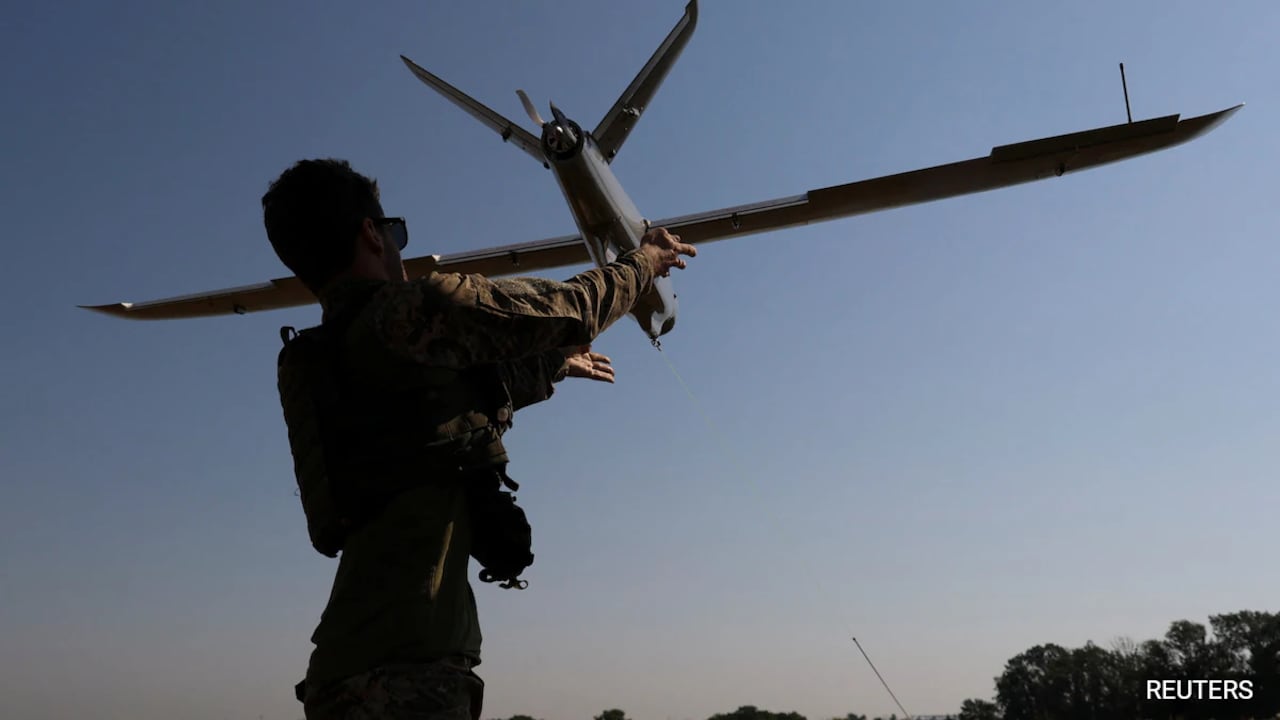
Modern military procurement moves at the speed of bureaucracy, while battlefield innovation moves at the speed of a software update. Recent military exercises and combat data from Eastern Europe have laid bare an uncomfortable reality for traditional defense contractors. Premium, multi-million-dollar weapon systems designed by major superpowers routinely struggle against inexpensive, commercial-off-the-shelf drone swarms.
This mismatch is not merely a budgetary failure. It represents a fundamental doctrinal miscalculation that has persisted for decades. Traditional defense paradigms assume that dominance belongs to the side with the heaviest armor, the highest altitude, and the most expensive radar. Yet, when low-cost uncrewed aerial systems equipped with modified consumer electronics encounter sophisticated electronic warfare suites, the expensive hardware often fails to adapt quickly enough.
Understanding why these high-end platforms falter requires looking past the glossy promotional brochures and examining the physics of modern electronic combat.
The Economics of Attrition
Military budgeting has long favored exquisite technology. A single surface-to-air missile designed to protect a high-value asset can cost upwards of a million dollars. When that missile is fired at a quadcopter built from hobbyist components costing less than a thousand dollars, the economic equation breaks down instantly.
Defenders run out of ammunition long before attackers run out of drones. This math defines modern attrition.
- High-end interceptors require extensive manufacturing supply chains with long lead times.
- Commercial quadcopters utilize readily available components found in consumer electronics stores worldwide.
- Scaling production of traditional missiles takes years, while drone manufacturing can pivot to decentralized workshops overnight.
Defense analysts have warned about this cost asymmetry for years. The recent exercises simply provided empirical validation on a scale that military leadership could no longer ignore. When a superpower loses a simulation or an engagement to cheap aerial targets, the root cause is rarely a lack of engineering talent. It is a failure of imagination regarding mass and cost.
Electronic Warfare Realities
The battlefield of Eastern Europe serves as an ongoing laboratory for electronic countermeasures. Both sides deploy heavy signal jamming to sever the link between pilots and their flying machines. Superpower defense systems are built to dominate the electromagnetic spectrum through raw power projection.
However, raw power creates a massive signature. Turning on a billion-dollar radar array is the electronic equivalent of turning on a floodlight in a dark room full of snipers.
Furthermore, autonomy is changing the rules. Drones that rely on continuous radio frequency links are vulnerable to localized signal disruption. To counter this, developers have integrated simple onboard optical guidance and machine vision. These systems allow uncrewed aircraft to identify and strike targets terminal-style, completely independent of GPS or remote control signals.
When expensive defense hardware encounters autonomous flight paths, traditional jamming methods lose their effectiveness. The radar cross-section of a small plastic frame is already minimal. Combine that low physical profile with frequency-hopping radios and autonomous navigation, and traditional tracking systems experience severe degradation in target acquisition.
Doctrinal Inertia
Institutions resist change until crisis forces their hand. Major military establishments are optimized for long-term programs of record. Designing, testing, and fielding a new armored vehicle or fighter jet takes decades. By the time the hardware arrives in the field, the threat environment has already evolved twice.
Small-unit innovators operate under a different philosophy. They test, fail, and iterate within weeks. If a specific radio frequency is jammed, operators flash new firmware onto their flight controllers by the next morning.
This speed disparity creates a structural vulnerability. Superpower militaries possess unmatched destructive capacity, but their operational tempo is sluggish. Against a nimble adversary utilizing commercial technology, heavy institutional weight becomes a liability.
To bridge this gap, military leaders are attempting to incorporate commercial startup culture into traditional acquisition pipelines. Progress remains slow. Bureaucratic hurdles, strict safety certifications, and risk-averse procurement officers frequently stifle rapid prototyping.
The Path Forward for Defense Architecture
Fixing these systemic issues requires abandoning the assumption that bigger and more expensive automatically equates to superior.
- Decentralized Protection: Heavy, centralized air defense batteries cannot be everywhere at once. Protection must be distributed down to the platoon level.
- Cost-Effective Interceptors: Fleets need kinetic or directed-energy options that cost hundreds of dollars, not millions, to neutralize low-tier threats.
- Software Agility: Hardware must be treated as a modular platform designed for continuous, rapid software updates performed by end-users in the field.
The recent wake-up call from military drills and active combat zones has forced a reluctant pivot across defense ministries globally. Recognizing the vulnerability is only the first step. Overhauling deeply entrenched procurement habits will take generations of sustained pressure.
The illusion of absolute technological supremacy has evaporated. What remains is a brutal, adaptive contest where survival belongs not to the heaviest superpower, but to the fastest learner.