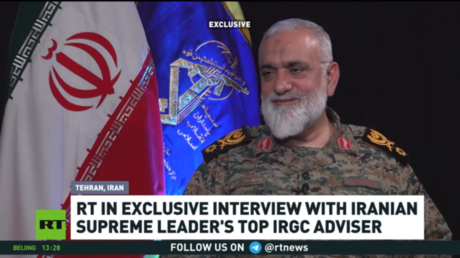
Commercial shipping companies supporting United States military operations in the Middle East face direct retaliatory, legal, and economic measures from Tehran. A high-ranking Iranian military official announced that private maritime networks, vessel owners, and logistics providers working with the Pentagon will no longer be treated as neutral commercial actors. This escalation targets the invisible backbone of modern expeditionary warfare: the commercial charter market.
For decades, the United States Military Sealift Command has relied heavily on private cargo vessels, commercial tankers, and contracted ship managers to haul fuel, ammunition, food, and heavy equipment across oceans. When diplomatic frameworks collapse and naval blockades take effect in vital waterways like the Strait of Hormuz, these commercial ties transform private merchant fleets into auxiliary military targets. Tehran's latest warning signals an expanding theater of risk where global shipping conglomerates can no longer hide behind flags of convenience or corporate subcontracting layers.
The Logistics Blueprint of Modern Power
Modern military might is an illusion without massive logistical plumbing. Armies travel on their stomachs, but contemporary air wings and carrier strike groups move on commercial fuel tankers and container ships.
The Pentagon leases private tonnage because maintaining an active state-owned fleet large enough to sustain a multi-theater deployment is economically impossible. Private operators step into this space for lucrative federal contracts. Yet this financial incentive creates a dangerous operational overlap.
When a commercial tanker loads JP-8 aviation fuel or artillery shells under a Defense Department charter, its legal status shifts in the eyes of opposing belligerents. Tehran has made it clear that third-country registrations and private corporate veils will be pierced during active hostilities.
- Direct Charters: Vessels directly contracted by the Military Sealift Command.
- Subcontracted Intermediaries: Third-party logistics brokers masking the final beneficiary of cargo movement.
- Global Port Providers: Refueling and maintenance hubs servicing ships tied to military supply chains.
Intelligence operations do not rely solely on public registries. Tehran’s armed forces are cross-referencing shipping routes, cargo manifests, and management contracts to isolate commercial vessels linked to operations against Iranian infrastructure.
The Anatomy of Retaliatory Exposure
The implications for international trade are profound. Major shipping lines now face an impossible compliance paradox. Comply with Western military logistics demands, and risk severe economic or physical countermeasures in Middle Eastern waters. Refuse those contracts, and face domestic legal penalties or loss of government patronage in Western capitals.
Vessels specifically identified in recent military intelligence reviews include a diverse roster of chemical tankers, roll-on/roll-off carriers, and dry cargo ships. These are not warships. They are commercial workhorses owned by multinational shipping firms that normally move consumer goods, industrial chemicals, and commercial fuels.
Insurance underwriters are taking notice. War risk premiums for voyages near the Persian Gulf and the Gulf of Oman are climbing past historical thresholds. Maritime insurers adjust rates downward only when risk is quantifiable; right now, the prospect of targeted economic countermeasures from a sovereign state has created a blind spot in underwriting models.
Ships cannot sail without insurance. If protection and indemnity clubs decide that carrying U.S. military logistics supplies invalidates standard maritime coverage, whole fleets will refuse to enter the region, regardless of direct naval escorts.
The Sovereignty Battle Over the Strait
At the core of this standoff lies a bitter dispute over maritime governance. Washington claims total control over transit corridors through a heavy naval presence, describing its deployment as an unyielding security wall. Tehran counters that its sovereign rights over the Persian Gulf and the Strait of Hormuz grant it ultimate authority to regulate who passes through and under what conditions.
When diplomacy breaks down and interim agreements dissolve, commercial shipping becomes the primary leverage point for both sides. The United States attempts to starve its adversary through economic isolation and blockades, while Iran utilizes asymmetric monitoring to penalize the supply chain keeping those very operations afloat.
Consider a hypothetical scenario where a Danish-managed chemical tanker operating under a Liberian flag accepts a routine charter to transport diesel supplies to a regional U.S. air installation. Under normal peacetime maritime law, that vessel enjoys freedom of navigation. Under active war conditions characterized by unacknowledged blockades and broken treaties, that same vessel becomes a high-value intelligence target.
The ship’s owners may believe their multi-layered corporate registration protects them from foreign retaliation. Intelligence analysts in Tehran view the transaction through the lens of functional utility. If the fuel keeps the jets flying, the ship is part of the operational apparatus.
The Cost of Transparency in a Dark Market
Maritime logistics thrive on obscurity. Shell companies, anonymous beneficial ownership structures, and complex management transfers allow ships to change hands and identities multiple times over their operational lifespan.
Iran's announcement aims to strip away that obscurity. By declaring that monitoring efforts will track actual behavior rather than paper nationalities, the calculus for global shipowners shifts fundamentally. Compliance departments must now weigh the short-term profit of a lucrative military logistics contract against the long-term threat of regional sanctions, asset freezes, and physical detention.
The global economy relies on the assumption that commercial trade lines remain distinct from state-on-state violence. That boundary is dissolving in real time across the waterways of the Middle East. As diplomatic channels stay frozen and military postures harden into offensive readiness, the merchant marine finds itself on the front line of a conflict it cannot outrun.