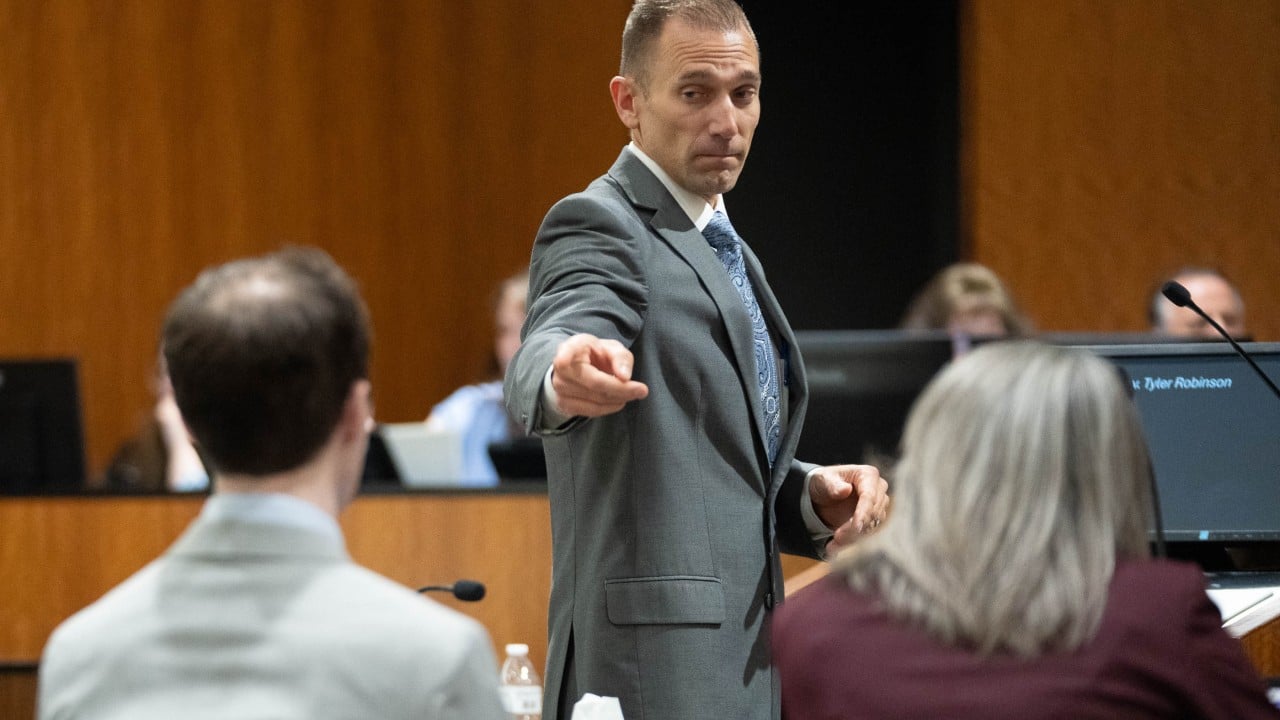
Tyler Robinson will stand trial for the assassination of conservative activist Charlie Kirk, facing a potential death sentence after a Utah judge ruled that prosecutors established sufficient probable cause.
Fourth Judicial District Judge Tony Graf delivered the decision in Provo, pushing the high-stakes capital case one step closer to a courtroom showdown nearly a year after Kirk was gunned down on the campus of Utah Valley University. The proceedings have exposed deep fractures over how extreme political polarization intersects with capital punishment statutes. The upcoming courtroom battle will test the boundaries of Utah's legal definitions for aggravated murder, DNA forensics, and the mechanics of charging hate-motivated crimes in an era of heightened ideological hostility.
The Weight of Probable Cause
The threshold for binding a case over to trial is intentionally low, yet the defense fought tooth and nail to prevent it. Prosecutors presented what they described as an overwhelming mountain of physical and digital evidence. This dossier includes DNA profiles recovered from the trigger of the firearm found on a nearby rooftop, along with incriminating text messages sent to Robinson's former romantic partner, Lance Twiggs.
Judge Graf noted that the evidence, when viewed in the light most favorable to the state, clearly supports a reasonable belief that Robinson pulled the trigger.
Yet the core argument in the courtroom did not center purely on identity. The defense focused heavily on dismantling the aggravating factors that elevate a standard second-degree murder charge into a capital offense. Under Utah law, a murder becomes capital aggravated murder only if specific statutory criteria are met. The state chose to anchor its death penalty bid on the claim that the shooter knowingly created a severe risk of death to individuals other than the intended target.
Dissecting the Aggravating Factor
The legal sparring over collateral risk revealed the technical intricacies of capital defense strategy. Defense attorneys pointed out the precise geometry of the assassination. Kirk was positioned on an elevated stage during an outdoor or campus event when a single shot rang out from more than 400 feet away.
One bullet. One victim. No other physical injuries reported at the scene.
The defense argued that claiming the shooter endangered the crowd is an artificial stretch of the statute, designed purely to secure a death sentence in a politically charged environment. Prior case law requires proof of a high probability of collateral harm, not just a theoretical possibility.
Prosecutors countered by emphasizing the sheer volatility of firing a high-powered rifle from a rooftop into a populated university zone. Missing the target by a fraction of a degree could have easily resulted in mass casualties. Judge Graf ultimately sided with the state for the purposes of the preliminary hearing, ruling that the proximity of bystanders and the chaotic nature of the environment support a reasonable inference of generalized danger.
The Motive Matrix
Beyond the physical mechanics of the shooting, the state has signaled its intent to pursue sentencing enhancements based on ideological animus. Investigators allege that Robinson targeted Kirk explicitly because of his prominent conservative platform and vocal opposition to transgender rights and same-sex marriage. Text messages recovered during the investigation show the accused expressing deep frustration with Kirk's rhetoric, stating that he had heard enough of the public figure's perceived hatred.
The defense has pushed back against this narrative, arguing that political disagreement does not automatically equate to a premeditated hate crime and that prosecutors are building a speculative framework around private communications.
Proving political motivation beyond a reasonable doubt adds an extra layer of complexity to an already combustible trial. Juries rarely encounter cases where ideological polarization forms the core narrative of a homicide prosecution.
The Reality of Capital Punishment in Utah
The decision to seek the death penalty places this proceeding into a rare category for the state of Utah. Capital punishment remains legally authorized, but executions have been historically sparse. The state carried out its first execution in over a decade when Taberon Honie was put to death in 2024, ending a fourteen-year hiatus. Juries in the modern era have sentenced 26 individuals to death, but none have handed down a new capital sentence since 2008.
Pursuing a death sentence requires navigating years of rigorous pre-trial motions, exhaustive juror vetting, and stringent constitutional scrutiny. Even if a conviction is secured, a capital verdict demands unanimous agreement from all twelve jurors, setting a high bar in a case that has already polarized public opinion.
Robinson pleaded not guilty to all seven counts, which include aggravated murder, firearms violations, obstruction of justice, and committing a violent offense in the presence of a child. As the legal teams prepare for motions that could stretch deep into the year, the fundamental questions of evidence reliability, collateral risk, and political motive will define the road to the courtroom.