Thirty-two years after the spring of 1994 turned the hills of Rwanda into killing fields, the long arm of international justice has reached into an ordinary North London suburb. Dr. Vincent Brown, formerly known as Vincent Bajinya, stands accused in a British courtroom of orchestrating cold-blooded murders during the hundred-day genocide that claimed over 800,000 lives. For more than two decades, Brown lived quietly in Islington, working with refugee charities and advising government task forces. Now, he faces historic charges brought by the Crown Prosecution Service, transforming a suburban existence into the epicenter of a landmark legal reckoning.
The Illusion of Procedural Routine
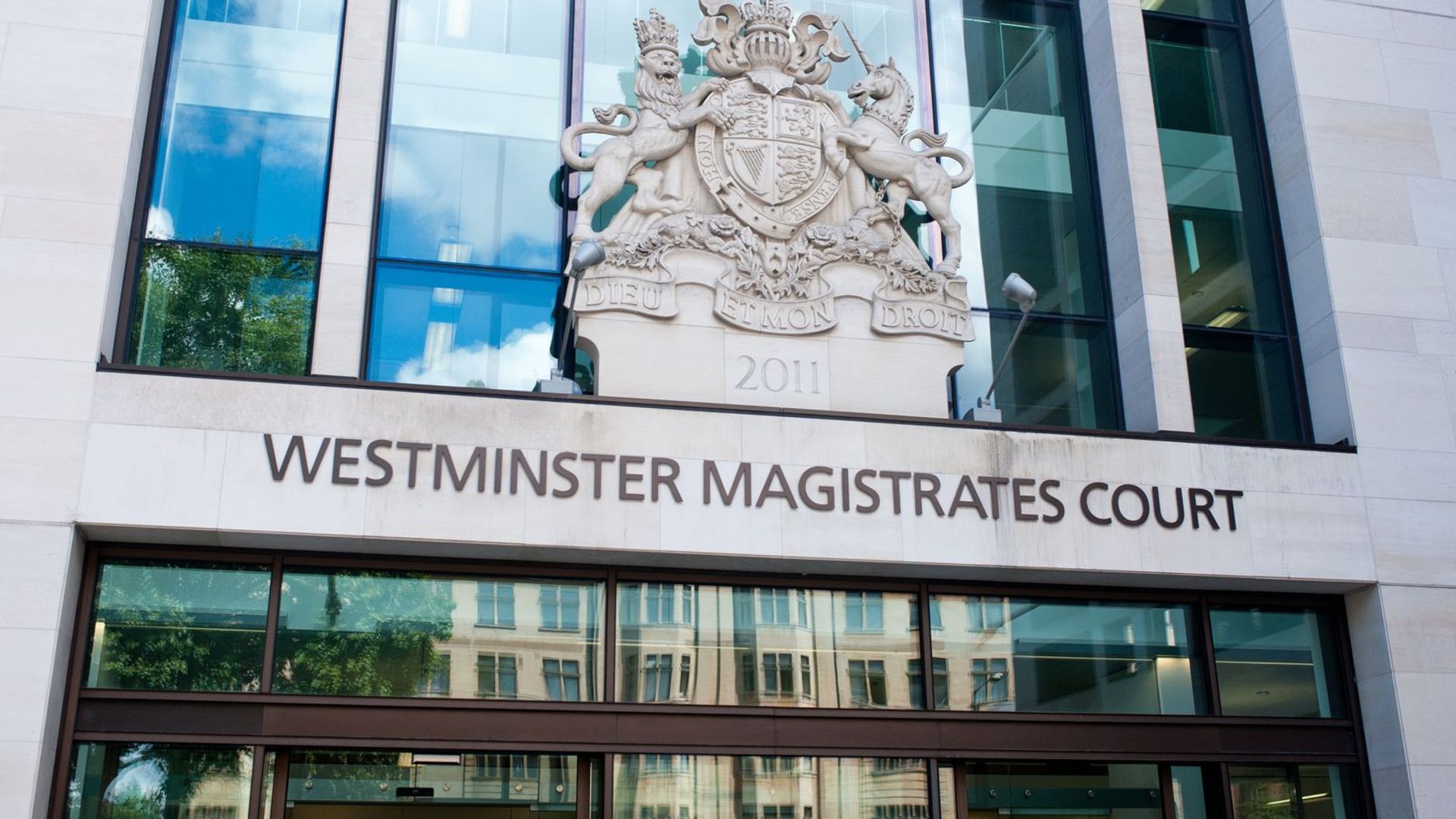
The initial reports from the magistrate's bench captured only the procedural surface of a much deeper institutional friction. Prosecutors alleged that Brown served as a supervisor of killings during the first week of the violence in Kigali. Yet that framing obscures the grueling, decade-spanning administrative and investigative war that preceded his arrest. This case is not merely about an aging doctor entering a plea or securing bail. It represents the painful collision between Britain's historical reluctance to prosecute foreign atrocities on home soil and an aggressive, methodical campaign by war crimes investigators determined to dismantle safe havens for international fugitives. Building on this theme, you can find more in: Why Opening the Strait of Hormuz is a Trap Iran Cannot Afford to Spring.
To understand why this prosecution matters, one must look backward to the diplomatic deadlock of 2007. Back then, a British court blocked the extradition of Brown and three other men to Rwanda, ruling that local judicial standards at the time could not guarantee them a fair trial. That extradition refusal created an impasse. For years, critics argued that Britain had effectively become a comfortable sanctuary for individuals suspected of participating in mass atrocities. Extradition was off the table. Domestic prosecution was legally daunting, logistically expensive, and politically ignored.
Unraveling a Seven-Year Police Inquiry
The turning point came quietly in September 2019, when the Rwandan government formally requested that the Metropolitan Police investigate the suspects. That request triggered a seven-year operation conducted by the Met's War Crimes Team. Investigators had to scour archives, re-examine witness testimonies from survivors scattered across multiple continents, and navigate complex statutory requirements under British legislation designed to handle international crimes committed overseas. Piecing together a case over thirty years old is an exercise in archaeological forensics. Memories erode. Documents vanish. Witnesses pass away. Building a viable case requires an extraordinary accumulation of corroborating evidence that can withstand the rigorous scrutiny of an English criminal court. Observers at The New York Times have provided expertise on this trend.
The Forensic Hurdles of Decades-Old Atrocities
The specific charges brought against Brown illuminate the micro-level mechanics of mass violence. Prosecutors did not merely accuse him of holding abstract extremist views. They tied him directly to six specific murders carried out over four days of terror in the Rugenge district of Kigali. Among the named victims are Dominique Mukurarinda, Immaculee Mukankusi, Gerase Rurangirwa, Charlotte Kamaguja, her infant son Olivier Tuyishime, and taxi driver Leandre Mbogoye. These names matter. They strip away the numbing abstraction of genocide statistics and expose the raw intimacy of targeted assassinations.
According to the Crown Prosecution Service, Brown allegedly directed and incited others to carry out these killings. The accusation against a trained medical professional—someone whose professional oath explicitly demanded the preservation of human life—adds a bitter layer of betrayal to the narrative. In many instances across Rwanda during those hundred days, community leaders, intellectuals, and medical practitioners did not merely fail to protect their neighbors; they weaponized their social standing to organize, target, and eliminate political opponents and members of the Tutsi minority.
The Defense Strategy and the Old Bailey Battle
Defense attorneys have pushed back hard against the prosecution's framing. During court appearances, legal representatives stressed that Brown completely denies any involvement in the genocide. They pointed out that he left Kigali in mid-April 1994, arguing that his professional duties and subsequent departure have been misconstrued by political opponents and biased witness accounts. For the defense, the trial is an overdue chance to characterize the accusations as flawed historical assumptions and to prove his innocence before an impartial jury at the Old Bailey.
This courtroom clash in London does not exist in a vacuum. It is part of a broader European judicial shift. Over the past two decades, national courts in countries such as France, Belgium, Germany, Sweden, the Netherlands, Finland, Norway, and Switzerland have quietly opened more than a hundred cases against individuals suspected of taking part in the Rwandan genocide. France notably convicted figures like former physician Eugène Rwamucyo, sentencing him to prison after lengthy legal battles. Canada also utilized its Crimes Against Humanity and War Crimes Act to prosecute suspects. Britain's entry into this transnational prosecutorial network signals that European capitals are finally shedding their historical hesitation regarding extraterritorial war crimes.
The Structural Limits of Universal Jurisdiction
Yet, relying on universal jurisdiction to try crimes committed decades ago exposes deep structural weaknesses in modern legal systems. Trials of this magnitude consume millions of pounds in public funds and tie up judicial resources for years. They force judges and juries to weigh events filtered through linguistic barriers, translation discrepancies, and decades of political propaganda. Furthermore, survivors often experience secondary trauma as they are dragged back through agonizing recollections in foreign courtrooms thousands of miles away from the soil where their families perished.
There is also the stark reality of selective justice. While European courts investigate a handful of high-profile residents who managed to slip through immigration controls decades ago, countless other perpetrators enjoy total impunity across the globe. The bureaucratic inertia required to launch a seven-year police investigation means that only a microscopic fraction of suspects living abroad will ever face a dock in London, Paris, or Brussels. For every high-stakes trial making international headlines, dozens of other alleged war criminals live out their natural lives undisturbed.
For the survivors and families of those murdered in Kigali, the trial of Dr. Vincent Brown carries immense emotional and symbolic weight. It offers a tangible counterweight to the decades of frustration caused by failed extradition bids and administrative delays. It signals that borders do not grant permanent immunity for crimes against humanity. Whether the prosecution can legally substantiate its claims beyond a reasonable doubt remains to be tested in the crucible of a British courtroom. But the mere fact that the trial is happening marks a watershed moment in how Western democracies handle the ghosts of twentieth-century mass violence.
The courtroom doors at the Old Bailey will swing open, witness testimonies will be dissected line by line, and defense lawyers will challenge every fragment of paper submitted by the Crown. Whatever the ultimate verdict, the proceedings have already shattered the quiet anonymity that defined two decades of suburban life in North London. History has a long memory, and the hills of Kigali continue to cast their shadow across the globe.