Moonshot AI’s co-branded credit card with Agricultural Bank of China and American Express turns everyday retail swipes into Kimi AI computing quotas, but strict spend hurdles, rolling rate caps, and recurring capacity shortages expose a fragile economic bargain.
Watch enough consumer tech launches and the pattern becomes almost comical. A model lab builds something clever, slaps a flashy label on it, and suddenly every financial desk is asking whether plastic can solve an inference margin problem. When Moonshot AI teamed up with Agricultural Bank of China and American Express to market what it calls an AI-native credit card, the pitch sounded irresistible on paper: buy groceries, book flights, swipe at dinner, and convert your routine spending into Kimi computing access.
Do not mistake clever co-branding for a solved business model. Anyone who has spent two decades tracking both consumer banking rewards and cloud infrastructure economics knows that free or loyalty-subsidized compute is a trap if the underlying inference engine chokes every time heavy users show up. And Kimi has been choking a lot lately.
How Plastic Turns Into Token Quotas
On the surface, the Kimi AI credit card looks like a natural evolution of airline miles and hotel points. Instead of accumulating points toward a coach seat or a mid-tier business hotel, cardholders earn access to AI tools—including agent workflows, coding assistance, and tiered subscription perks—by meeting spending thresholds.
In practice, the mechanics are far more conditional than glossy launch copy implies. Take the platinum tier reported in market coverage, where a cardholder must spend at least 5,888 yuan—roughly $830—in a month just to unlock two months of Kimi Pro, a plan that ordinarily lists at 199 yuan per month. That math tells you something critical right away. If you are already a serious Kimi power user, spending nearly six thousand yuan on plastic to get roughly 398 yuan worth of subscription value is a roundabout, high-friction way to pay for software. If you are an ordinary shopper who rarely touches an AI coding agent or multi-step research workflow, the card might nudge you into trying Kimi, yet your actual compute consumption may never justify the bank’s rewards liability.
To understand why the quota rules feel so tight once you start using the product, you have to look at how Kimi meters work under the hood. Kimi membership features—ranging from Agent workflows, Deep Research, Kimi Work, and Kimi Claw to Kimi Code—draw from a shared monthly credit pool calculated against actual token usage. Longer inputs, verbose outputs, large context windows, and multi-step tool calls eat through that pool much faster than casual single-turn chat prompts.
On top of the monthly allowance, Kimi enforces rate windows. Under the updated membership structure, new plans remove the separate weekly coding cap while keeping a rolling 5-hour usage window, whereas legacy plans retain both rolling 5-hour limits and 7-day resets. Unused monthly quota does not roll over; it vanishes at the end of the billing cycle.
A credit card rewards program can manufacture trial attention overnight, yet it cannot repeal GPU memory bandwidth, context-window latency, or inference cost per million tokens.
Why Computing Quotas Keep Colliding With Reality
A rewards card only works if the reward is reliably deliverable. Over the second half of 2026, Moonshot AI’s biggest headache has not been marketing reach; it has been keeping Kimi’s compute quotas from buckling under real-world demand.
In July 2026, shortly after introducing Kimi K3, capacity pressure forced the company to temporarily pause new consumer subscriptions as demand outran available compute. Then, on October 24, 2026, Moonshot AI rolled out Kimi K3.1 Pro—a massive 2.8-trillion-parameter release with a 1-million-token context window and API pricing set at $2 per million input tokens and $10 per million output tokens ($0.20 for cached input tokens). Within two days, users hit rate limits and complained that their quotas were evaporating at alarming speed.
Moonshot AI did not dodge the blame. It issued an apology, credited active subscribers across tiers with 25% of their monthly quota—roughly a week’s worth of allowance—and adjusted system behavior to cut back on unnecessary sub-agent spawns and bloated output lengths. Still, that apology marked Kimi’s third public mea culpa over usage quota friction in six months.
| Quota & Billing Layer | How It Works for Kimi Users | Where Friction Shows Up |
|---|---|---|
| Card Spend Unlock | Retail spending on the co-branded card unlocks Kimi membership benefits or compute perks. | High monthly spend hurdles (such as 5,888 yuan on platinum) make it inefficient for light users. |
| Monthly Shared Pool | Agent, Deep Research, Kimi Work, and Kimi Code share a token-based monthly pool that resets without rollover. | Heavy agent chains and large context windows burn allowance quickly; unused credits expire. |
| Rolling 5-Hour Window | Caps burst usage over a sliding five-hour span (legacy plans also carry a 7-day cycle). | Heavy coding or research sprints trigger rate limits even before the monthly pool hits zero. |
| Extra Usage Wallet | Prepaid top-up balance (minimum 25 yuan, up to 10,000 yuan cap) acts as a fallback after quotas run out. | Non-refundable balance; requires active subscription to top up after a lapse. |
That sequence reveals an engineering truth that casual observers miss. Modern agentic systems are token multipliers. When a user asks an AI assistant to research a topic, inspect files, run code, and draft a report, the model does not merely answer once; it plans, calls tools, spawns sub-agents, and re-reads long context blocks. Each extra reasoning step adds tokens on both input and output. If a model’s default behavior spawns sub-agents aggressively or rambles through long responses, a generous-sounding quota can feel like a pinhole leak in a bucket.
What Banks and AI Labs Actually Gain
Banks have been trying to invent the "next" credit card perk for decades. Airline miles built loyalty in an era when flights felt aspirational. Cash back won over pragmatic consumers. Co-branded AI compute is an attempt to plant a flag in front of younger, tech-literate borrowers who spend hours every week inside code editors, browsers, and productivity assistants.
For Agricultural Bank of China and American Express, the strategic play is clear: differentiation and card engagement in a crowded payments market. Issuing a differentiated card is cheap compared to building a frontier model. Even if only a fraction of cardholders actively redeem or chase the AI perks, the association positions the card issuers alongside high-momentum technology.
For Moonshot AI, the incentives are trickier. A credit card partnership expands top-of-funnel awareness beyond developers and AI hobbyists. It puts Kimi inside everyday consumer routines—the exact place where a standalone software subscription often struggles to hold attention month after month. At the same time, Moonshot AI has been pushing aggressively on multiple fronts: open-weighting models like Kimi K3, slashing API prices on K3.1 Pro compared to K3, and preparing capital-markets moves while competing against deep-pocketed domestic and global rivals.
Bundling compute into credit card rewards creates a subtle tension. Direct subscription revenue and prepaid top-ups—such as Kimi’s Extra Usage wallet, which lets subscribers top up starting at 25 yuan (up to 3,000 yuan per day and a 10,000 yuan cap) once subscription quotas or rate windows are hit—tie revenue directly to compute consumption. Rewards-driven access, by contrast, introduces a middleman: card swipe volume. Interchange fees and bank marketing budgets do not scale neatly with a user running a 1-million-token context prompt at 2 a.m.
The Hidden Traps in Quota Fine Print
Read the fine print on almost any AI billing system and you will find rules designed to protect the provider’s servers rather than maximize user convenience. Kimi is no exception.
First, expiry and priority rules matter. Subscription allowances refresh on a cycle and do not roll over. When Extra Usage credits are enabled, time-limited quotas and promotional credits are generally drawn down first, with non-expiring top-up balance acting as the fallback—and if you let your membership lapse, you can still spend existing Extra Usage balance, though you cannot top up again until you re-subscribe.
Second, rate limits are not the same thing as total allowance. A user can still have plenty of monthly quota left and still hit a rolling 5-hour wall because they fired off too many heavy requests in a short burst. Extra Usage can let paid members keep moving past subscription limits or rate caps, provided they watch their monthly spending cap and accept that top-ups are generally non-refundable.
Third, fairness and transparency remain moving targets. Giving users back 25% of their monthly quota after a launch-week metering glitch is a decent goodwill gesture. It is still a band-aid. Developers and analysts building real workflows around a model need predictable throughput and clear token accounting, not surprise throttles followed by retroactive quota top-ups.
A Hypothetical Test of Real-World Value
Consider a hypothetical example to see how the numbers play out in practice. Suppose a software engineer in Shanghai—let’s call him Chen—already pays out of pocket for a Kimi subscription to assist with coding in Kimi Code and running document checks. Chen spends roughly 6,000 yuan a month on normal living expenses: groceries, transit, dining, and online orders.
If Chen switches those routine expenses to the co-branded card to earn Kimi membership benefits, he gets two obvious outcomes and one hidden catch. On the plus side, his normal spending now contributes toward his AI access instead of sitting idle on a generic card. On the minus side, a credit card does not expand the laws of physics inside a data center. If K3.1 Pro hits rate limits during a busy release week, or if a complex agent task consumes tokens faster than Chen expected, having a card perk in his wallet will not stop a rate-limit wall from slowing down his afternoon sprint. Worse, if Chen’s monthly spending dips below the threshold in a quieter month, the rewards calculus shifts overnight.
That is the real takeaway for consumers, banks, and AI startups alike. Turning spending into computing quotas is a clever marketing hook, not a magic wand against compute scarcity. Anyone considering the card should do the exact reverse of what the brochure suggests: price out their real monthly token and coding habits first, compare that against direct subscription or API costs, and treat any card-linked compute perk as a modest bonus rather than a primary supply line.
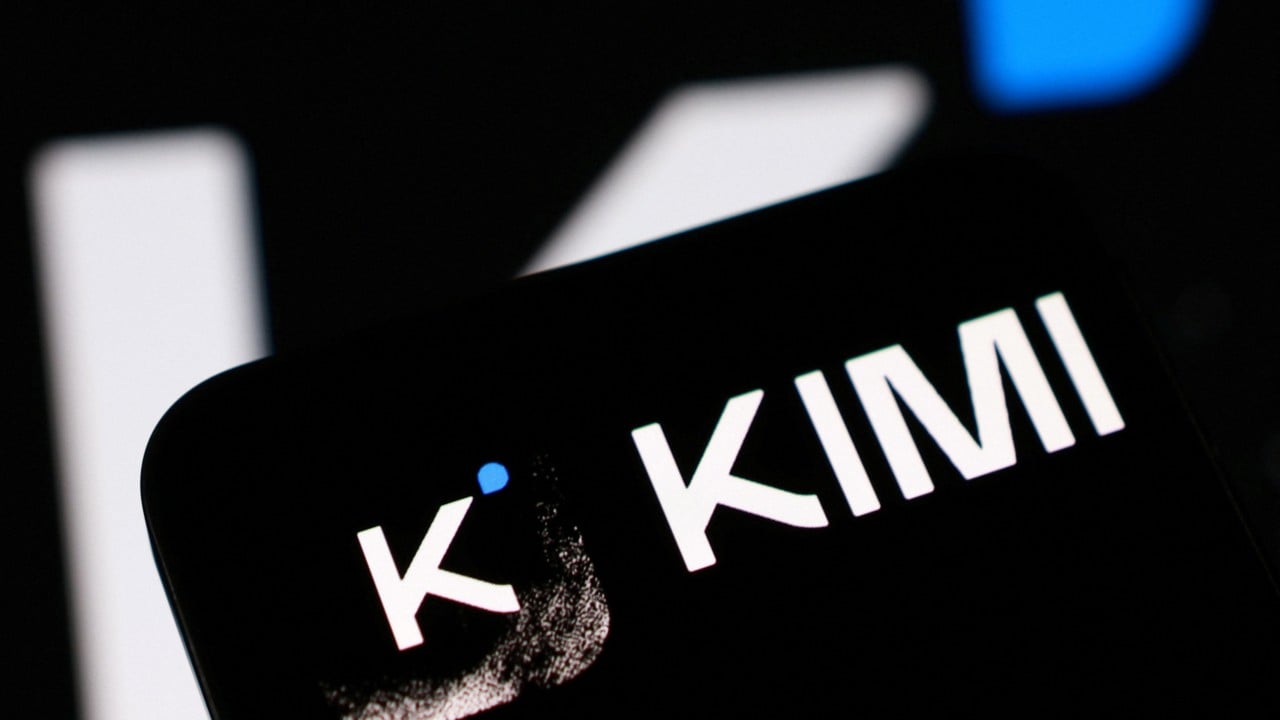
Kimi’s AI credit card turns spending into computing quotas – with limits provides a concise visual overview of Moonshot AI’s co-branded card announcement with Agricultural Bank of China and American Express and how spending ties to AI computing benefits.