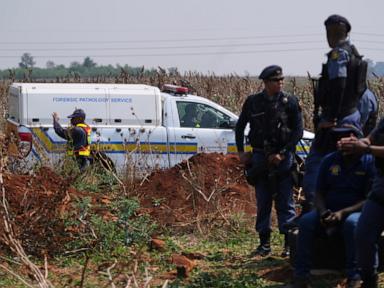
Nine bodies. Nine women. All discovered within a tight forty-minute radius on the outskirts of Johannesburg, specifically winding through the industrial and residential sprawl of Kempton Park and Ekurhuleni, over a span of just two months. When the police finally moved to arrest three suspects—two women and one man—over the murder of the ninth victim, Jabulile Ntimba, public outcry flared. Official briefings pointed toward a domestic dispute, hinting at a toxic relationship or a localized love triangle.
That explanation offers neat closure. It treats a cluster of violent deaths as isolated domestic tragedies. But seasoned investigative analysis of the region tells a starkly different story. It exposes a systemic failure in public safety that policy makers have ignored for decades.
The Anatomy of an Investigation Flaw
South Africa records an average of more than sixty murders a day. It holds one of the highest per-capita homicide rates globally, a grim statistic that tends to normalize catastrophic loss of life. When bodies pile up in semi-abandoned lots, tall grass, or industrial peripheries near major transport hubs like O.R. Tambo International Airport, the immediate institutional reflex is compartmentalization. Investigators look for local motives, immediate suspects, and rapid courtroom appearances.
The arrest of three individuals for Ntimba's murder satisfies the urgent need for a headline. It creates the impression of a functional criminal justice response. Yet treating these nine deaths as separate events linked merely by geography ignores the structural vulnerability of women in the area.
When systemic gender-based violence is endemic, the line between a serial predator and localized interpersonal violence blurs dangerously. Law enforcement agencies often lack the advanced forensic integration required to connect disparate crime scenes swiftly. DNA backlogs, underfunded precinct-level detectives, and fragmented database sharing mean that serial offenders operate in plain sight for months.
Beyond the Love Triangle Narrative
The rapid descent into relationship-based explanations for multiple murders in a single neighborhood deserves deep skepticism. Domestic disputes do not spontaneously cluster into a string of nine bodies discarded in the same municipal corridor over eight weeks. Even if individual altercations motivated specific attacks, the broader environmental vulnerability that allowed a killer or killers to repeatedly dump bodies without immediate interception points to a total collapse of basic municipal policing.
Consider the physical terrain. These discovery sites are not remote wilderness; they sit within populated municipal zones characterized by broken street lighting, overgrown brush, neglected public spaces, and minimal police visibility. Civil rights audits repeatedly show that municipal neglect acts as an accomplice to violent crime. When infrastructure fails, safety vanishes.
A hypothetical city planner mapping the recovery sites would find a clear pattern of spatial abandonment. Dark corridors, unmonitored intersections, and poor public transport security corridors create natural zones of impunity.
The Cost of Reactive Policing
Public safety officials routinely issue strong condemnations after a cluster of bodies emerges, promising heightened attention and resource deployment. These promises miss the structural reality. Reactive policing is fundamentally incapable of stopping crimes born of systemic socioeconomic decay and institutional weakness.
When the state treats gender-based violence as a crisis only after a specific threshold of media outrage is crossed, it guarantees future tragedies. Arresting three suspects for one murder does not dismantle the underlying mechanics that permitted nine women to be targeted, killed, and discarded within walking distance of each other.
The court cases will proceed. Defense lawyers will parse the validity of the DNA evidence, the reliability of witness testimony, and the precise timeline of the domestic dispute alleged by the prosecution. But the deeper investigation—the one examining why local patrols missed a pattern of bodies accumulating in broad daylight—remains unwritten.
Justice in this context requires more than a pair of handcuffs and a magistrate's hearing. It demands an honest accounting of why the state leaves its most vulnerable citizens exposed to predators who know that finding an isolated patch of ground near the airport takes less than five minutes.
Two women arrested for one of nine murders that have gripped South Africa
This video provides on-the-ground news coverage regarding the series of murders in South Africa and the initial arrests that gripped the nation.