The rhetoric echoing from Washington regarding Iran’s heavily fortified subterranean infrastructure relies on a fundamental misunderstanding of structural geology and modern ordnance physics. When political figures suggest that a complex buried nearly one hundred meters beneath solid bedrock can be neatly neutralized with a few well-placed munitions, they are ignoring decades of engineering data. Known locally as Kuh-e Kolang Gaz La and universally tracked by analysts as Pickaxe Mountain, this site sits adjacent to the primary enrichment complex at Natanz. It was conceived not as a temporary shelter, but as a direct response to past sabotage operations. Understanding why this mountain has become the focal point of geopolitical friction requires stripping away the political bluster and examining the harsh engineering realities of deep-target destruction.
The origin of Pickaxe Mountain traces directly back to July 2020, when a mysterious explosion tore through an advanced centrifuge assembly workshop at Natanz. Recognizing that surface-level and shallow-depth structures were acutely vulnerable to kinetic sabotage, cyber interference, and aerial bombardment, Iranian authorities made a strategic pivot. They drove deep into the Zagros mountain range. By tunneling hundreds of feet beneath the summit, Tehran sought to establish a redundant, highly protected ecosystem for centrifuge manufacturing and potential uranium enrichment. Satellite intelligence gathered over subsequent years revealed massive earth-moving operations, reinforced tunnel portals layered with thick composite shields of concrete and steel, and a sprawling multi-layered security perimeter.
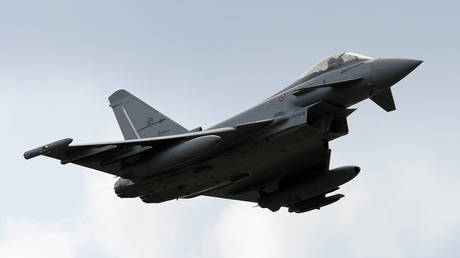
Yet, public assertions that the United States military can effortlessly obliterate this underground labyrinth overlook the severe physical limitations of bunker-busting technology. The primary tool designated for such missions is the GBU-57 Massive Ordnance Penetrator (MOP), a thirty-thousand-pound guided bomb designed to burrow through earth and reinforced concrete before detonating. While the MOP performs exceptionally well against standard military bunkers, its operational limits against dense mountain granite are a subject of intense debate among defense analysts. Figures predicting penetration depths through soil or standard aggregate tell us very little about how a multi-ton kinetic weapon behaves when striking folded, highly compressed mountain rock at supersonic speeds.
Furthermore, intelligence agencies acknowledge a glaring deficiency regarding the interior of Pickaxe Mountain: international inspectors have never been permitted inside. While commercial satellite imagery tracks the external reinforcement of tunnel entrances and the constant movement of construction vehicles, it cannot peer through solid bedrock. Analysts can infer that the facility is designed to house sensitive machinery, but verifying whether active uranium enrichment or centrifuge rotor assembly is actually occurring deep underground remains nearly impossible. This creates a severe strategic dilemma for any administration contemplating a preemptive strike.
If American bombers were to target the site, the immediate result would likely be the catastrophic collapse of the reinforced tunnel portals. Entrance shafts would be choked with thousands of tons of shattered rock and twisted metal, temporarily cutting off access and delaying external operations. But collapsing an entrance is fundamentally different from vaporizing the deep underground halls themselves. Equipment and personnel stationed deep within the primary chambers could survive the seismic shockwaves entirely intact.
This dynamic sets up a dangerous verification trap. A political administration could authorize a massive aerial campaign, point to satellite photos of smoking, caved-in portals, and declare a decisive victory. They could frame the strike as the definitive neutralization of Iran's nuclear aspirations, utilizing the narrative to wind down military postures or appease domestic constituencies. Yet, months later, intelligence blind spots would persist. Without boots on the ground or international inspectors combing the subterranean tunnels—an outcome no military strike can secure—outsiders would have no way of knowing whether the core capabilities merely survived deeper inside the mountain.
The broader strategic calculus also reveals the limits of isolated military actions. Even a flawless tactical execution against Pickaxe Mountain does nothing to resolve the ongoing maritime security crises in the region, nor does it permanently alter the technical knowledge held by Iranian nuclear physicists. Once a bunker-busting campaign concludes, the adversary retains agency. Retaliatory asymmetries, regional proxy conflicts, and the perpetual cycle of reconstruction mean that a single strike cannot achieve a permanent geopolitical reset.
The fixation on Pickaxe Mountain reflects a desire for simple, cinematic solutions to deeply entrenched security challenges. Leaders look to satellite feeds and heavy ordnance as tools to neatly sever complex international knots. But physics imposes hard boundaries on what brute force can achieve beneath a hundred meters of solid stone, leaving policy makers trapped between the desire for a clean exit narrative and the stubborn, opaque reality of modern underground fortification.