The U.S. Army has indefinitely suspended planned open-air detonations of bomb-making chemicals at the Iowa Army Ammunition Plant near Middletown, halting a disposal operation that drew intense pushback from local residents, environmental advocates, and state regulators. The pause freezes the destruction of legacy energetic materials and hazardous chemical stockpiles while defense officials review alternative disposal methods, updated environmental permits, and community health concerns.
That official announcement sounds routine on paper. It is anything but. For decades, the sprawling facility in Des Moines County has served as a critical node in the American defense industrial base, loading, assembling, and packing conventional munitions from World War II through modern conflicts. Yet the very chemistry that makes high explosives reliable on the battlefield turns them into an environmental and logistical nightmare once they expire, degrade, or become obsolete. Meanwhile, you can read similar stories here: The Iron River Flowing South and the Shadows Moving North.
When munitions reach the end of their shelf life, they cannot simply be tossed into a landfill or poured down an industrial drain. They are unstable, shock-sensitive, and chemically volatile. Historically, the military's default answer to that problem has been straightforward: take the material to a designated range, pile it up, and blow it up or burn it in the open air.
The Mechanics of Open Burning and Open Detonation
To understand why the Iowa suspension matters, you have to understand the method the Pentagon relies on most heavily. In defense and regulatory circles, it is known as Open Burning and Open Detonation, or OB/OD. To see the full picture, we recommend the recent report by The Guardian.
The process is exactly what the name implies. Technicians place waste explosives, propellants, and contaminated chemical residues into open pits or metal pans on remote sections of an installation. Depending on the instability of the material, they either ignite it to burn off the energetic compounds or detonate it using donor charges.
From an operational standpoint, OB/OD is fast, inexpensive, and requires minimal mechanical handling of unstable compounds. Every time a technician moves, cuts, or processes degraded explosives inside an enclosed building, the risk of an accidental blast rises. Open-air disposal minimizes human contact with unstable ordnance.
From an environmental standpoint, however, open detonation is an uncontrolled chemical release. Unlike modern hazardous waste incinerators equipped with scrubbers, baghouses, and afterburners, an open pit has no smokestack and no filtration system. Whatever survives the blast or combustion goes directly into the Iowa wind and soil.
What Happens in the Plume
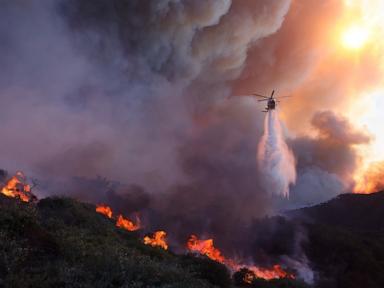
When bomb-making chemicals and high explosives detonate in the open air, the reaction is rarely 100 percent efficient. High temperatures break down primary compounds like RDX, HMX, and TNT, alongside heavy metal stabilizers such as lead and barium.
- Particulate fallout carries heavy metals and unburned energetic residues onto surrounding farmland and surface water.
- Volatile organic compounds and nitrogen oxides disperse downwind, reacting in the atmosphere to form ground-level ozone and secondary pollutants.
- Perchlorates and nitroaromatics can leach into shallow groundwater aquifers if residual ash is not rapidly excavated and contained.
In rural southeastern Iowa, where agriculture dominates the economy and private wells supply drinking water to neighboring families, the prospect of routine open-air blasts raises immediate questions about soil contamination, livestock health, and long-term human exposure.
Why the Iowa Army Ammunition Plant Is a Flashpoint
The Iowa Army Ammunition Plant, often referred to as IAAAP, spans roughly 19,000 acres near Burlington and Middletown. Built in 1941, the installation has a long, documented environmental history. Portions of the site were placed on the Environmental Protection Agency's Superfund National Priorities List in 1990 due to soil and groundwater contamination from decades of wastewater lagoons, explosive manufacturing, and historical disposal practices.
Remediation crews have spent tens of millions of dollars pumping and treating groundwater, capping contaminated soils, and monitoring plumes of RDX and other energetic compounds. Against that backdrop, plans to conduct new open-air detonations of bomb-making chemicals struck many locals not as a routine maintenance task, but as a step backward.
Community pushback in Des Moines County did not happen in a vacuum. Residents living along the perimeter of the plant have complained for years about structural vibrations from testing and disposal blasts, rattling windows, cracked foundations, and sudden concussions that shake livestock and homes without adequate warning. When word spread that the Army planned to detonate accumulated bomb-making chemicals in the open air, public scrutiny intensified rapidly.
State and federal permitting rules under the Resource Conservation and Recovery Act (RCRA) govern how hazardous waste is treated. While military munitions enjoy specific regulatory exemptions during active training, waste munitions and surplus energetic chemicals fall under strict hazardous waste permitting frameworks. Getting those permits approved or modified requires public notice, technical justification, and proof that safer alternatives are not viable.
The National Reckoning Over Military Waste Disposal
What is unfolding in Iowa mirrors a broader, nationwide conflict playing out around dozens of military depots, arsenals, and ammunition plants across the United States. From Radford in Virginia to Tooele in Utah and Camp Minden in Louisiana, the Pentagon is facing mounting pressure to phase out open-air burning and detonation.
The catalyst for much of this pressure was a series of high-profile incidents and regulatory reviews over the past decade. Most notably, the 2012 explosion of improperly stored propellant at Camp Minden, Louisiana, forced the evacuation of a nearby town and prompted a fierce debate over how the Army disposes of millions of pounds of surplus energetic material. When the military initially proposed burning the Camp Minden stockpile in open trays, local residents and environmental groups fought back, eventually forcing the adoption of a closed-chamber thermal treatment system.
Following that controversy, the National Academies of Sciences, Engineering, and Medicine conducted a landmark study evaluating alternatives to OB/OD for conventional munitions. Their findings undercut the Pentagon's long-standing claim that open-air disposal was the only safe option.
Closed-Loop Alternatives Are Already Proven
The technology to destroy energetic materials without venting raw plumes into the atmosphere exists today. Engineers use several closed-containment methods depending on the chemical composition and physical state of the waste:
- Contained Detonation Chambers use thick-walled steel vessels engineered to withstand repeated internal explosions. Blast gases are captured, cooled, and routed through multi-stage filtration systems that trap heavy metals and neutralize acid gases before release.
- Static Kilns and Rotary Furnaces thermally treat propellants and smaller energetic components at controlled temperatures, ensuring complete combustion while capturing exhaust particulates.
- Supercritical Water Oxidation and alkaline hydrolysis break down complex explosive molecules in liquid phases without any combustion at all, converting hazardous compounds into benign salts, water, and carbon dioxide.
These systems are not theoretical prototypes. They operate commercially and at select defense installations in both the United States and Europe.
The Counter-Argument Inside the Defense Establishment
If closed containment works, why has the Army resisted abandoning open detonation in places like Iowa? Talking to munitions engineers and defense logistics planners reveals a set of stubborn, practical constraints that critics often gloss over.
Cost is the most obvious barrier. Building, permitting, and operating a contained detonation chamber capable of handling heavy-cased munitions or bulk chemical precursors requires tens of millions of dollars in upfront capital. Maintenance costs are punishing. Repeated internal blasts fatigue steel liners, destroy sensors, and require frequent downtime for inspection and repair.
Throughput is the second major bottleneck. An open detonation pit can destroy thousands of pounds of net explosive weight in a single afternoon. A contained detonation chamber might only be rated for 50 to 100 pounds per shot, with mandatory cooling and air-scrubbing cycles between detonations. When an installation is sitting on hundreds of tons of aging munitions or unstable bomb-making precursors, a low-throughput chamber turns a six-month disposal campaign into a decade-long backlog.
Safety remains the third, and most legitimate, engineering concern. Degraded bomb-making chemicals do not behave like fresh factory-grade explosives. Over years of storage, stabilizers deplete, crystal structures shift, and sensitivity to friction or static electricity can spike unpredictably.
To feed waste into a closed chamber or rotary kiln, workers often have to unpack, size-reduce, or remotely handle the material. If a compound is too unstable to transport or feed into a machine without risking a catastrophic detonation inside the processing facility, ordnance disposal experts argue that destroying it in place—or via a single open-air donor shot—is the lesser of two evils.
The Regulatory Gray Zone
The indefinite delay in Iowa sits squarely at the intersection of these competing realities. By pausing the detonations, the Army buys time, but it does not make the chemicals disappear.
Hazardous materials sitting in bunkers still require continuous monitoring, climate control, and physical security. Stabilizers continue to degrade. Every month a stockpile sits in limbo, the chemical risk profile changes, potentially making eventual disposal harder rather than easier.
At the same time, proceeding with open-air detonations without full regulatory alignment and community trust carries severe political and legal risks. Environmental organizations have grown adept at using FOIA requests, dispersion modeling, and RCRA permit appeals to stall military disposal projects in court. Even if the Army wins a legal battle over a permit, the resulting public backlash can draw congressional scrutiny and threaten funding for broader installation modernization.
The Environmental Protection Agency has also signaled tighter scrutiny of OB/OD permits nationwide. Under updated federal guidance, facilities seeking to continue open burning or detonation must conduct rigorous, documented evaluations of alternative technologies rather than relying on blanket safety assertions from decades past.
What Happens During an Indefinite Pause
When the military announces an indefinite delay on a disposal operation, several parallel tracks typically unfold behind closed doors:
- Chemical characterization and re-sampling to verify whether the stockpiled materials can be safely segmented, transported off-site to a commercial hazardous waste facility, or stabilized for closed-chamber processing.
- Air dispersion and soil deposition modeling using updated meteorological data to determine exact downwind concentrations of heavy metals and energetic byproducts under worst-case weather conditions.
- Permit renegotiation with state environmental agencies, which may impose stricter limits on net explosive weight per blast, wind speed thresholds, or mandatory perimeter air monitoring.
- Budget reprogramming to determine whether funds can be redirected toward mobile containment units or off-site commercial disposal contracts.
None of these steps move quickly. Defense contracting cycles and environmental permitting reviews routinely stretch across fiscal years.
The True Cost of Deferred Maintenance in the Munitions Base
The standoff in Iowa exposes a deeper structural flaw in how the United States manages its defense industrial base. Congress and the Pentagon routinely pour billions of dollars into researching, manufacturing, and stockpiling new weapons systems, yet demilitarization—the unglamorous back end of the munitions lifecycle—is chronically underfunded.
For decades, the military treated demilitarization as an afterthought, relying on cheap open-air burning and detonation to clear bunker space. That model worked only so long as ammunition plants sat in isolated rural areas where few people asked questions about smoke plumes or ground vibrations.
Those days are over. Suburban expansion, heightened awareness of forever chemicals and heavy metals, and stricter environmental enforcement have closed the door on casual open-air waste disposal. Yet the funding and infrastructure needed to transition the entire ammunition enterprise to closed-loop destruction have lagged far behind the rhetoric.
Until the Pentagon builds dedicated, high-throughput containment facilities at its core ammunition plants—and budgets for lifecycle disposal at the moment a weapon is procured—installations like the Iowa Army Ammunition Plant will remain trapped between aging chemical stockpiles and communities that refuse to serve as open-air burn pits.
What Residents and Watchdogs Are Demanding Next
For the communities surrounding Middletown and Burlington, an indefinite delay is a welcome reprieve, not a permanent resolution. Local residents and environmental watchdogs have made clear that any future path forward must meet three non-negotiable standards before a single pound of bomb-making chemical is destroyed.
First, full transparency regarding the exact chemical inventory slated for disposal. Vague references to "energetic materials" or "legacy chemicals" no longer satisfy local officials or neighbors who want to know precisely what compounds are stored near their property lines.
Second, independent, real-time perimeter air and soil monitoring during any testing or disposal activity, with raw data made publicly accessible rather than buried in annual compliance reports.
Third, a binding commitment to evaluate and fund closed-containment or off-site commercial treatment options rather than defaulting to open-air detonations simply because the pit is already dug.
The Army has paused the blasts in Iowa, stopping the immediate threat of open-air chemical plumes over Des Moines County, while leaving tons of unstable bomb-making material sitting inside storage bunkers waiting for a safer way out.