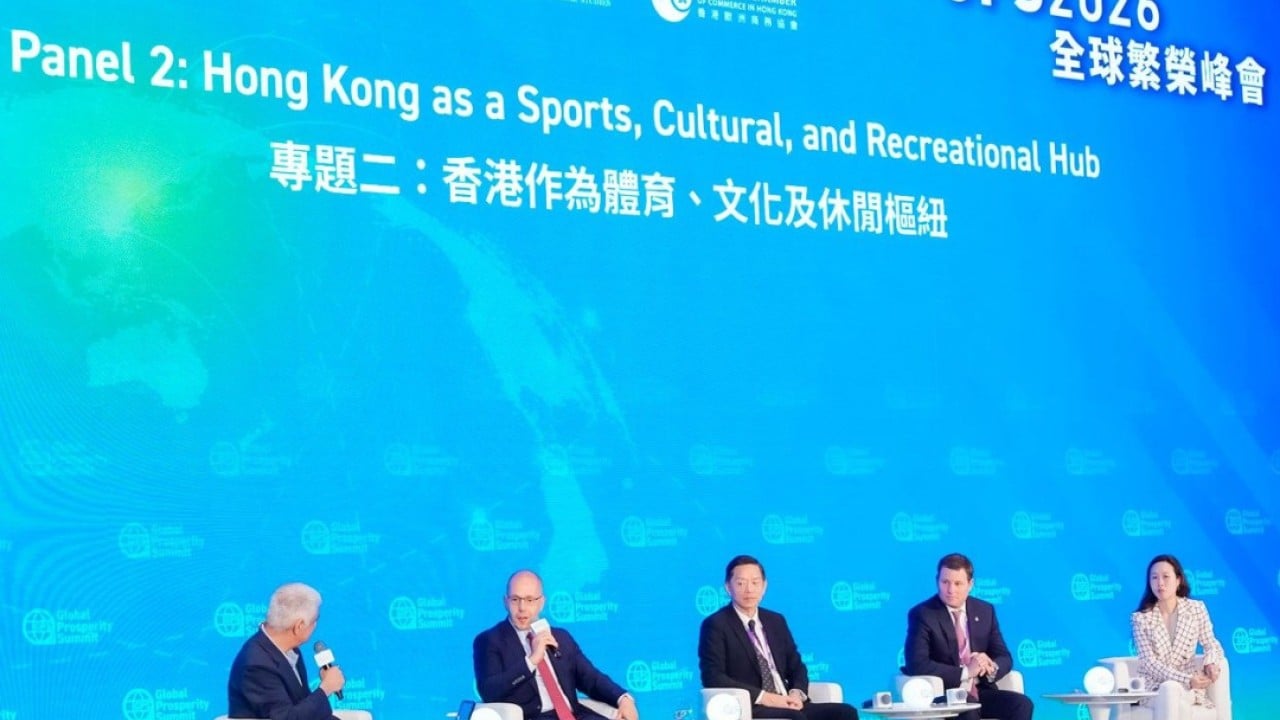
Hong Kong is trying to draft a new economic blueprint while caught between two worlds. At the recent Global Prosperity Summit 2026, held from May 19 to 20, government officials and mainland think tanks gathered to map out the city’s next chapter. The official narrative was unswervingly optimistic, pointing to a first-quarter GDP growth rate of 5.9 percent and a sudden fascination with the commercial space sector. Yet, beneath the corporate handshakes and polished policy proposals lies a far more complex reality.
The city is trying to convince western capital that it remains an independent, common-law financial hub, while simultaneously embedding itself deeper into Beijing’s state-directed economic framework. Resolving this tension is the central challenge for the territory's survival.
The Friction in Digital Finance and Biotech
The summit dedicated significant time to the future of digital finance and pharmaceutical innovation in the Greater Bay Area. Local regulators like Christopher Hui, Secretary for Financial Services and the Treasury, spoke of a gradual convergence between traditional finance and decentralized web3 systems. The administration prefers a cautious regulatory approach rather than rushing to build a custom legal framework.
This caution reveals a deeper dilemma. Hong Kong wants to be a freewheeling sandbox for crypto assets and digital innovation to lure back global tech firms. However, it must operate within the strict risk boundaries set by the mainland's financial regulators.
A similar friction appears in the biomedical sector. For years, the territory has tried to position itself as a hub for innovative drug development. The pitch relies on its two world-class medical schools and its capacity to run international-standard clinical trials.
Yet, the actual commercial pipeline remains bottlenecked by regulatory misalignments between Hong Kong’s Department of Health and the mainland’s National Medical Products Administration. It is a recurring pattern. The city has the scientific talent and the capital markets, but it remains tangled in the administrative machinery of cross-border integration.
The Space Economy Pivot
The most surprising development of the summit was the heavy emphasis on the commercial aerospace industry. Following the selection of Hong Kong’s first payload specialist for a Chinese space mission, local politicians have embraced the space economy as a potential pillar for future GDP growth. Proponents at the event claimed that satellite data analysis, remote sensing applications, and aerospace manufacturing could add two to three percent to the city's economic output over the next two years.
Regina Ip, founder of the summit and chairperson of the Savantas Policy Institute, even called for the immediate creation of a dedicated government space office.
"One of my takeaways from the summit is the urgency of Hong Kong to establish a space office, so that Hong Kong can play a key role in the space economy."
This ambition warrants a reality check. The commercial space race is capital-intensive and historically dependent on massive state subsidies or deep-pocketed venture capital ecosystems like those in California or Shenzhen. Hong Kong excels at logistics, trade finance, and maritime law. It does not possess a domestic industrial manufacturing base.
The proposal to have the Hong Kong Stock Exchange loosen listing requirements specifically for aerospace enterprises is a clear attempt to use the city’s capital markets to fund mainland China’s broader space ambitions. While this provides local banks with listing fees, it does little to create a genuine domestic tech ecosystem on the ground.
The Geopolitical Tightrope and APEC
The political reality of Hong Kong’s current position was laid bare during the sessions on global governance. Ambassador Han Zhiqiang, vice-president of the China Public Diplomacy Association, used his keynote address to champion Beijing’s Global Governance Initiative. He framed Hong Kong as a vital bridge to counter Western protectionism and unilateralism.
This alignment with mainland foreign policy complicates the city's relationship with traditional Western trading partners. Representatives from Western business groups, such as Sean Stein of the US-China Business Council, noted that the territory's true value rests on its distinctiveness. Its adherence to the rule of law, institutional transparency, and judicial fairness are what make it useful to global business.
The challenge will intensify later this year. The city is scheduled to host the APEC Finance Ministers’ Meeting in October, right before the main APEC Economic Leaders' Meeting in neighboring Shenzhen in November.
Local think tanks have proposed an "APEC Global Cities Network" to cement cooperation between past host cities. But networking cannot obscure the structural shifts occurring in the region. Western multinationals are increasingly adopting a "China Plus One" strategy, diversifying their supply chains and legal corporate structures into Singapore, Vietnam, and India to insulate themselves from geopolitical shockwaves.
Infrastructure and the Flight of Domestic Talent
To counter the narrative of decline, Chief Executive John Lee and other officials regularly point to massive infrastructure commitments. The center of this strategy is the Northern Metropolis, a HK$224 billion development project along the mainland border designed to absorb tech firms and house 2.5 million people. The Hetao Hong Kong Park has already brought in around 80 tech institutions.
This construction boom aims to anchor the city to the industrial power of the Greater Bay Area. The policy assumes that hardware and physical proximity to Shenzhen can replace the loss of Western corporate headquarters.
It also ignores a persistent structural vulnerability: human capital. While the city boasts five universities in the global top 100, it has faced a significant outflow of local mid-level professional talent over the last four years. The government has attempted to offset this drain through various talent admission schemes, which have successfully drawn tens of thousands of applicants.
However, the vast majority of these new arrivals come directly from the mainland. This shifts the demographic and cultural makeup of the city's corporate workforce, gradually eroding the bilingual, internationally minded middle class that originally made the territory an adaptable global node.
Reclaiming a Unique Lane
Hong Kong is not entering an era of simple economic irrelevance, but it is undergoing a profound mutation. The old model of acting as an uncomplicated, Western-friendly gateway to a closed Chinese economy is gone. The new model requires the city to serve as a highly regulated financial utility for state-backed enterprises, while trying to preserve enough institutional autonomy to keep global investors comfortable.
This is an incredibly difficult balancing act. If the city aligns too closely with Beijing’s regulatory and political preferences, it risks losing the legal distinctiveness that justifies its special economic status. If it pushes too hard for regulatory independence, it loses the backing of the mainland authorities who control the flow of capital, tourists, and political favor.
The current focus on speculative frontiers like web3 finance, aerospace arbitration, and regional think-tank networks shows an administration searching for a new economic identity. To succeed, policymakers must look past the choreographed optimism of summits and address the core concerns of international business. Investors do not look to Hong Kong for state-directed industrial policy or space exploration programs. They look to it for predictable courts, capital mobility, and institutional transparency. Preservation of those fundamentals, rather than grand infrastructure projects or new bureaucratic offices, will ultimately decide the city's economic future.