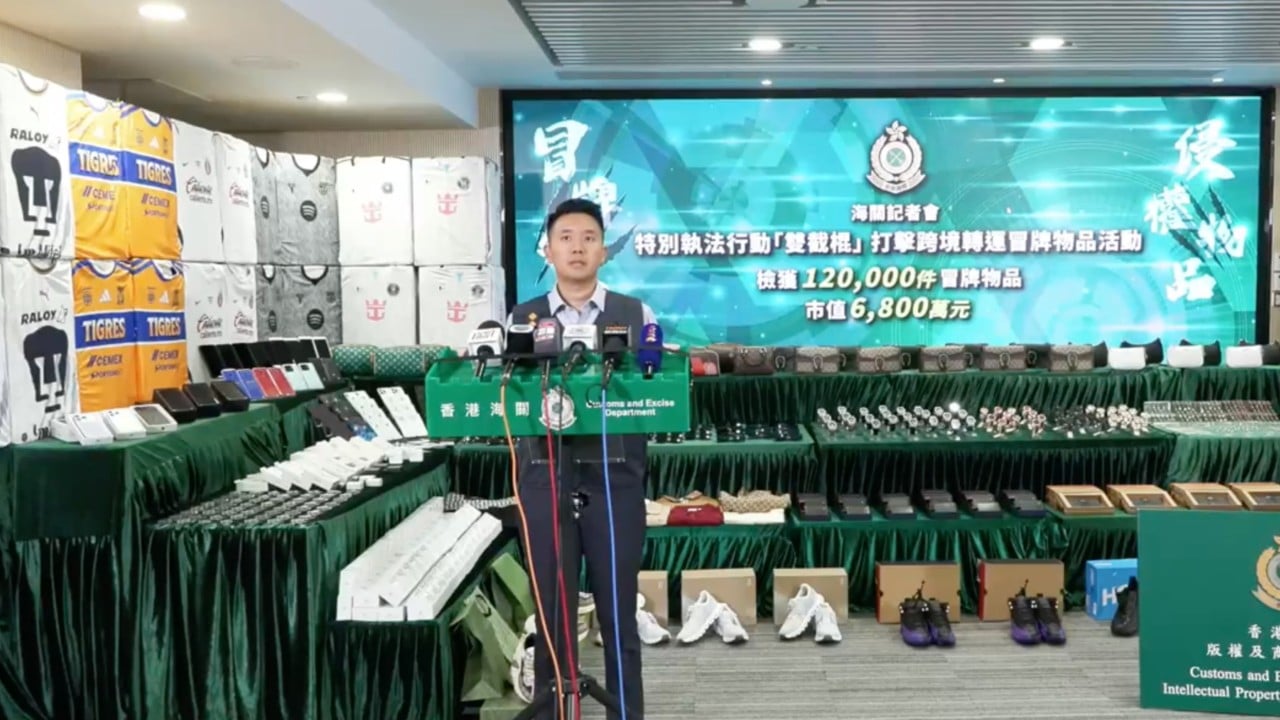
Hong Kong Customs and Excise Department officers intercepted HK$68 million worth of suspected counterfeit goods during a targeted crackdown ahead of the Double 11 shopping festival. The massive haul—comprising luxury handbags, high-end watches, designer apparel, and consumer electronics—exposes how illicit supply chains exploit the annual e-commerce surge to slip fake merchandise into global transit networks. Rather than representing a final victory against intellectual property theft, this seizure highlights the structural vulnerabilities of cross-border logistics during peak retail windows.
The operation was timed specifically to disrupt the logistics buildup preceding November 11, known globally as Singles' Day or Double 11. What began decades ago as an anti-Valentine's Day novelty among Chinese university students has mutated into the world's largest online shopping event, eclipsing Black Friday and Cyber Monday combined. For legitimate brands, the festival generates billions in gross merchandise volume within days. For counterfeiters, it provides the ultimate operational camouflage.
Volume is the criminal's greatest ally. During the weeks surrounding Double 11, freight forwarders, air cargo hubs, and maritime container terminals across the Pearl River Delta operate at maximum capacity. Millions of parcels move daily through consolidation centers in Shenzhen, Guangzhou, and Hong Kong. Customs inspectors face an impossible mathematical equation when freight volumes spike by orders of magnitude overnight.
Why Hong Kong Remains the Chokepoint of Choice
Geography and trade policy make Hong Kong an indispensable node for both legitimate commerce and illicit transshipment. As a free port with minimal tariffs and streamlined customs clearance procedures for cargo in transit, the city processes an enormous share of goods moving between mainland China and international markets. Counterfeit syndicates rely heavily on this speed.
A typical smuggling operation does not manufacture fake luxury goods inside Hong Kong. Labor and real estate costs make local production economically absurd. Instead, illicit workshops operate across manufacturing clusters in neighboring Guangdong province, producing knockoffs that range from cheap street-level imitations to near-identical "super-fakes" complete with forged certificates of authenticity and scannable QR codes.
Once packaged, these goods are moved across the boundary into Hong Kong via cross-border trucks, river trade vessels, or consolidated express courier shipments. The goal is simple. By routing cargo through Hong Kong, syndicates launder the shipment's point of origin. A parcel arriving in Los Angeles, London, or Tokyo with a Hong Kong air waybill draws far less immediate scrutiny from destination customs authorities than a package originating directly from a known manufacturing hub on the mainland.
During the Double 11 crackdown, enforcement teams focused heavily on local logistics hubs and cross-border control points. Inspectors look for subtle anomalies in shipping manifests, under-declared cargo values, and mismatched weights. Yet even a HK$68 million interception represents a fraction of the total illicit flow moving through the territory during peak season.
The Anatomy of a Modern Counterfeit Supply Chain
Forget the outdated image of a trench-coated vendor hawking fake Rolexes on a street corner. Modern counterfeiting is a decentralized, data-driven enterprise that mirrors legitimate e-commerce operations down to the customer service desk.
Consider a hypothetical example of how a mid-tier syndicate operates during Double 11. One entity sources raw materials and hardware—zippers, clasps, watch movements—from specialized component suppliers. A second facility handles assembly in small batches to minimize inventory losses if raided. A third group manages the digital storefront, purchasing targeted social media ads and setting up temporary listings on cross-border e-commerce marketplaces using algorithmic pricing that undercuts authentic retail prices by thirty to forty percent.
When a consumer clicks "buy" during a Double 11 flash sale, the order routes to a fulfillment warehouse near the border. The parcel is bundled into a massive pallet alongside thousands of legitimate e-commerce orders—phone cases, kitchen gadgets, fast-fashion clothing. That pallet is loaded onto a container truck bound for Hong Kong International Airport or the Kwai Tsing Container Terminals.
This co-loading strategy is the backbone of modern smuggling. Freight forwarders frequently consolidate small parcels from dozens of individual merchants into a single master airway bill or bill of lading. If customs officers flag one suspicious box inside a consolidated container, the entire shipment faces delays, creating immense commercial pressure to keep cargo moving swiftly.
The Rise of the Drop-Shipped Fake
Bulk container smuggling still accounts for high-value seizures like the HK$68 million haul, particularly when syndicates attempt to stock overseas distribution warehouses ahead of the holiday rush. However, enforcement agencies increasingly contend with the de minimis loophole and direct-to-consumer parcel shipping.
Instead of shipping five thousand counterfeit handbags in a single sea container—where one inspection wipes out the entire investment—syndicates ship five thousand individual parcels via express air courier. Each package falls below the customs duty threshold in destination countries, qualifying for simplified clearance. Even if customs intercepts fifty parcels, the remaining 4,950 reach buyers without interruption. The syndicate absorbs the loss as a routine cost of doing business, much like legitimate retailers budget for shrinkage and returns.
How Enforcement Tactics Are Adapting
Hong Kong Customs has shifted away from random manual inspections toward intelligence-led targeting. With millions of tonnes of cargo passing through the city annually, opening boxes at random is akin to searching for a needle in a typhoon.
Officers rely on risk-profiling algorithms that analyze historical shipping data, corporate registration records, and financial flows. If a newly registered logistics firm suddenly begins exporting high volumes of "plastic accessories" or "unbranded leather goods" to major luxury markets in Europe and North America right before November 11, the system flags the anomaly.
Physical inspection teams also deploy mobile X-ray scanning systems and portable Raman spectrometers at land boundary control points like Lok Ma Chau and Shenzhen Bay. These scanners allow officers to inspect the internal density and structure of sealed cargo without unloading an entire forty-foot container. When an X-ray image reveals watch dials or luxury handbag silhouettes inside a shipment declared as "hardware parts," enforcement teams move in.
Collaboration with brand owners remains equally vital. Counterfeiters constantly update their packaging, holograms, and stitching patterns to mimic current-season releases. Customs officers cannot memorize the exact serial number format or leather grain of every luxury house on earth. During major crackdowns, brand protection specialists work directly alongside customs investigators to authenticate suspect items rapidly, establishing the legal threshold required to seize goods and prosecute offenders under the Trade Descriptions Ordinance.
Under Hong Kong law, importing, exporting, or possessing counterfeit goods for trade carries severe penalties, including substantial fines and imprisonment. Yet prosecution often stops at the mid-level logistics operator or truck driver. The financial architects behind the syndicates rarely touch the physical merchandise, shielding themselves behind layers of shell companies and encrypted messaging platforms.
The Hidden Costs of the Fake Economy
Consumers often view buying a counterfeit luxury bag or discounted electronic device as a victimless crime—a harmless way to get status or utility without paying corporate markups. That perspective ignores the severe downstream consequences of the illicit trade.
First, there is the direct physical hazard. While a fake designer tote bag merely disappoints the buyer when the strap snaps, counterfeit electronics, lithium-ion batteries, cosmetics, and pharmaceuticals pose immediate safety threats. Knockoff phone chargers lack basic thermal cutoff circuits, causing house fires. Counterfeit cosmetics frequently contain dangerous levels of lead, mercury, and unregulated carcinogens. During Double 11, when consumers rush to grab deep discounts on personal care items and gadgets, the volume of hazardous fakes surging through the mail spikes dramatically.
Second, counterfeiting hollows out legitimate innovation. Developing an authentic mechanical watch movement, a proprietary audio driver, or a sustainable textile requires years of research and capital expenditure. Counterfeiters spend zero dollars on research, safety testing, or regulatory compliance. They reverse-engineer the exterior shell, slap a forged logo on cheap internals, and flood the market during peak shopping events.
Third, the revenue generated by large-scale intellectual property theft rarely stays within the consumer goods sector. International law enforcement agencies, including Interpol and the World Customs Organization, have repeatedly documented how transnational crime syndicates use counterfeiting profits to finance narcotics trafficking, money laundering, and human smuggling. The low risk of detection and relatively light sentencing compared to drug trafficking make fake goods an attractive cash cow for organized crime.
Why E-Commerce Platforms Struggle to Police the Surge
Every major online marketplace claims a zero-tolerance policy toward counterfeits. They deploy automated image recognition, keyword filters, and merchant verification protocols. Yet every Double 11, fake goods proliferate across social commerce feeds, third-party marketplaces, and standalone pop-up webstores.
The problem lies in adversarial adaptation. When a platform bans a specific brand name from listing titles, sellers use coded abbreviations, obscured logos in product photos, or emojis. A listing might show a plain white t-shirt with a tiny, blurry corner of a luxury emblem visible, accompanied by a WhatsApp number or a link to an external catalog.
Furthermore, marketplaces face a fundamental conflict of interest during major shopping festivals. Platform performance is judged by investors and analysts on gross merchandise volume growth during events like Double 11. Aggressively purging thousands of third-party merchants right before the biggest sales day of the year creates friction, invites merchant backlash, and depresses short-term transaction metrics. Reactive takedowns after a consumer complains are standard practice; proactive verification that slows down merchant onboarding is far rarer.
Payment processors and social media advertising networks share this blind spot. Counterfeiters routinely use cloaking technology on social media ads. When a platform's automated ad reviewer clicks the link, the website displays a benign, compliant storefront selling generic phone cases. When a real user clicks the exact same link from a mobile device in a target demographic, the site redirects to a hidden catalog of counterfeit luxury watches.
The Limits of Border Interdiction
A HK$68 million seizure makes for compelling headlines and demonstrates active enforcement by Hong Kong authorities. It removes millions of dollars in illicit inventory from circulation and disrupts the immediate delivery timelines of the syndicates involved.
Still, border interdiction alone cannot solve a demand-driven global problem. As long as consumers actively hunt for luxury aesthetics at bargain-bin prices, and as long as cross-border parcel networks prioritize delivery speed over cargo transparency, syndicates will simply adjust their routes. When Hong Kong tightens inspection protocols at land borders, illicit shipments shift to maritime fishing vessels, regional air hubs in Southeast Asia, or indirect transit routes through the Middle East.
The real battleground is shifting from physical customs checkpoints to data transparency. Ending the flow of Double 11 counterfeits requires mandating granular, itemized electronic manifest data for every single cross-border parcel before it ever boards an aircraft or container ship, stripping away the anonymity that allows billion-dollar criminal networks to hide inside the world's shopping cart.