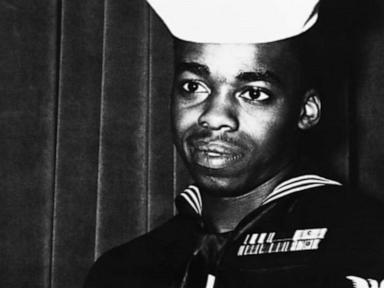
The United States Navy is quietly reviewing the designation of CVN-81, a Ford-class nuclear-powered aircraft carrier originally slated to bear the name of World War II hero Doris Miller, with internal discussions weighing a shift to honor President Donald Trump. This brewing controversy places naval traditions, institutional memory, and historical recognition directly in the political crosshairs. According to reports from outlets like CNN via the Jacksonville Free Press, senior defense figures and administrative directives have caused the service to step back from using the iconic sailor's moniker internally, referring to the multi-billion-dollar hull strictly by its alphanumeric designation.
Naming conventions for capital warships have never existed in a vacuum. They serve as floating geopolitical statements, broadcasting a nation's values across international waters. When the ship was christened in 2020 during Trump's first term, the decision carried profound symbolic weight. Miller, a Black mess attendant who hauled wounded comrades to safety and manned a Browning anti-aircraft machine gun without prior training during the attack on Pearl Harbor, was set to become the first enlisted sailor and the first African American to have an aircraft carrier named in his honor. Reopening that designation now signals a jarring about-face that has sent shockwaves through military heritage circles. For an alternative perspective, read: this related article.
The Mechanics of Maritime Nomenclature
Warship naming is governed by a mix of statutory tradition, secretarial discretion, and political pressure. Under historical precedent, aircraft carriers have traditionally honored commanders-in-chief, legendary naval strategists like Fleet Admiral Chester Nimitz, or influential congressional champions like Georgia Representative Carl Vinson. Breaking these unwritten rules carries steep institutional costs.
To understand the weight of this shift, consider a hypothetical scenario: a commercial enterprise rebranding its flagship product overnight after years of public marketing. The confusion is immediate. Within the Department of Defense, a ship name is tied to commissioning committees, commissioning gifts, unit cohesion, and the morale of thousands of sailors who report to the pre-commissioning unit. Dropping a name in internal communications while a vessel remains under construction in Virginia shipyards bypasses the customary transparency associated with fleet milestones. Recent executive orders regarding naval shipbuilding infrastructure have similarly scrubbed the historic moniker, utilizing only the hull code CVN-81. Further insight on this matter has been provided by TIME.
Historical Precedent and Living Figures
The prospect of naming a nuclear aircraft carrier after a sitting president shatters a long-standing firewall. Traditionally, American leaders waited until after their terms—or their lifetimes—to be immortalized in steel and titanium. Past vessel namings honoring living politicians typically required bipartisan consensus or specific legislative navigation, yet a carrier designation of this magnitude sits at the absolute apex of naval prestige.
Critics from civil rights organizations, including the NAACP via The Guardian, have pointedly criticized the potential reversal as a direct dismissal of minority contributions to military history. Meanwhile, defense analysts note that discussions regarding alternative compensations—such as shifting the Doris Miller name to a different, smaller combatant or advancing a posthumous upgrade to the Medal of Honor—risk looking like reactive damage control rather than a cohesive strategy for honoring valor.
The structural realities of modern shipbuilding leave little room for administrative delay. With the keel-laying ceremonies fast approaching, the window to resolve the designation is closing rapidly. The final outcome will determine whether the Navy protects its foundational break from past segregation or charts a radically unprecedented course for its capital fleet