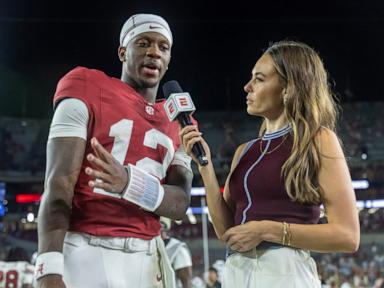
The College Football Playoff and ESPN are locked in intensive discussions regarding an expanded 24-team bracket, a massive structural shift that would radically alter the financial and operational reality of collegiate athletics. This ongoing dialogue between the network and tournament organizers centers on amending their current media rights framework well ahead of schedule, proving that the appetite for expanded postseason inventory remains insatiable despite mounting player wear and tear.
When ESPN and the College Football Playoff finalized their massive six-year extension through the 2031-32 season, the ink was barely dry before executive suites began eyeing a wider field. The current format accommodates twelve teams, a structure that debuted only recently to considerable fanfare and immediate commercial success. Yet, billion-dollar television contracts thrive on scarcity and scale. Moving from twelve to twenty-four contenders is not a simple logistical tweak. It represents a fundamental recalibration of college sports economics, player health management, and conference politics that will ripple through every athletic department in the country.
The Financial Engine Driving the Expansion Push
Television executives do not gamble on expanded brackets out of competitive goodwill. They do it because inventory translates directly into subscriber acquisition, advertising revenue, and cable bundle protection.
The current twelve-team layout already transformed December and January into a multi-week gauntlet of high-stakes television events. Doubling the field to twenty-four creates an entirely new tier of early-round matchups that can be broadcast on campus sites, shifting the economic model away from neutral-site bowl games toward high-engagement local broadcasts.
Consider the mathematics of regular-season value. In a twenty-four-team system, the margin for error shrinks dramatically for elite programs while widening the safety net for traditional powerhouse conferences. A nine-win team in the Southeastern Conference or the Big Ten that previously sat on the bubble of a twelve-team field suddenly finds secure passage into the postseason. That security protects coaches' jobs, drives ticket sales, and secures local booster funding.
However, this influx of games introduces severe friction regarding broadcast window saturation. Weekends in December are already crowded with NFL games, regular-season college football conference championships, and the nascent stages of college basketball. Inserting additional playoff rounds requires carving out exclusive broadcast windows that will inevitably cannibalize other programming blocks.
The Physical Toll on Student Athletes
While boardrooms calculate broadcast ad rates, trainers and sports science directors look at the calendar with quiet dread. The human cost of expanding a football season from twelve regular-season games to a potential seventeen-game marathon for championship contenders is staggering.
Football is a collision sport of maximal kinetic impact. Unlike professional leagues where athletes are compensated as full-time professionals with dedicated recovery staffs, college players are students navigating academic schedules alongside brutal athletic demands. Adding multiple rounds of playoff football pushes the season deep into January, turning a brutal fall semester into an endurance test that spans nearly half the year.
The administrative defense relies on medical advancements, improved helmet technology, and sophisticated recovery protocols. Yet, science cannot rewrite human biology. Joint degradation, cumulative sub-concussive trauma, and chronic fatigue do not vanish because a program hires a specialized nutrition staff. If the bracket expands to twenty-four teams, rosters must inevitably expand, or the talent attrition rate among elite programs will skyrocket.
Conference Hegemony and the Mid-Major Squeeze
Every structural change in college athletics concentrates power among the financial elite, and a twenty-four-team bracket is no exception.
Proponents argue that a larger field democratizes access, offering a guaranteed path for smaller conferences and mid-major champions. History suggests the opposite effect occurs in practice. As the field expands, the pressure from major television partners and power-conference athletic directors intensifies to reserve those extra slots for at-large bids from dominant leagues.
When athletic directors sit across the table from network executives, the conversation invariably drifts toward television ratings. A matchup between two storied traditional programs commands millions more in ad revenue than a regional conference champion playing on a cold December afternoon. The gravity of television revenue pulls the selection committee inevitably toward the brands that move the needle.
This dynamic leaves mid-major programs in a permanent state of precarious negotiation. They may secure token representation in the initial design of a twenty-four-team model, but subsequent television negotiations will quietly erode those guarantees in favor of expanded access for the conferences holding the media leverage.
The Logistics of Campus Sites Versus Neutral Bowls
One of the most contentious debates underlying these negotiations involves where these games will actually take place.
The initial twelve-team model introduced campus-site games for the first round, a stroke of brilliance that captured the raw, visceral energy of college football traditions. Fans packed into historic stadiums in freezing temperatures, creating an atmosphere that traditional bowl games struggle to replicate.
Scaling that model to a twenty-four-team bracket introduces severe operational hurdles. Hosting a playoff game requires massive security infrastructure, coordination with local law enforcement, and municipal resources that smaller university towns struggle to manage on short notice during the academic calendar. Furthermore, the weather variable introduces massive unpredictability into the broadcast schedule. A blizzard halting travel in the Midwest can disrupt a billion-dollar television ecosystem in ways that a climate-controlled domed stadium never will.
Conversely, shifting those games to traditional bowl venues strips away the home-field advantage that makes college football distinct from the NFL. The bowls themselves, already fighting for relevance in a playoff-dominated ecosystem, view any expansion as either an opportunity to secure additional games or an existential threat to their traditional New Year's Day monopolies.
The Inevitable Horizon
The trajectory of sports media is relentless. Once an executive raises the possibility of a twenty-four-team playoff, the momentum becomes self-sustaining. The revenue projections are too large to ignore, the competitive pressures among conferences are too fierce to resist, and the television networks need premium inventory to justify their massive rights fees.
Yet, every expansion dilutes the regular season. When half the sport can dream of a playoff berth deep into November, the unique urgency that once defined every Saturday afternoon begins to fray. College football is slowly transforming into a professionalized minor league, trading its chaotic, regional charm for a streamlined, nationalized entertainment product.
The negotiations between ESPN and the College Football Playoff will ultimately conclude with a compromise, as all multi-billion-dollar deals do. The games will be played, the television windows will be filled, and the ledger sheets will balance. But the sport crossing that finish line will bear little resemblance to the game that built its foundation.


