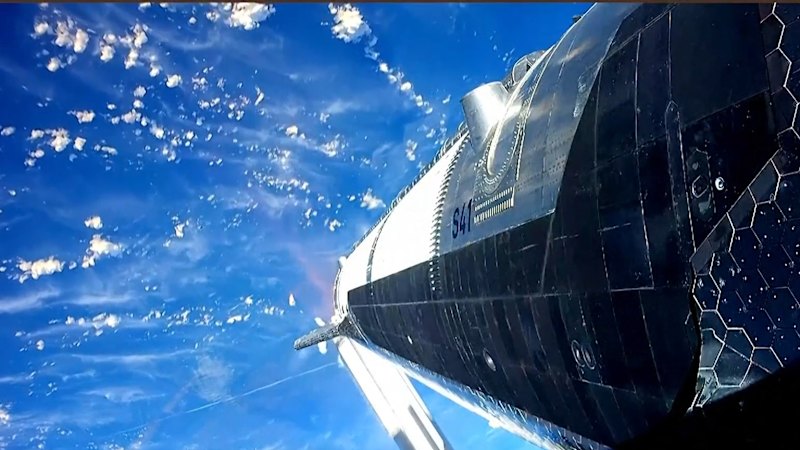
When a rocket engine stumbles on the ascent corridor, the margin between a historic milestone and a catastrophic fireball shrinks to milliseconds. SpaceX recently achieved an orbital insertion despite enduring unexpected propulsion anomalies during the climb, a feat celebrated across industry headlines as another triumph of sheer engineering resilience.
Beneath the veneer of that successful deployment lies a more troubling reality. When a rocket reaches orbit despite engine trouble, it is not just a testament to hardware redundancy; it is a flashing warning sign about the tolerances of modern heavy-lift architecture. Aerospace veterans know that near-misses rarely happen in a vacuum. They are symptoms of systemic stress, aggressive flight rates, and thermal thresholds pushed to their absolute breaking point.
To understand why an engine falters mid-flight without destroying the vehicle, we must look at the anatomy of modern propulsion systems, the physics of staged combustion, and the hard choices engineers face when margins vanish.
The Margin of Error in Modern Heavy Lift
Rocket propulsion is an exercise in controlled violence. Inside the combustion chamber of a high-performance engine, liquid propellants mix under extreme pressure, creating temperatures that rival the surface of the sun, restrained only by regenerative cooling channels where fuel loops through the nozzle walls before ignition.
When an anomaly occurs, it rarely announces itself as a clean shutdown. Instead, sensors register pressure oscillations, turbopump cavitation, or sudden spikes in exhaust gas temperatures. In the recent flight, telemetry indicated that at least one primary combustion unit suffered a performance degradation phase during the high-dynamic-pressure regime.
The vehicle survived because of flight computer autonomy and engine-out capability. Modern multi-engine architectures are designed with the assumption that things will break. If one unit loses chamber pressure or suffers an oxidizer imbalance, the flight computer instantly recalculates the thrust vector, redistributes propellant loads across the remaining working engines, and burns slightly longer to compensate for the lost velocity vector.
Yet, relying on redundancy is an expensive insurance policy. Every time a rocket alters its flight profile to nurse a failing engine through orbit, it burns deeper into its fuel reserves, reducing payload capacity and straining secondary structural frames that were never meant to absorb asymmetric thrust forces for extended durations.
The Cost of Accelerated Launch Cadence
SpaceX operates on a relentless tempo. The cadence of orbital launches has transformed from a quarterly event to a daily operational reality. This factory-floor velocity drives down launch costs and accelerates iterative design, but it introduces a distinct set of operational risks.
When you build flight hardware at high volume, quality control becomes a battlefield. A microscopic particulate in a fuel injector, a minor weld imperfection in a high-pressure manifold, or a slight batch variation in turbopump turbine blades can trigger a catastrophic failure under flight loads.
Industry analysts often point to the iterative philosophy of "test, fail, fix, repeat" as the ultimate innovation engine. That philosophy works exceptionally well on an empty test stand or during suborbital hop tests. It becomes perilous when flying operational payloads, national security hardware, and human-rated crew vehicles.
When an engine struggles on an ascent that ultimately succeeds, the engineering team faces a grueling diagnostic puzzle. They cannot inspect the hardware that burned up in the atmosphere or drifted into space. They must rely entirely on high-frequency telemetry logs, recreating the failure modes in ground test facilities through computational fluid dynamics and destructive physical analysis of sister components from the same manufacturing lot.
The Physics of Combustion Instability
Combustion instability remains the persistent ghost in the machine of rocket propulsion. It is a phenomenon where acoustic waves inside the combustion chamber couple with the energy release rate, creating violent pressure oscillations that can tear an engine apart in fractions of a second.
During high-stress phases of atmospheric ascent, acoustic standing waves can disrupt the delicate injection pattern of fuel and oxidizer. If the mixing fails to remain uniform, local hot spots form against the chamber walls, burning through the regenerative cooling channels and triggering an uncontrolled breach.
When a rocket manages to punch through the atmosphere despite these internal tremors, it means the instability was either self-correcting or mild enough for the engine controller to throttle down before structural integrity failed. But a mild instability is still an anomaly that demands explanation. Was it caused by propellant temperature fluctuations? Did a valve actuate a millisecond too slow? Or are the operating parameters of the engine being pushed past the design envelope to squeeze out extra payload performance?
The Broader Industry Ripple Effect
The implications of these near-misses extend far beyond a single company's launch manifest. The global satellite internet economy, national defense infrastructure, and crewed lunar ambitions now rely heavily on the operational stability of a very small number of heavy-lift platforms.
When a vehicle reaches orbit with degraded performance, regulatory bodies and commercial customers take notice. Insurance underwriters re-evaluate risk profiles. Premium rates adjust. Launch customers begin asking uncomfortable questions about whether the drive for launch frequency is outpacing reliability margins.
Competitors in the aerospace sector watch these telemetry anomalies with a mix of professional respect and deep concern. Traditional aerospace historically favored exhaustive, slow-moving qualification processes to weed out anomalies before hardware ever touched a launchpad. The modern commercial paradigm accepts a higher rate of anomalies on the path to high-volume reliability.
That philosophical divide is the defining debate of modern aerospace engineering. One side argues that flying frequently with minor anomalies is the only way to uncover hidden failure modes and achieve true economies of scale. The other side warns that pushing hardware to the edge of destruction increases the statistical probability of a catastrophic public failure that could ground an entire fleet for years.
The Path Forward for Propulsion Reliability
Solving these propulsion puzzles requires returning to the fundamentals of material science and fluid dynamics. Engineers are currently exploring advanced computational modeling that predicts combustion instabilities before they manifest on the test stand, alongside new alloy compositions capable of withstanding higher thermal loads without degrading.
At the same time, manufacturing processes are shifting toward automated non-destructive testing, using advanced X-ray tomography and machine learning to scan every internal weld and component for microscopic flaws before assembly.
Yet, technology alone cannot eliminate risk. The pressure to launch heavier payloads further, faster, and cheaper will always push engineering teams toward the ragged edge of physical limits.
The recent orbital success disguised a warning that the industry cannot afford to ignore. Next time, the margins might not hold.