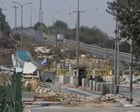
Nearly 2,000 Palestinians in Hebron have been forced from their homes as Israeli military forces convert private residential buildings into temporary operational outposts, according to local municipal officials and international human rights observers. While the Israel Defense Forces (IDF) maintain that these seizures are temporary tactical necessities required to counter militant activity in the occupied West Bank, residents and legal analysts characterize the practice as a form of collective punishment that disrupts civilian life and alters the demographic reality on the ground.
The mechanics of these displacements follow a distinct, repeatable pattern across Hebron’s densely populated neighborhoods. Soldiers enter multi-story apartment buildings, order families to evacuate with little to no advance notice, and establish sniper positions or command centers on the upper floors and rooftops. For the families pushed out, the disruption is immediate. They are left to shelter with relatives or seek temporary accommodation in already strained community centers, often uncertain when—or in what condition—they will be allowed to return.
The Anatomy of a Military Seizure
To understand why Hebron experiences this friction so acutely, one must examine the city's unique administrative division. Under the 1997 Hebron Protocol, the city was split into two sectors. H1, comprising roughly 80 percent of the city, falls under the civil and security control of the Palestinian Authority. H2, covering the remaining 20 percent, includes the historic Old City and remains under direct Israeli military control to protect a population of several hundred Israeli settlers living among tens of thousands of Palestinians.
This geographic overlap creates a permanent state of friction. When military operations intensify, the boundary between H1 and H2 blurs, and residential structures in both zones become strategic high ground.
In typical military terminology, taking over a civilian structure during active operations is referred to as "requisitioning" or establishing a temporary observation post. Israeli military spokespeople routinely argue that dense urban terrain leaves troops with few alternatives when tracking armed suspects or securing transit corridors. From the perspective of IDF commanders, occupying a rooftop provides critical visibility over narrow alleyways where armored vehicles cannot easily maneuver.
Human rights organizations, including B'Tselem and the Norwegian Refugee Council, dispute both the necessity and the proportionality of these measures. Monitors point out that while the military describes these takeovers as brief, some occupations stretch for days or weeks, effectively paralyzing entire city blocks. Even after soldiers withdraw, residents frequently report damaged furniture, broken doors, and the psychological toll of having their private living spaces converted into militarized zones.
Legal Frameworks and the Question of Collective Punishment
International humanitarian law draws a strict line regarding civilian property in occupied territories. Under Article 53 of the Fourth Geneva Convention, an occupying power is prohibited from destroying or seizing real or personal property belonging individually or collectively to private persons, except where such destruction or seizure is rendered absolutely necessary by military operations.
Furthermore, Article 33 of the Fourth Geneva Convention explicitly forbids collective penalties and all measures of intimidation or terrorism. Legal scholars who specialize in the laws of armed conflict emphasize that military necessity is not a blank check; it requires commanders to prove that no less harmful alternative existed to achieve a specific, legitimate military objective.
Critics of the Israeli military's conduct in Hebron argue that displacing nearly 2,000 civilians fails this legal test. When dozens of families in a single neighborhood are evicted simultaneously, the impact extends far beyond the immediate tactical perimeter.
- Economic Paralysis: Breadwinners cannot reach their workplaces, and local shopkeepers in H2—already restricted by hundreds of checkpoints and welded-shut storefronts—lose what little foot traffic remains.
- Educational Disruption: Children displaced from their homes lose access to textbooks, quiet study spaces, and safe transit routes to schools, compounding existing attendance drops caused by frequent curfews.
- Healthcare Barriers: Elderly residents and individuals with chronic conditions are separated from medical supplies and local clinics, forcing emergency responders to negotiate complex military cordons to deliver basic care.
Israeli legal experts aligned with the state's defense establishment counter that international law recognizes the realities of asymmetric urban warfare. In legal briefs submitted to Israel's High Court of Justice over similar West Bank operations, state attorneys have argued that temporary operational use of civilian buildings is permissible when troops face direct threats, provided the property is returned once the immediate threat subsides and compensation mechanisms remain available for documented damage.
Yet residents and Palestinian legal aid groups note that filing claims for property damage with the Israeli Ministry of Defense is an arduous, bureaucratic process that rarely yields timely or full restitution. For a working-class family in Hebron, theoretical legal remedies do little to offset the immediate cost of replacing a shattered water tank or finding shelter during winter months.
The Broader West Bank Context
What is happening in Hebron does not exist in a vacuum. Across the occupied West Bank, the scale and frequency of Israeli military raids have escalated dramatically, particularly in northern cities like Jenin, Tulkarm, and Nablus. In those areas, operations have involved heavy armored bulldozers, aerial strikes, and the large-scale demolition of roads and municipal infrastructure, displacing tens of thousands of people.
Hebron, however, presents a different dynamic. Unlike the refugee camps of northern West Bank cities, which have long served as strongholds for armed Palestinian factions, Hebron’s economy is deeply tied to manufacturing, stone quarrying, and commerce. It is the economic engine of the southern West Bank.
Analysts who track West Bank security trends note that the IDF’s posture in Hebron is heavily driven by a desire to prevent the kind of entrenched militant networks seen in Jenin from taking root in the south. Preventive raids, mass arrests, and the seizure of residential high ground are deployed as deterrence mechanisms.
By maintaining a visible, unpredictable presence inside civilian neighborhoods, military planners aim to signal that no area is beyond their reach. However, veteran observers of the conflict warn that this strategy often produces the opposite effect. Rather than pacifying the population, the intrusion into private homes deepens resentment among ordinary citizens who have no affiliation with armed groups, eroding the credibility of local governance and fueling long-term instability.
Overlooked Pressures on Municipal Infrastructure
While international headlines focus on the immediate human displacement, local municipal engineers point to a quieter, compounding crisis: the strain on Hebron’s urban infrastructure.
Hebron’s water and electrical grids were not designed to absorb sudden population shifts within city limits. When 2,000 people are abruptly pushed out of one sector and into adjacent neighborhoods, localized demand for water and power spikes overnight. In older buildings where extended families crowd together to accommodate displaced relatives, sanitation systems and rooftop water reserves are quickly depleted.
Municipal workers attempting to repair damaged pipes or restore cut power lines in H2 must coordinate their movements through the Israeli District Coordination Office (DCO). According to local utility managers, obtaining clearance for repair crews can take hours or days, leaving surrounding blocks without basic services long after military personnel have vacated the area.
This administrative friction creates a cascading effect. A single military operation affecting twenty apartment buildings can disrupt utility access for hundreds of neighboring households, blurring the line between a targeted security action and a broad disruption of civilian life.
The Competing Narratives of Security and Survival
At the heart of the Hebron crisis lies an irreconcilable clash of narratives. To Israeli security officials and the settler community living in the heart of the city, the military's actions are purely defensive. Settler representatives in Hebron argue that their communities face constant threats of shootings, stabbings, and stone-throwing, and that the IDF’s willingness to seize strategic vantage points is the only thing preventing major attacks. From their viewpoint, temporary inconvenience to Palestinian neighbors is an unavoidable consequence of maintaining security in a volatile environment.
To Palestinian residents, human rights advocates, and UN officials, this framing ignores the fundamental asymmetry of power. Palestinians in H2 live under a dual legal system—where Israeli settlers are governed by Israeli civil law, while their Palestinian neighbors are subject to Israeli military law. When soldiers knock on a door at midnight and order a family onto the street, those residents have no political representation in the government that commands the troops, nor any meaningful recourse to stop the eviction in real time.
International diplomatic bodies, including the United Nations Office for the Coordination of Humanitarian Affairs (OCHA), have repeatedly warned that the cumulative impact of movement restrictions, settler violence, and military home seizures creates a coercive environment. Under international law, when living conditions become so untenable that residents feel they have no choice but to leave permanently, the situation approaches forcible transfer—a grave breach of the Geneva Conventions.
Historical Echoes in the Old City
Those who have covered Hebron for decades recognize that the current wave of displacements is an acute flare-up of a decades-long attrition process. Following the 1994 Ibrahimi Mosque massacre, in which an Israeli settler killed 29 Palestinian worshippers, the Israeli military imposed sweeping closures on Hebron’s historic center, including the bustling Shuhada Street market.
Over the subsequent thirty years, thousands of Palestinians gradually left the Old City as checkpoints multiplied, commercial permits were revoked, and buildings were sealed. Each new security crisis brought tighter restrictions that rarely loosened once tensions subsided.
Residents displaced during the latest operations express a pervasive fear that "temporary" military positions will follow this historical precedent. Even when soldiers eventually vacate an apartment building, the memory of the intrusion lingers. Families know that their homes are marked on military maps as viable tactical posts, meaning the next raid could bring another midnight knock at the door.
The physical scars remain visible on the limestone facades of Hebron—sandbags left behind on balconies, shattered window frames covered in plastic sheeting, and heavy iron gates separating neighbors who once shared the same streets. Until a political framework addresses the underlying reality of military occupation and the competing claims to the city, the families of Hebron remain caught in a cycle where their homes are treated not as sanctuaries, but as terrain.



