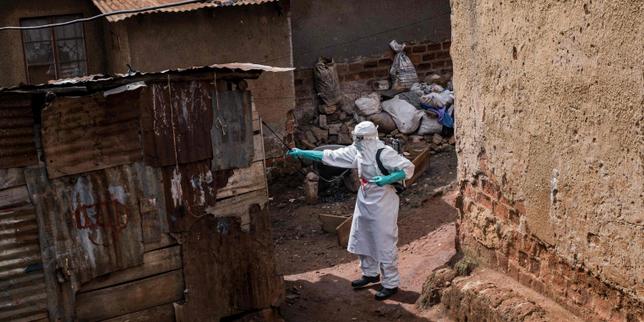
Five American cruise ship passengers have officially left the federal bio-secure isolation unit in Omaha, Nebraska, to finish their 42-day quarantine at home. While public health officials stress that the broader risk to the American public remains low, the quiet discharge highlights a deeply fractured federal response behind closed doors, featuring forced federal detention orders, traumatized passengers, and an unprecedented domestic scramble to contain the only strain of hantavirus capable of jumping from human to human.
The five individuals are part of a cohort of 18 Americans evacuated from the MV Hondius, an expedition cruise ship that suffered a deadly outbreak while navigating the South Atlantic Ocean. After a frantic international repatriation effort coordinated by the Centers for Disease Control and Prevention (CDC), the passengers landed in Nebraska on May 12. Though none of the returning travelers have displayed active symptoms, the decision to allow nearly a third of them to scatter across state lines halfway through their incubation window exposes the delicate, often agonizing balance between individual civil liberties and rigid biosecurity. Expanding on this theme, you can find more in: The Anatomy of Commotio Cordis and Projectile Impact Mechanics in Youth Sports.
The Threat of Person to Person Transmission
Most Americans familiar with hantavirus associate it with the American Southwest—sweeping out dusty cabins, inhaling dried deer mouse droppings, and contracting a severe, non-contagious respiratory illness.
That is not what happened in the South Atlantic. Analysts at Mayo Clinic have also weighed in on this matter.
The World Health Organization confirmed that the vessel outbreak was driven by Andes virus, a highly lethal South American hantavirus strain. It possesses a uniquely terrifying evolutionary trait. It can spread directly between humans through prolonged close contact, respiratory droplets, and shared fluids.
Out of 147 people aboard the MV Hondius, 13 confirmed or probable cases have emerged, resulting in three deaths. Because Andes virus mimics the early symptoms of flu or common colds before triggering catastrophic respiratory failure, tracking it requires extreme vigilance. The incubation period can stretch to a staggering 42 days.
Because of this extended timeline, federal officials didn't send the repatriated Americans home to self-isolate on arrival. Instead, they routed them directly to America’s only dedicated federal containment facility designed for citizens exposed to high-consequence pathogens.
Isolation Inside America's Biodefense Capital
The National Quarantine Unit sits inside the Dr. Edwin G. & Dorothy Balbach Davis Global Center at the University of Nebraska Medical Center (UNMC) in Omaha. It is a highly specialized fortress. Built using a $20 million federal grant, the 20-bed facility features complex negative-pressure air filtration systems, single-occupancy suites, and a dedicated, all-volunteer medical staff trained to handle viral hemorrhagic fevers and airborne threats.
For the passengers, the unit became a gilded cage.
While equipped with high-speed internet and exercise equipment, the reality of strict medical confinement quickly took a psychological toll. The facility operates under zero-exposure rules. Staff don intensive personal protective equipment, and patients are completely barred from physical human contact.
The psychological fractures inside the unit became public when federal health officials quietly issued formal quarantine orders to legally force two passengers to stay after they attempted to walk out.
NATIONAL QUARANTINE UNIT VS. BIOCONTAINMENT WARD
+-----------------------------------+-----------------------------------+
| National Quarantine Unit (NQU)    | Biocontainment Unit (Level 1)     |
+-----------------------------------+-----------------------------------+
| Purpose: Asymptomatic exposure    | Purpose: Active, confirmed illness|
| Structure: Single rooms, en suite | Structure: Intensive care beds    |
| Protocol: Daily observation       | Protocol: Strict bio-isolation    |
| Status: 5 out of 18 discharged    | Status: Prepared for escalation   |
+-----------------------------------+-----------------------------------+
Not everyone wanted to leave when given the chance. Passenger Jake Rosmarin choosing to stay behind illustrates the profound trauma experienced by those on board. In daily dispatches shared on his blog, Rosmarin detailed his decision to remain in federal custody for the final three weeks of his monitoring window.
"For me personally, this experience has been incredibly traumatic," Rosmarin wrote. "I don't think I've fully processed everything yet, and right now I don't want to leave until I know there is no risk of me getting sick or putting my family, friends, or the general public at risk."
The Logistical Nightmare of Moving a Pathogen
Letting five asymptomatic individuals leave Omaha is not as simple as booking a commercial flight. To maintain the biosecurity perimeter, federal and state authorities had to coordinate an intricate, non-commercial transit operation.
The discharged passengers were flown via private, government-arranged transport explicitly barred from commercial air paths. Two of the individuals are returning to New York State, bound for residences located strictly outside of New York City to avoid dense urban centers.
Once home, the administrative burden shifts to local health departments. Local teams must maintain 24/7 oversight and conduct mandatory daily symptom checks until the final quarantine window closes on June 22.
If any of these five individuals develops a sudden fever or cough, the local public health apparatus faces a logistical crisis. Andes virus requires immediate supportive care. Delayed treatment drastically reduces survival rates, yet a symptomatic patient cannot simply be wheeled into a local community hospital emergency room without risking catastrophic staff exposure.
The Unresolved Risks of Home Monitoring
The decision to decentralize the cruise ship quarantine represents a significant gamble by public health authorities. While home quarantine satisfies the legal pressure to grant freedom to individuals who are technically healthy, it reintroduces human error into a highly sensitive biosecurity equation.
In a controlled facility like UNMC, compliance is absolute. At home, boundaries blur. A family member walks into a room; a delivery person approaches a door; a piece of contaminated laundry is handled incorrectly. When dealing with a pathogen that has already claimed three lives on a single ship, the margin for error is razor-thin.
Public health containment strategies are only as strong as their weakest link. By transferring monitoring duties from a centralized, multi-million-dollar defense facility to scattered local jurisdictions, the federal government has traded absolute containment for a logistical honor system. The next three weeks will determine whether that compromise was an acceptable risk, or a critical mistake.