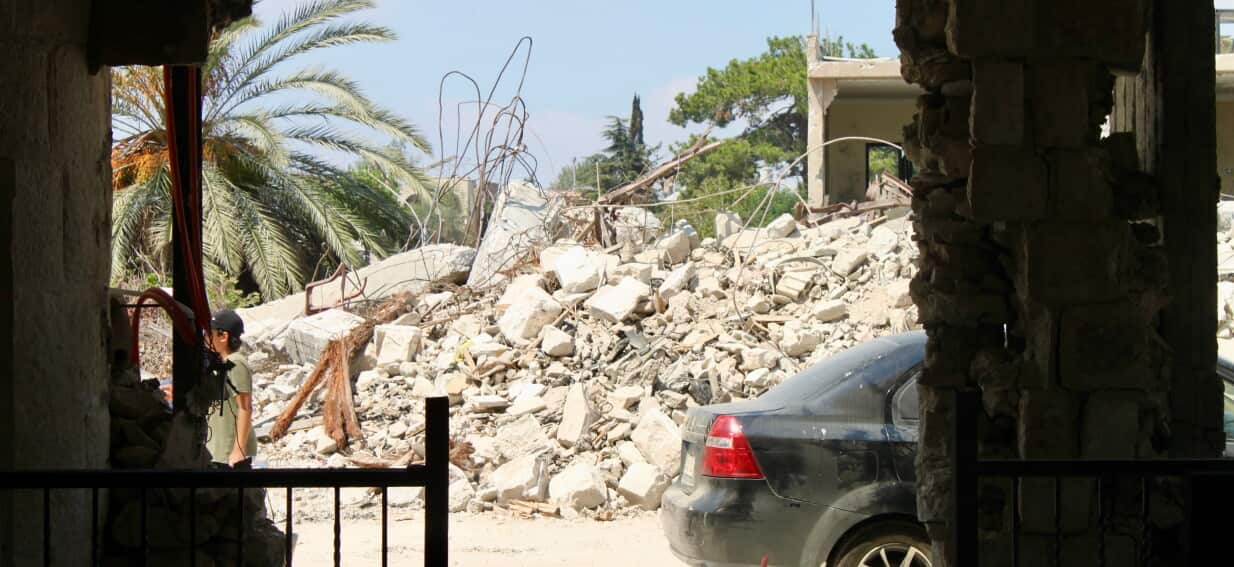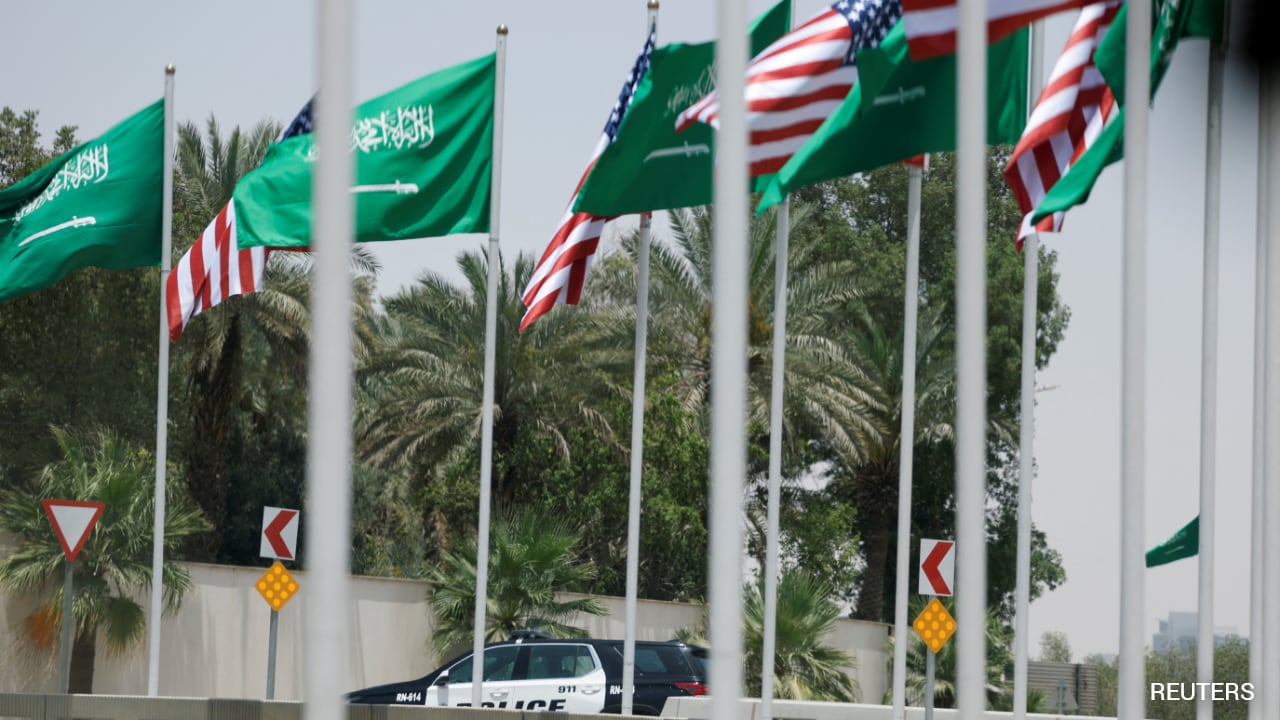
Washington has greenlit a massive $5 billion military package for Riyadh. The State Department cleared the transfer of thousands of Joint Direct Attack Munitions, commonly known as JDAMs, along with guidance kits and general-purpose bombs manufactured by Boeing. This transaction unfolds directly against the backdrop of an expanding regional conflagration involving the United States, Israel, and Iran. Since the outbreak of hostilities earlier this year, Saudi airspace and critical infrastructure have absorbed repeated waves of drone and missile fire launched by Iranian forces and allied regional militias.
The transaction is not merely an emergency reaction to incoming shrapnel. It represents the continuation of a decades-long logistical marriage between American defense contractors and Gulf monarchies. Understanding why Washington is rushing thousands of precision-guided munitions into Saudi hangars requires looking past the immediate headlines of aerial interceptions and examining the architecture of modern power projection in the Middle East.
The Mechanics of the Five Billion Dollar Arsenal
The specifics of the Foreign Military Sale notification delivered to Congress reveal an explicit focus on precision strike capability and extended range. The package includes over five thousand KMU-572 JDAM guidance kits, five thousand KMU-556 kits, and a combined total of more than ten thousand general-purpose bombs, split between 500-pound BLU-111 and 2,000-pound BLU-117 bodies.
These are not defensive interceptors designed to knock incoming ballistic missiles out of the stratosphere. These are offensive, high-explosive packages built to destroy hardened targets on the ground. When bolted onto standard unguided iron bombs, the JDAM guidance tail kit transforms gravity-dropped ordnance into precision-guided munitions capable of hitting targets within meters, even through heavy cloud cover or electronic countermeasures.
By pushing these packages into Saudi Arabia, the Pentagon is actively restocking the kingdom's primary strike inventory. Years of low-intensity conflict along the southern border against Houthi forces in Yemen, combined with the new operational tempo demanded by the active theater against Iran, have severely depleted regional stockpiles. The Boeing production lines in Arlington and St. Louis are essentially running shifts to backfill what has been expended in defense of regional oil infrastructure and military installations.
Interoperability as a Strategic Tether
Official justifications from the State Department emphasize interoperability. The argument follows a familiar bureaucratic script. By outfitting the Royal Saudi Air Force with American-standard munitions, the United States ensures that its regional partners can plug directly into the command-and-control networks utilized by U.S. Central Command and allied forces operating across the Gulf.
Yet interoperability cuts both ways. When a foreign military becomes entirely dependent on proprietary American guidance systems, software updates, and maintenance schedules, it forms an unbreakable strategic tether. The kingdom's fleet of F-15s and Eurofighters rely entirely on Western supply chains to remain mission-capable. A cutoff in spare parts or guidance modules grounds the fleet within weeks.
This technical integration acts as a permanent diplomatic anchor. Washington can manage the scope of regional operations not merely through direct command, but by controlling the physical flow of ordnance. When the Pentagon approves a $5 billion munitions transfer during an active war, it is signaling absolute operational alignment with Riyadh, binding the two militaries closer together as the theater expands.
The Congressional Hurdle and Political Reality
Under the Arms Export Control Act, Congress maintains a window of review to block or modify major foreign military sales. Historically, arms packages to Gulf states attract intense scrutiny from lawmakers concerned about civilian casualties, human rights records, and the broader proliferation of advanced weaponry in an unstable neighborhood.
However, the political calculus changes dramatically during active wartime engagement. When American service members and regional allies are under direct threat from Iranian missile batteries and drone swarms, legislative opposition tends to evaporate under the banner of coalition defense. The argument that a major non-NATO ally must be immediately reinforced to protect vital global energy arteries carries immense weight on Capitol Hill.
Critics will point out that flooding the region with more high-explosive ordnance does little to de-escalate a multi-front war. They are entirely correct. Arms sales of this magnitude do not extinguish fires; they provide the fuel. Riyadh is preparing for a protracted campaign, and Washington is ensuring the supply lines remain open, uninterrupted, and deeply profitable for the domestic defense industrial base.
The munitions will clear the congressional review period without significant legislative friction. The crates will arrive at King Khalid Air Base, the guidance kits will be bolted to the iron bodies, and the warplanes will taxi onto the tarmac. The diplomatic language will continue to frame the transaction as a stabilizing force for regional security, masking the grim reality of an arms pipeline running at maximum capacity.