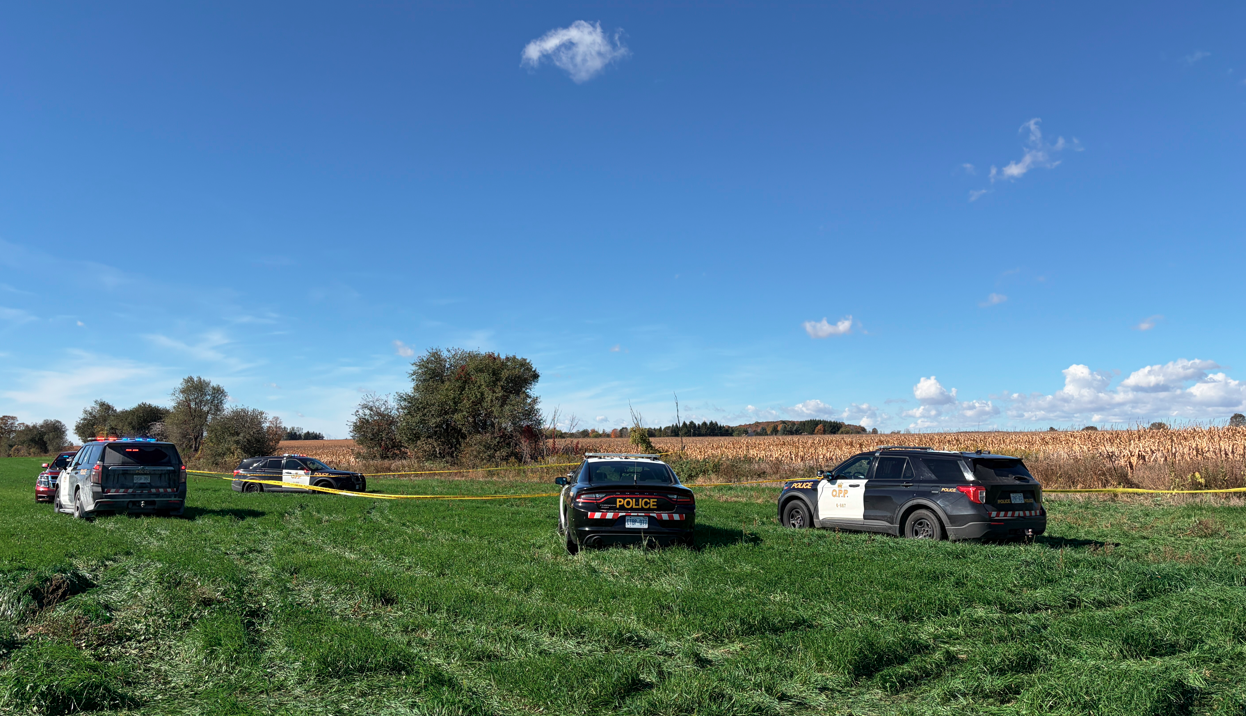
On a quiet Friday morning in October, the routine hum of light aircraft over Wellington County was shattered by a sudden, catastrophic drop. Two people lost their lives when an amateur-built Skybolt biplane, operating out of the local Juergensen Field near Fergus, Ontario, plunged into a harvested cornfield and erupted into flames.
While wire services quickly reduced the incident to a brief bulletin about a fatal post-crash fire, the structural realities of general aviation safety demand a much harder look. When small, experimental aircraft experience catastrophic structural or mechanical failures during low-altitude maneuvers, the margin for human error or mechanical grace shrinks to absolute zero.
The Anatomy of an Experimental Flight
The Transportation Safety Board of Canada confirmed that the aircraft involved was an amateur-built biplane engaged in local aerobatic training. Both occupants were experienced pilots, a detail that immediately complicates the standard public assumption that pilot inexperience is the primary driver of general aviation incidents.
Amateur-built aircraft—often categorized as homebuilt or experimental—occupy a unique space in civil aviation regulations. Unlike factory-certified commercial jets or standard Cessna trainers, these machines are assembled by individuals, sometimes using kits, under oversight frameworks that prioritize builder latitude over standardized mass-production conformity.
When an experienced aviator straps into a high-performance aerobatic biplane like a Skybolt, they are managing a complex equation of aerodynamic stress, engine performance, and structural integrity. Aerobatic flight places severe g-forces on airframes. Even minor deviations in maintenance history, material fatigue, or unexpected mechanical binding can precipitate an unrecoverable descent within seconds.
The Rural Response and the Post-Crash Fire Hazard
First responders from the Ontario Provincial Police, local fire services, and emergency medical personnel rushed to the scene near Beatty Line and Wellington Road 17. Upon arrival, they faced a devastating scene: the aircraft had come to rest upside down in an open field, fully engulfed in flames.
The post-impact fire remains one of the most lethal variables in light aircraft mishaps. Aviation fuel, highly volatile upon tank rupture, turns survivable low-speed impacts into thermal emergencies. Even if structural deceleration forces are within human tolerance, the rapid ignition of fuel leaves a microscopic window for extraction, frequently necessitating specialized rural fire suppression before recovery operations can even begin.
Local residents and agricultural workers near Fergus were left shaken as emergency crews cordoned off the perimeter, shifting the focus from immediate rescue to a meticulous multi-day forensic examination by federal safety investigators.
Uncovering the Systemic Vulnerabilities
Why do fatal incidents continue to plague the amateur-built sector despite stringent safety campaigns?
The answer lies in the inherent tension between freedom of flight and regulatory standardization. Commercial aviation benefits from predictable fleet behaviors, centralized maintenance logs, and mandatory service bulletins that catch systemic component flaws before they cause disaster. In contrast, the experimental community relies heavily on individual vigilance. Every homebuilt aircraft is a singular engineering entity; what works or fails on one Skybolt may share very little with another built down the hangar row.
Furthermore, training for aerobatic flight requires pushing envelopes. Executing loops, rolls, or snap maneuvers close to rural terrain leaves virtually no altitude buffer when mechanical anomalies or spatial disorientation occur.
As federal investigators comb through wreckage fragments, engine telemetry, and maintenance records over the coming weeks, the aviation community is once again forced to confront the sobering price of pushing aerodynamic boundaries in machines built by hand. The cornfields of Wellington County have recorded another grim reminder that in the realm of experimental flight, the margin for error is measured in heartbeats.