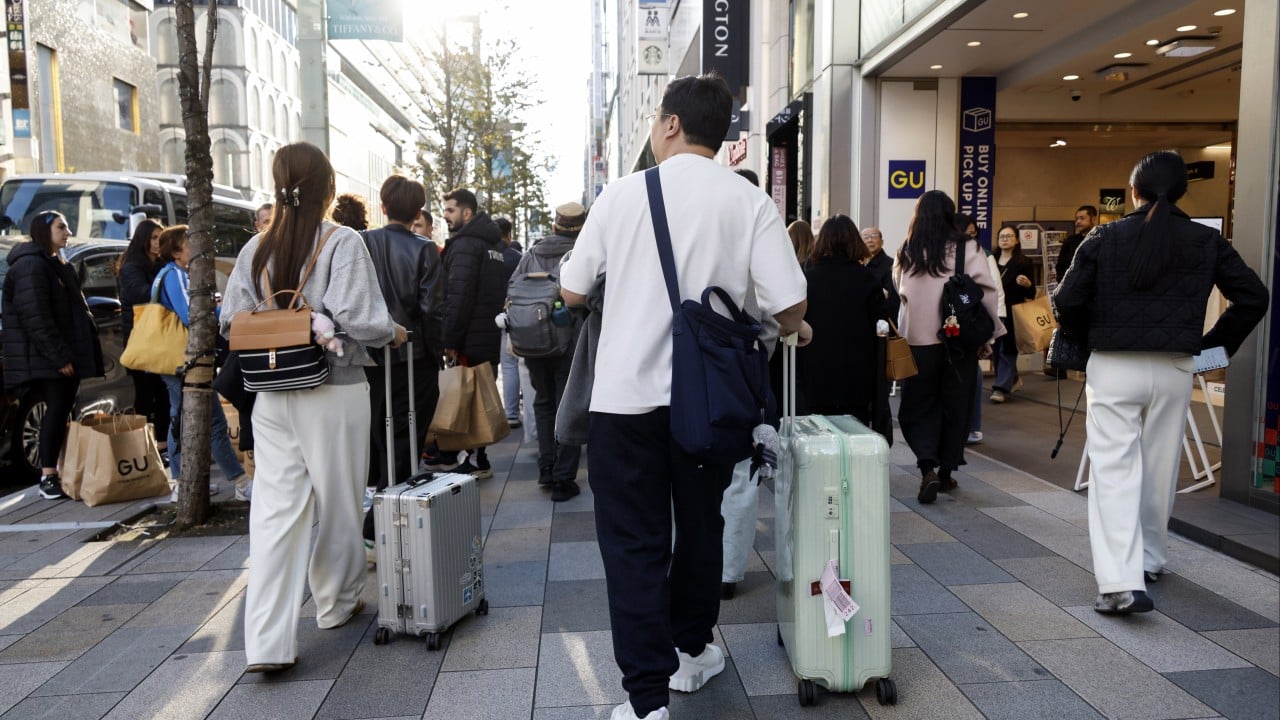
In central Tokyo, police dismantled a mobile phishing operation built around an IMSI-catcher—a rogue cellular base station—that hijacked the mobile connections of Chinese tourists to blast fraudulent bank and payment alerts directly to their screens. By mimicking a legitimate local carrier tower, the device forced nearby phones to drop down to insecure 2G networks, bypassing standard carrier spam filters entirely. The incident exposes a glaring structural vulnerability in global roaming architecture that leaves international travelers uniquely defenseless against localized radio-frequency attacks.
How Rogue Base Stations Hijack Roaming Phones
To understand why this attack worked so cleanly in one of the most technologically advanced cities on earth, you have to look at how cellular protocols handle backward compatibility. Modern smartphones constantly scan the airwaves for the strongest available signal. When you land in a foreign country, your phone enters roaming mode, aggressively searching for partner networks to establish data and voice connections. Read more on a connected issue: this related article.
An IMSI-catcher—often referred to colloquially as a Stingray or false base station—exploits this exact behavior. By broadcasting a signal at a higher power level than the surrounding legitimate towers operated by carriers like NTT Docomo, SoftBank, or KDDI, the rogue rig tricks passing handsets into believing it is the closest, most reliable cell tower in the area.
Once a phone initiates a handshake with the fake tower, the attacker executes a downgrade attack. Modern 4G LTE and 5G networks require mutual authentication; the tower must prove its identity to the phone before encrypted communication begins. Older 2G (GSM) networks lack this safeguard. The fake tower jams or rejects the 4G/5G connection request and forces the phone to fall back onto a 2G protocol. Additional reporting by The Next Web explores comparable views on this issue.
Japan famously shut down its commercial 2G networks years ago, which creates a dangerous blind spot. Because domestic Japanese phones rarely rely on legacy GSM bands anymore, local infrastructure and consumer devices are not optimized to flag sudden 2G fallbacks as anomalous. Foreign phones, however, retain global multi-band radios designed to connect to whatever legacy infrastructure exists anywhere in the world. When the fake tower emits a 2G signal, the tourist's phone happily connects.
From that moment on, the attacker controls the pipe. They do not need to buy stolen phone numbers from data brokers or route texts through international SMS gateways where telecom firewalls can inspect and block malicious links. The rogue station injects the SMS directly into the handset's baseband processor. On the victim's screen, the message appears to come from a trusted sender ID—such as a major Chinese bank, WeChat Pay, Alipay, or a Japanese customs authority—often landing inside the exact same message thread as legitimate past notifications.
Why Chinese Tourists Became the Primary Target
Cybercriminals do not deploy expensive radio hardware in dense urban centers at random. They go where the liquidity is highest and the friction to cash out is lowest. The surge of inbound tourism to Japan—driven heavily by visitors from mainland China and Hong Kong—created an ideal hunting ground in districts like Shinjuku, Ginza, and Shibuya.
Consider the operational mechanics of the scam. A criminal crew packs a compact transmitter, a power supply, and a laptop into a backpack or the trunk of a rented van. They park near luxury retail corridors, duty-free flagship stores, or major transit hubs where international visitors cluster. Because the broadcast radius of a portable IMSI-catcher typically spans only a few hundred meters, physical proximity is everything.
Tourists in these zones are actively spending money. Their guards are down, and their phones are constantly pinging them with legitimate transaction alerts, currency conversion updates, and travel confirmations. When a phishing text arrives claiming a cross-border payment was frozen or a credit card requires immediate identity verification, the timing feels entirely plausible.
Targeting Chinese speakers also solves a major logistical hurdle for organized fraud syndicates. Domestic Japanese bank accounts are notoriously difficult to open, heavily monitored, and slow to liquidate. By contrast, compromised credentials for Chinese financial platforms, payment apps, or UnionPay cards can be drained and laundered within minutes through established underground networks operating across Southeast Asia. The attackers operate physically inside Japan to capture the signals, while the backend phishing infrastructure and money-mule operations run remotely offshore.
The Structural Blind Spot in Telecom Security
For decades, the telecommunications industry operated on a model of implicit trust. Signaling protocols like SS7 and legacy GSM radio interfaces were engineered in an era when building a cellular base station required massive capital investment and state-level licensing. Nobody designed those standards assuming a mid-level fraud ring could order software-defined radio components online, flash open-source cellular stack software onto a Linux box, and impersonate a national carrier from the backseat of a Toyota Alphard.
The problem persists because wireless carriers face an impossible trade-off between security and connectivity. If handset makers and mobile operators permanently disabled 2G and 3G radios on all modern devices, false base station SMS injection would vanish overnight. Yet carriers resist hard cutoffs because vast stretches of rural infrastructure, maritime zones, and developing markets still rely on legacy networks for basic voice and emergency calls.
Even when telecom regulators detect rogue transmissions, enforcement is a game of cat and mouse. Fixed monitoring stations can triangulate unauthorized radio emissions, and Japanese authorities—specifically the Ministry of Internal Affairs and Communications alongside the National Police Agency—maintain strict spectrum surveillance under the Radio Act. However, mobile rigs move. A crew can broadcast in Ginza for forty minutes during peak shopping hours, harvest thousands of device identifiers (IMSIs), blast out their payload, power down the transmitter, and drive across town before triangulation teams can physically converge on the block.
What Smartphone Makers Are Doing and Where They Fall Short
Apple and Google have finally begun treating legacy cellular protocols as the acute security liabilities they are, though the protections remain uneven across the global market.
In recent updates to Android, Google introduced a granular toggle allowing users to disable 2G connectivity entirely at the modem level. When switched on, the phone flatly refuses to negotiate a 2G handshake, regardless of how strong a fake tower's signal might be. Google has also rolled out cellular network transparency features that alert users when a network requests their unencrypted device identifier or forces an unencrypted connection.
Apple has taken a more conservative approach. Standard iOS settings do not expose a simple global "Disable 2G" switch to everyday users in most regions. Instead, Apple bundled 2G restrictions inside Lockdown Mode—an extreme security posture designed primarily for journalists, dissidents, and high-profile targets facing state-sponsored spyware. While Lockdown Mode effectively neutralizes false base stations, turning it on breaks standard web browsing features, blocks link previews in messages, and restricts photo sharing, making it impractical for an average tourist trying to navigate Tokyo's subway system or translate a restaurant menu.
Furthermore, a massive percentage of budget and mid-tier Android devices sold globally run older firmware versions that lack modem-level 2G kill switches altogether. Even on flagship phones that support the feature, it is almost universally turned off by default to prevent accidental loss of service in areas with poor coverage.
How to Harden Your Phone Before International Travel
Relying on mobile carriers to police the airwaves is a losing strategy. Until 2G protocols are permanently retired from consumer baseband chips, travelers moving through high-density tourist hubs must manage their own radio exposure.
- Disable 2G at the modem level. If you use an Android device running Android 12 or newer, open your network settings, navigate to your active SIM profile, and toggle off Allow 2G. If you rely on an eSIM specifically for international travel data, ensure the setting is disabled on both your primary physical SIM and your travel eSIM.
- Treat every SMS link as hostile while roaming. Legitimate banks, payment processors, and government agencies rarely send clickable URLs via standard text message to resolve urgent account freezes. If you receive an alert claiming your account is suspended, close your messaging app and open the official banking application directly.
- Use Wi-Fi calling and data-only eSIMs. Purchasing a reputable travel data eSIM and turning off your primary home SIM card while abroad drastically reduces your exposure to circuit-switched voice and SMS downgrade attacks. Without an active home SIM registered on the local roaming network, a fake tower cannot spoof your domestic carrier's routing tables to deliver targeted phishing texts.
- Enable Lockdown Mode in high-risk zones. If you use an iPhone and plan to spend hours shopping or commuting through major transit centers known for pickpockets and electronic fraud, temporarily enabling Lockdown Mode during transit hours eliminates the 2G attack surface entirely. You can toggle it back off once you return to your hotel.
The Tokyo bust proves that radio-frequency phishing is no longer an exotic espionage tactic reserved for intelligence agencies; it is a commoditized street crime following the tourist economy wherever crowds gather. As long as smartphones remain programmed to trust obsolete signals from the 1990s, criminals with a backpack full of off-the-shelf transmitters will keep hijacking the airwaves right above your head.