The Africa Centres for Disease Control and Prevention announced that the Democratic Republic of Congo and Uganda have logged 263 confirmed cases of Ebola and 43 deaths, numbers that signal a deeper crisis than the official tallies suggest. While bureaucratic wires track these static data points, the real story on the ground is an unfolding disaster defined by a missing vaccine, a rare viral strain, and weeks of undetected spread across highly volatile borders. The World Health Organization has labeled this a public health emergency of international concern, yet the international machinery is moving with a sluggishness that decades of past epidemics should have cured. This is not just another flare-up in a predictable region. It is the 17th recorded outbreak in the DRC, the third largest in the history of the disease, and it is actively outpacing the global capacity to contain it.
To understand why this specific outbreak is breaking the conventional playbook, one must look at the pathogen itself. We are not dealing with the familiar Zaire strain that caused the devastating West African epidemic or the major outbreaks in North Kivu. This is the Bundibugyo virus, a rare species of orthoebolavirus first identified in 2007.
The Zero Vaccine Reality
Public health agencies have spent the last decade celebrating the deployment of highly effective vaccines like Ervebo. Those countermeasures are completely useless here. The existing global stockpile of Ebola vaccines is formulated strictly for the Zaire strain, offering no proven cross-protection against Bundibugyo. If you are a frontline nurse in Bunia or a clinician in an intensive care unit in Kampala, you are operating without a biological shield.
Therapeutics are similarly non-existent. The monoclonal antibodies that dramatically reduced mortality in recent years do not bind to the Bundibugyo surface proteins. The clinical toolset has been rolled back twenty years, leaving doctors with nothing but basic supportive care: intravenous fluids, electrolyte replacement, and pure hope.
This technological vacuum changes the calculus of containment. When a vaccine is available, ring vaccination protocols can isolate a cluster within days by immunizing every contact around a sick individual. Without that weapon, containment relies entirely on traditional, grinding public health work: rigid contact tracing, strict isolation, and absolute community cooperation. In the current geopolitical environment of northeastern DRC, those three requirements are virtually impossible to meet simultaneously.
Weeks in the Dark
The official numbers tell us that 263 cases are confirmed, but the far more terrifying metric is the 1,100 suspected cases currently under investigation. The outbreak simmered silently in Ituri Province for weeks before laboratory confirmation occurred in mid-May.
When a hemorrhagic fever spreads undetected in a community, it masks itself as everyday illnesses. Early symptoms of the Bundibugyo strain are aggressively generic: fever, body aches, fatigue, and weakness. In a region where malaria, typhoid, and basic gastrointestinal infections are rampant, a patient with a mild fever does not trigger an alarm. They visit informal clinics, buy over-the-counter medication, and return to their families.
By the time "wet" symptoms appear—severe vomiting, diarrhea, and internal or external bleeding—the transmission chains have already multiplied exponentially. The virus had ample time to embed itself into dense, highly mobile populations before the first diagnostic sample reached the Institut National de la Recherche Biomédicale in Kinshasa.
The geographic footprint reveals the consequence of this delay. Transmission is heavily concentrated in the mining-heavy health zones of Mongbwalu and Rwampara within Ituri, but cases have flared in North Kivu and South Kivu. More alarming still is the cross-border leap. Two independent cases, individuals traveling from the DRC, showed up in Kampala, Uganda, within 24 hours of each other. They were admitted to intensive care units in a major metropolitan hub, thousands of kilometers away from the epicenter. A single infected traveler can turn a localized provincial problem into an international emergency overnight.
The Triad of Failure
To blame the spread entirely on a lack of medical technology is to ignore the structural rot that defines modern health security funding. The containment effort is buckling under three distinct pressures.
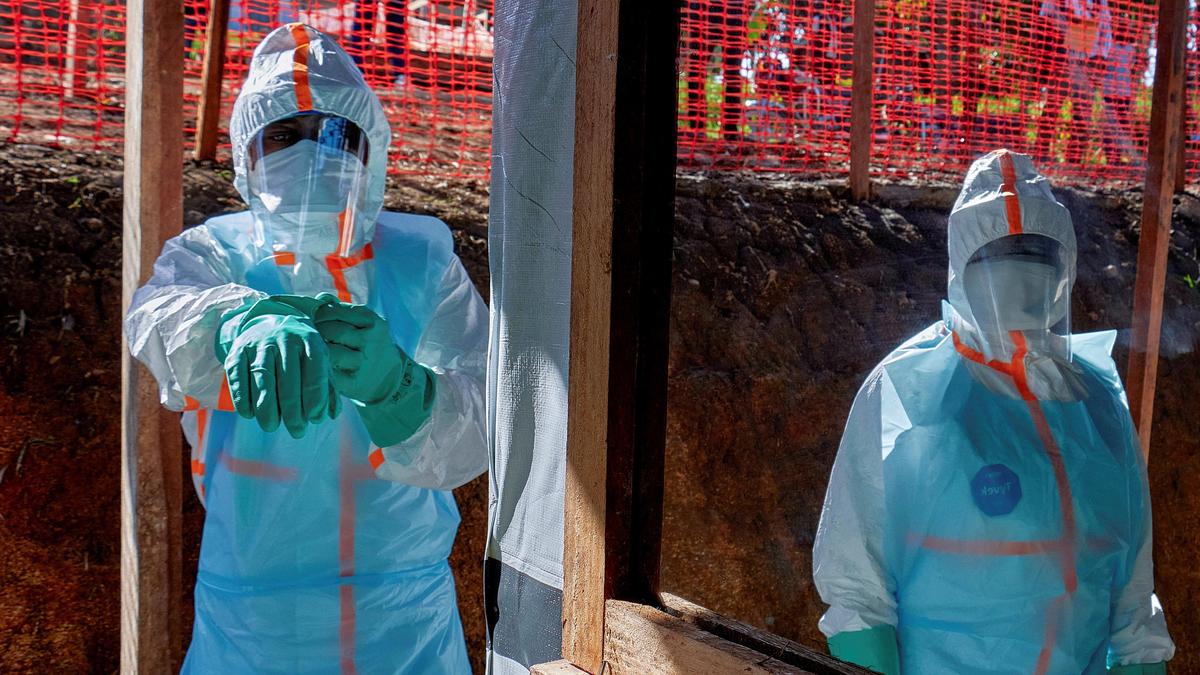
- Supply Chain Depletion: Health workers in Ituri are facing the virus without basic personal protective equipment. Simple surgical masks and gloves are scarce. When healthcare workers are forced to treat suspected viral hemorrhagic fever patients without adequate barriers, the hospital becomes an amplifier rather than a sanctuary. At least four healthcare workers have already died in Ituri after contracting the virus in clinical settings.
- Active Conflict and Displacement: Northeastern DRC is an active war zone. Dozens of armed groups operate across Ituri and North Kivu, displacing hundreds of thousands of civilians. Contact tracing requires stability; you cannot track a contact who has fled into the forest to escape a rebel militia.
- Informal Healthcare Networks: A significant portion of the population seeks care from unregistered traditional healers or informal drug vendors. These facilities lack the infrastructure for infection prevention, turning every consult into a potential super-spreading event.
Dr. Jean Kaseya, Director-General of the Africa CDC, noted that national incident systems must be activated rapidly and permanently. But declarations do not manufacture masks. The global health architecture remains stubbornly reactive, unlocking emergency funds only after bodies begin piling up in provincial morgues.
The Myth of Localized Risk
The historical narrative around Ebola suggests it is a disease of remote forest villages. That narrative is dead. The current outbreak is unfolding in urban and semi-urban hubs characterized by high population mobility and intense regional trade. The borders between the DRC, Uganda, Rwanda, and South Sudan are highly porous lines on a map, crossed by thousands of traders, miners, and refugees every single day.
Consider a hypothetical scenario where an informal gold miner in Mongbwalu develops a fever. He boards a shared minibus to Bunia, passes through informal border checkpoints, and seeks treatment in a larger city like Kampala or Goma. By the time he is isolated, dozens of passengers, clinicians, and family members have been exposed. This is not an abstract theory; it is the exact mechanism that carried the virus to Uganda's capital.
International partners frequently parachute into these crises with top-down strategies designed in Geneva or Washington. They bring capital but lack the cultural literacy required to build trust in communities that view external medical intervention with deep historical suspicion. When foreign teams arrive in full-body biohazard suits without local consultation, communities often push back, hiding the sick and conducting unsafe traditional burials in secret.
The strategy must shift toward unconditional support for African-led institutions that understand how to navigate local political realities and militia-controlled territories. Western intervention is most effective when it serves as a logistical backbone—delivering raw supplies and funding—rather than a commanding force.
The primary defense against a global pandemic is the resilience of the local clinic in the most remote health zone of the DRC. If that clinic lacks a pair of rubber gloves, the entire global health apparatus is vulnerable. The international community must treat pandemic preparedness not as a series of sporadic fire drills funded by emergency grants, but as a permanent, baseline infrastructure cost. Until the structural gap between Western laboratory capability and frontline African clinical reality is closed, the global response will remain one step behind the next mutation.