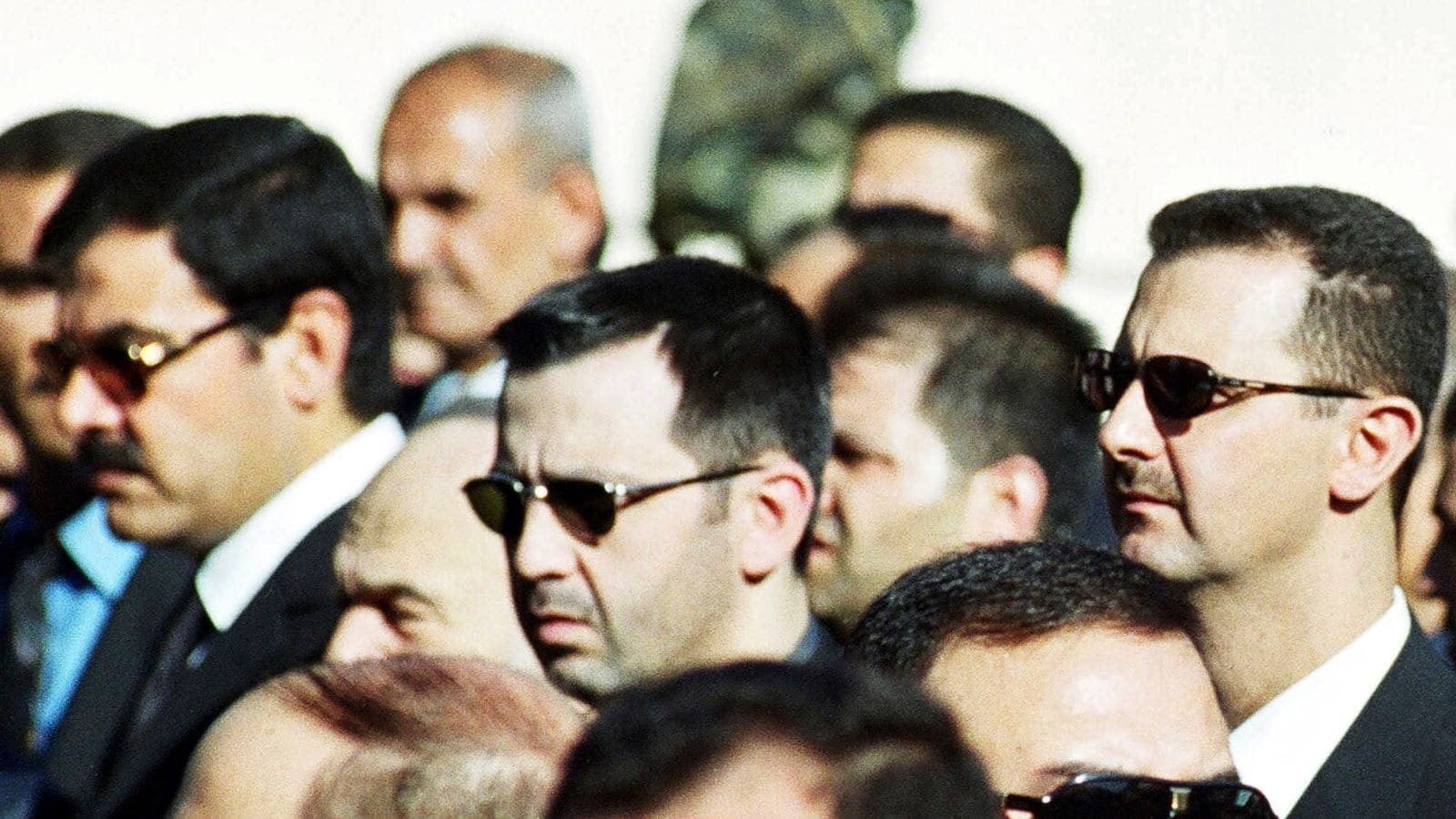
A Damascus criminal court sentenced ousted Syrian leader Bashar al Assad to death in absentia, marking a monumental step in the transitional government's pursuit of accountability following the collapse of his five-decade regime in December 2024. Presiding judge Fakhareddine al-Aryan delivered the verdict after convicting Assad, his brother Maher al Assad, and former security official Atef Najib on charges of war crimes, premeditated murder, and crimes against humanity. While Assad and his inner circle remain safely sheltered in Moscow under Russian state protection, the proceedings inside the Syrian capital represent more than symbolic theater. They expose the mechanics of transitional justice, the limits of international law, and the heavy burden of reckoning with a fourteen-year conflict that left roughly half a million people dead.
The Anatomy of a Symbolic Verdict
Legal proceedings conducted in the absence of the accused often face immediate skepticism. Critics point out that a sentence passed on an exiled former dictator living thousands of miles away carries no immediate physical consequence. Yet dismissing the Damascus tribunal as a hollow gesture ignores the procedural foundation it attempts to build for a fractured nation. In related news, take a look at: Structural Failures of Trilateral Security Pacts Under Asymmetric Threat Models.
The Fourth Criminal Court did not merely issue an executive decree; it processed evidence, heard testimony from survivors of state detention centers, and documented specific institutional chains of command. Judge al-Aryan detailed how state security agencies were weaponized to crush civil dissent, transforming bureaucratic ministries into engines of forced disappearance and systematic torture.
Atef Najib, a cousin of the former president and former head of political security in Deraa province, stood trial inside a courtroom cage wearing a prisoner uniform. Najib's presence provided a stark contrast to the absentee verdicts handed down to Bashar and Maher al Assad. As the official who oversaw the initial detention and torture of schoolboys whose anti-government graffiti sparked the 2011 uprising, Najib's prosecution anchored the state's legal arguments in physical reality. Witnesses who were children during the 2011 crackdown stood in the courtroom gallery, watching the apparatus that terrorized their youth face direct legal scrutiny. BBC News has also covered this important subject in great detail.
The Geopolitical Wall in Moscow
The primary obstacle facing the Syrian judiciary is not a lack of statutory imagination, but the unyielding wall of geopolitical asylum. When opposition forces led by Hayat Tahrir al-Sham executed a lightning offensive that dismantled the regime, Bashar and Maher al Assad fled to a Russian military base before relocating to Moscow.
Moscow has consistently declined to extradite its long-standing Middle Eastern allies. For the Kremlin, harboring the former Syrian leadership serves both a domestic political narrative and a strategic posture of loyalty to client states. Consequently, the death sentences handed down in Damascus will not result in immediate execution unless a drastic, highly improbable shift occurs in Russian foreign policy.
This dynamic highlights the inherent friction between domestic transitional justice and sovereign immunity. Transitional authorities in Syria have formally requested international cooperation and extradition channels, knowing full well that foreign capitals hold the keys to enforcement. Legal experts note that while extradition remains blocked, the rulings establish a formal international paper trail. Red notices and Interpol listings restrict the movement of convicted war criminals, effectively binding them to jurisdictions willing to offer protection.
The Perils of Post-Regime Vengeance
Reconstructing a judicial system on the smoking ruins of a police state requires navigating severe security vacuums. The collapse of the Baathist government did not instantly unify the country. Instead, the post-Assad era has witnessed periodic explosions of sectarian violence, including retaliatory massacres targeting Alawite and Druze communities.
Transitional leaders face an immense balancing act. If prosecutions appear too narrow or politically motivated, they risk fueling cycles of revenge. If trials move too slowly, public outrage boils over into extrajudicial street justice.
Human rights organizations have raised complex questions regarding the proceedings. While acknowledging the gravity of the crimes committed by the regime, groups such as Human Rights Watch maintain principled opposition to capital punishment under any circumstances, arguing that irreversible sentences undermine the creation of a reformed, impartial judiciary. Building an enduring legal framework requires adherence to strict fair-trial standards, even when prosecuting architects of mass atrocities. The challenge for Damascus is proving that its new courts operate on jurisprudence rather than victor's justice.
The Long Road to Historical Accounting
The courtroom in central Damascus filled to capacity hours before the verdict was read. Families of detainees who vanished inside the notorious Sednaya and branch prisons gathered outside, holding photographs of loved ones whose fates remain unknown. For these families, the death sentence serves as official acknowledgment of state-sponsored violence that previous administrations denied for decades.
Yet, a judicial ruling in a capital city cannot instantly heal a landscape fragmented by foreign military interventions, economic ruin, and millions of displaced citizens. The transitional government must transition from high-profile trials of top-tier exiles to the painstaking, unglamorous work of institutional reform, property restitution, and local reconciliation.
Bashar al Assad watches these developments from exile, issuing occasional statements denying responsibility for the collapse of his government while remaining insulated by foreign protection. Back in Syria, the court transcripts are filed, the physical cages in the courtroom are emptied of their high-ranking occupants, and the transitional authorities are left to administer a country where the demand for absolute justice vastly outstrips the instruments available to secure it


