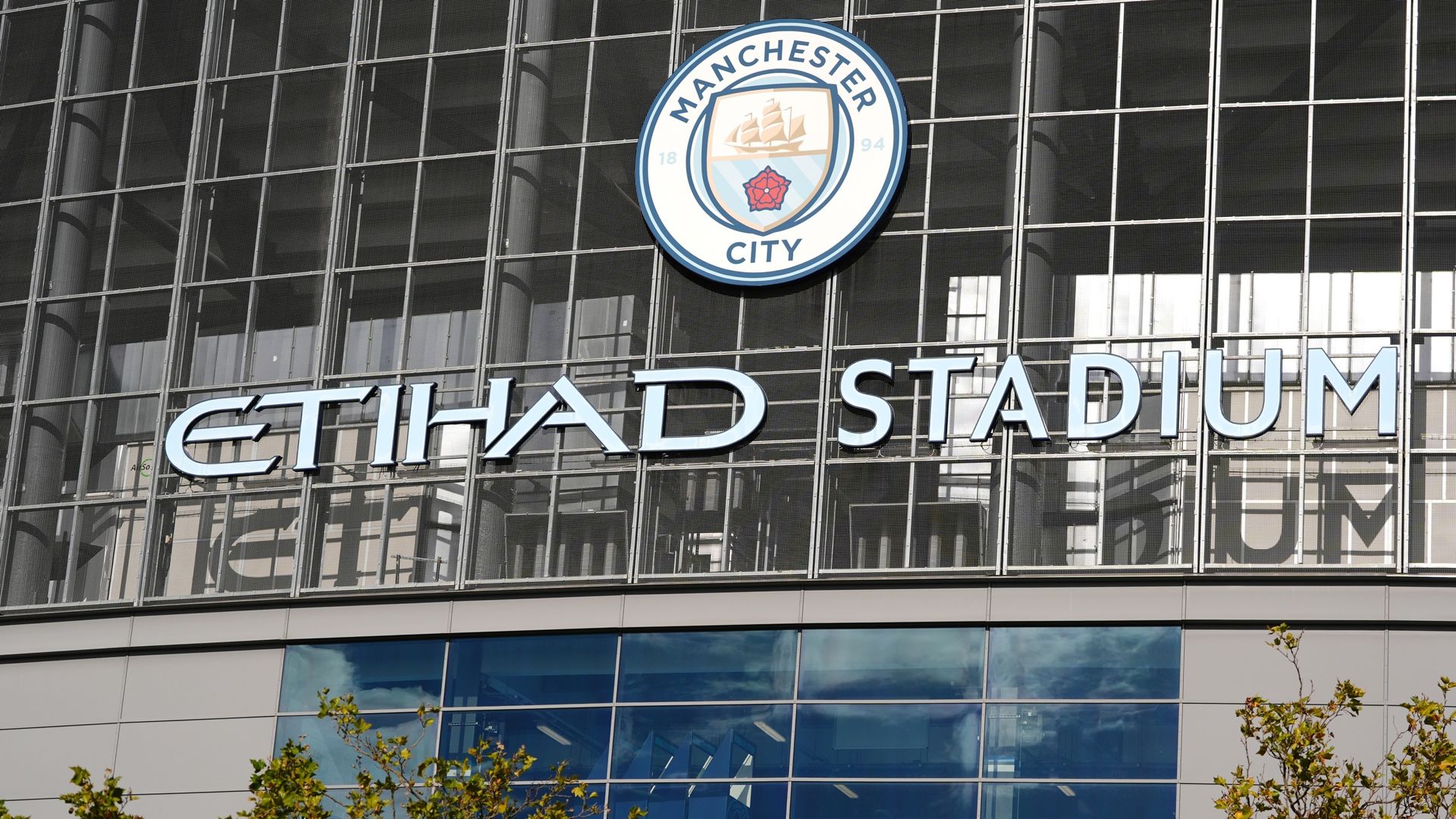
A commercial partner of Manchester City stepping forward to threaten legal action against the Premier League is not a routine corporate dispute. It represents an unprecedented escalation in a cold war that has quietly defined English football for years. At the heart of this conflict lies a fundamental disagreement over financial governance, fair market value, and who truly holds the authority to dictate the commercial boundaries of elite sport. When sponsors begin drafting legal briefs alongside clubs, the traditional boundaries separating sporting regulation from corporate autonomy dissolve entirely. The Premier League built its global empire on the premise of a shared economic ecosystem, yet that very ecosystem is now fracturing under the weight of conflicting financial interests and state-backed investment models.
For decades, football governance operated under a predictable rhythm. Clubs agreed on collective broadcasting deals, adhered to loose budgetary guardrails, and accepted the authority of league administrators without significant resistance. That consensus has completely shattered. The introduction of stringent Associated Party Transactions rules transformed commercial partnerships into a legal minefield. When the league attempts to block or discount sponsorship agreements involving entities linked to a club’s ownership, it triggers a chain reaction. Sponsors are no longer passive billboard purchasers. They are active financial stakeholders whose brand valuations, growth projections, and commercial strategies are directly undermined by regulatory interventions.
Consider the mechanics of modern football finance. Elite clubs operate as multinational corporations with revenue streams rivaling Fortune 500 companies. A multimillion-pound shirt sponsorship or stadium naming rights agreement is calculated across multi-year cycles, balancing brand equity, global television exposure, and regional market penetration. When league-appointed panels arbitrarily deem a sponsorship value to be outside fair market value parameters, the commercial impact is immediate. It restricts cash flow, alters internal budget allocations, and forces corporate partners into defensive postures. From a sponsor's perspective, this interference constitutes a direct threat to their commercial interests. Why invest tens of millions of dollars into a premier asset if an external governing body can unilaterally diminish the legitimacy or utility of that contract?
The legal friction stems from the fundamental tension between collective governance and individual commercial freedom. The Premier League operates as a membership organization governed by its clubs. Historically, a coalition of clubs could vote to implement rules designed to protect competitive balance and financial stability. However, the legal challenges mounted by Manchester City and supported by commercial partners expose the limits of this cooperative model. When rules are perceived not as tools for competitive fairness, but as instruments designed by rival factions to suppress specific economic models, litigation becomes an attractive alternative to the ballot box.
The broader implications for global football commerce are profound. For years, the Premier League marketed itself as the most competitive and lucrative league in the world, largely driven by open market dynamics and heavy inward investment. Attracting sovereign wealth and billionaire owners transformed the competitive baseline. Traditional elite clubs, alarmed by the rapid acceleration of challengers, pushed for tighter financial controls under the banner of integrity. Yet integrity is a malleable concept in professional sports. To one faction, financial controls prevent runaway spending and maintain competitive parity. To another, those same controls amount to protectionism, designed to pull up the drawbridge and lock in a permanent hierarchy among the traditional elite.
When sponsors enter the legal fray, they introduce a terrifying variable for league executives. Television broadcasters, commercial sponsors, and private equity investors rely on stability. Prolonged courtroom battles, injunctions, and challenges to the legality of league regulations create uncertainty. Uncertainty depresses asset values. If a major sponsor successfully challenges the Premier League's regulatory authority in court, the floodgates open for an array of further legal challenges. Other clubs might follow suit, questioning broadcasting distributions, disciplinary frameworks, and commercial restrictions. The centralized authority that allowed the Premier League to negotiate record-breaking international TV rights could disintegrate into a fractured collection of warring legal factions.
The defense offered by the league centers on the necessity of fair market value assessments. Without independent oversight, critics argue, clubs with limitless ownership backing could artificially inflate commercial revenues through affiliated companies, effectively bypassing financial regulations and distorting the competitive landscape. This argument carries weight among traditionalists who fear football is turning into an unregulated playground for nation-states and multi-club ownership conglomerates. Yet the enforcement mechanism is where the system breaks down. Determining the true market value of a global sports asset is an inexact science. Unlike publicly traded stocks, football sponsorships carry intangible benefits, emotional resonance, and geopolitical dimensions that defy traditional valuation metrics. When a regulatory panel applies rigid economic formulas to a subjective global market, friction is guaranteed.
The whisper of legal action from a major sponsor signals a shift from boardroom lobbying to open warfare. Sponsors do not issue legal warnings lightly. They retain expensive legal counsel, conduct risk assessments, and calculate the cost-benefit ratio of confronting a sports governing body. The fact that a sponsor feels compelled to take this step suggests they believe the regulatory body oversteered significantly. It indicates that the economic damage caused by regulatory interference outweighs the diplomatic cost of litigation. This is the danger zone for any sports administration. Once commercial partners view the regulator as an antagonist rather than a protector of the league's brand, the social contract binding the competition together is broken.
Looking closely at the governance structure reveals an inherent structural flaw. The Premier League acts simultaneously as a commercial promoter maximizing revenue and a strict regulator policing compliance. These two roles frequently conflict. Maximizing commercial appeal often requires encouraging aggressive investment and star power, while regulation often seeks to restrict spending and cool the market. When clubs and their commercial partners feel the regulatory apparatus is being weaponized to curb sporting ambition, trust evaporates.
The legal arguments will likely focus on competition law, restraint of trade, and the abuse of dominant market position. These are heavy legal concepts far removed from the traditional banter of football terraces. Yet they are the new reality of the modern game. Courts are being asked to decide whether private sporting associations possess the legal right to veto commercial agreements negotiated in good faith between private entities. The outcome of these legal maneuvers will reverberate far beyond English shores. European leagues, FIFA, and UEFA are watching closely. If the Premier League's regulatory framework is successfully dismantled or severely curtailed in court, the floodgates will open across international football.
The modern football club is no longer just a sporting institution rooted in its local community. It is a node in a complex global network of capital, media, and statecraft. Sponsors are integral nodes in that network. Treating them as peripheral actors who can be managed through internal voting procedures is a dangerous miscalculation by league administrators. When the money driving the sport starts talking the language of injunctions and antitrust lawsuits, the traditional administrative model is finished.
The consequences of this confrontation will reshape the financial architecture of elite sport. Even if a settlement is reached behind closed doors, the precedent is set. Commercial partners now know they possess the legal leverage to challenge regulatory overreach. They understand that their financial contributions give them a seat at the table, not just as sponsors, but as active litigants capable of holding sports administrators accountable. The era of unquestioned regulatory supremacy is over. English football has entered a darker, more litigious phase where every commercial decision will be weighed against the looming threat of the courtroom. The beautiful game remains breathtakingly lucrative, but the boardroom war is only just beginning.