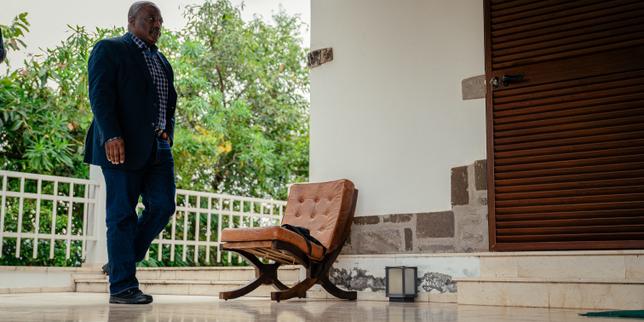
The masks have finally come off in Central Africa. Former Democratic Republic of Congo president Joseph Kabila has shattered years of political ambiguity by officially stepping out of the shadows to lead the Front pour la Refondation de la Nation, a new politico-militaire coalition that explicitly incorporates the M23 rebel movement. Announced from the eastern hub of Goma—a city held by insurgent forces—this development marks an extraordinary escalation in a region already bruised by decades of chronic instability. For years, Kinshasa whispered about Kabila's clandestine ties to the armed factions tearing apart the Kivus. Today, those accusations require no further proof. The architect of the nation's post-war political transition has chosen open rebellion against the administration of his successor, Félix Tshisekedi.
Understanding how a former head of state crosses the Rubicon into armed insurrection demands a hard look at the mechanics of power in Kinshasa. Kabila ruled the DRC from 2001 to 2019, presiding over a fragile patronage network built on mineral wealth, military balancing acts, and quiet accommodations with foreign actors. When he handed over power to Tshisekedi following the chaotic 2018 elections, analysts debated whether it was a genuine democratic transfer or a tactical retreat. It was the latter. Kabila retained loyalists deep within the state apparatus, the judiciary, and the military command structure. Recently making waves in related news: London Calling The Shadow War Behind Downing Streets Direct Accusations Against Moscow and Tehran.
As Tshisekedi steadily dismantled those bastions of influence—purging security branches and consolidating executive authority—Kabila's margin for survival narrowed. The pressure intensified following localized attacks on his Kinshasa residence and an accumulation of legal and political assaults from the current administration. By early 2026, the United States Department of the Treasury's Office of Foreign Assets Control had placed Kabila on its sanctions list for backing the M23, mirroring domestic treason charges that eventually resulted in a death sentence handed down by a military court in absentia. Cornered by a regime determined to erase his political footprint, Kabila stopped hedging. He calculated that his long-term survival depended not on quiet exile, but on reasserting control over the geopolitical chessboard through military force.
The newly formed coalition is not merely a union of convenience; it is a direct challenge to the territorial integrity of the Congolese state. By welding the remnants of the M23 insurgency and the Congo River Alliance (AFC) under a single banner with a former president at the helm, the movement attempts to solve a major legitimacy crisis for the rebels. Historically, the M23 has struggled against the label of being a proxy force fueled by external regional actors, most notably Rwanda. Injecting Kabila—an indigenous statesman who led the country for nearly two decades—into the leadership structure provides an indigenous, nationalist veneer to an armed campaign that has hollowed out eastern Congo. Further details into this topic are explored by USA Today.
Corneille Nangaa, the former electoral commission chief turned rebel leader, now serves alongside Kabila as part of a high-stakes leadership restructuring designed to project unified governance over occupied zones. Yet, this union carries immense internal friction. The ideological distance between disgruntled former presidential insiders and battle-hardened insurgent commanders is vast. Trust in eastern Congo's rebellion market is a scarce commodity. Every faction enters the tent with its own agenda, whether it is securing mineral corridors, extracting amnesty guarantees, or settling old scores with the political elite in the capital.
Kinshasa's response has been swift, blunt, and uncompromising. The government immediately moved to ban political parties tied to Kabila's network, freeze the assets of suspected collaborators, and restrict senior military officers from traveling abroad. State authorities launched an aggressive campaign to purge public spaces of the former president's legacy, ordering municipalities to rename streets, avenues, and public infrastructure that bore his name. In the corridors of power, the mood is defensive and furious. The administration views the alliance not as a legitimate political opposition, but as high treason committed by a privileged elite unwilling to accept irrelevance.
Diplomatic efforts are fracturing under the weight of this new reality. Regional mediation frameworks, including the stalled Luanda process and various Qatari-backed initiatives, assumed they were dealing with localized insurgent groups and conventional state actors. They were not built to accommodate a disgruntled former head of state openly commanding the armed opposition. Washington and European capitals are scrambling to recalibrate their diplomatic postures as Western peace formulas crumble against the hard edge of reality on the ground in North and South Kivu.
The humanitarian toll of this political realignment is catastrophic. While elites in Goma and Kinshasa rearrange the architecture of power, millions of displaced civilians remain trapped in squalid camps across the eastern provinces. They face a relentless cycle of extortion, forced recruitment, and violence perpetrated by actors who treat human lives as collateral in a high-stakes game of political survival. Peace agreements signed in foreign capitals dissolve the moment troops return to the hills.
Kabila's gamble is absolute. By throwing his lot in with the M23, he has crossed an invisible line from which there is no peaceful return. He has traded the security of a former head of state's pension for the volatility of an active war zone, betting that sheer military pressure can force Kinshasa back to a table it currently refuses to set. As the frontlines solidify and the state apparatus digs in for an existential struggle, the DRC enters its most dangerous chapter since the regional wars of the late twentieth century.
There are no clean exits left in this conflict, only the grinding friction of a state tearing itself apart from the inside out.
RD Congo : Joseph Kabila et l'AFC/M23 s'allient dans un mouvement politico-militaire • FRANCE 24
This broadcast segment provides a concise breakdown of Joseph Kabila's alliance with the M23 and the formation of their new coalition.