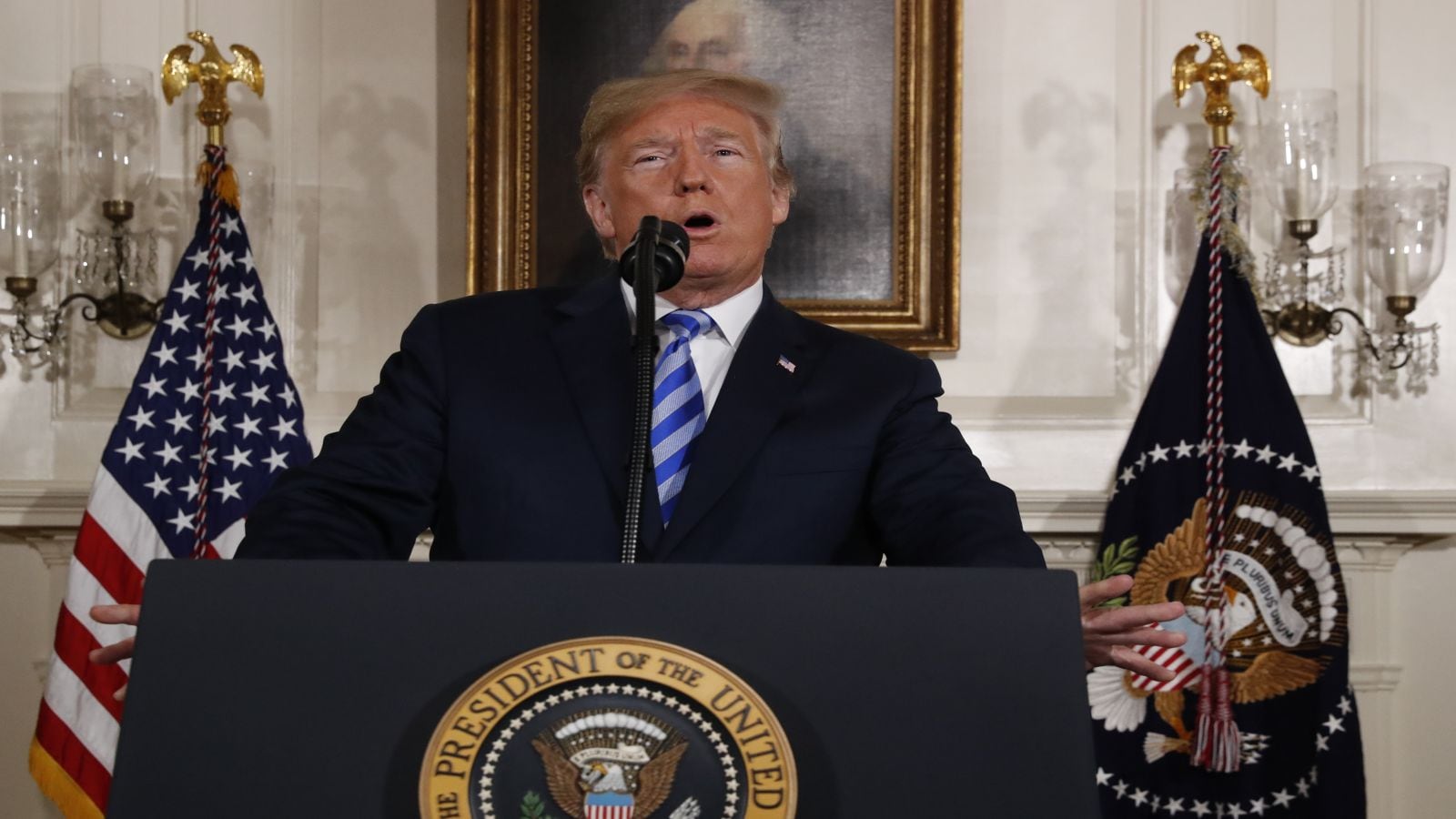
President Donald Trump relocated his administration’s executive meeting to the heavily guarded Maryland mountain retreat of Camp David, staging a televised session that blended rustic isolation with aggressive electoral messaging. While casual observers viewed the move as a simple change of scenery, the decision underscores a calculated shift in executive theater. For decades, the 180-acre presidential sanctuary has served as a crucible for high-stakes diplomacy and private administration resets. By dragging the cameras into a space historically reserved for classified summits and quiet contemplation, the administration has turned a private retreat into an explicit campaign billboard.
The strategy reveals a fundamental truth about modern political staging. When executive friction with the press grows tense, or when legislative agendas require a unified public posture, moving the stage outside Washington changes the power dynamics entirely. Reporters find themselves isolated on military-controlled grounds, dependent on the administration's timeline, and boxed into a backdrop that telegraphs presidential authority without the distractions of the West Wing.
Understanding this maneuver requires looking past the pastoral charm of the Catoctin Mountains. Camp David was established during World War II precisely because Franklin Roosevelt needed a secure alternative to vulnerable presidential yachts. Dwight Eisenhower later renamed it after his grandson, transforming it into a diplomatic engine room. Jimmy Carter leveraged its seclusion to broker the monumental 1978 accords between Egypt and Israel. Yet, the venue has rarely been used for long, televised cabinet roundtables where agency heads offer extended status updates on national television.
The televised format changes the utility of the retreat. Traditional cabinet meetings behind closed doors allow for granular policy debate and administrative friction. When broadcast live for hours, however, the table transforms into an audience for executive affirmation. Cabinet members take turns praising leadership updates, creating a synchronized media moment designed to project total control.
By pivoting from domestic governance to international flashpoints—such as migration crises in Europe and ongoing negotiations regarding Iran—during a rural retreat, the White House deliberately connects local isolation to global heft. The timing is far from accidental. With congressional midterm elections looming on the horizon, every visual asset is deployed to frame the administration as actively steering global affairs while opponents scramble in domestic gridlock.
Reporters covering the event noted the unusual access granted to the press corps, a tactical pivot from a president who frequently clashes with mainstream outlets. Offering prolonged exposure in an exclusive environment disarms critics through sheer hospitality and proximity. Journalists trade hard-hitting access for atmospheric exclusivity, producing coverage dominated by the unique setting rather than the mechanics of executive oversight.
This dynamic highlights an ongoing evolution in political communication. The architecture of power no longer relies solely on formal briefings inside the briefing room. Instead, it relies on transporting the entire apparatus of government to historic backdrops that evoke American tradition and unshakeable strength.
The rustic wood-paneled walls of the main lodge at Camp David have witnessed the framing of world peace agreements and the collapse of secret diplomatic overtures. Today, they enclose a very different kind of political staging, one designed less for quiet compromise and more for commanding the visual landscape of an election cycle. The mountain air offers plenty of isolation, but the signal broadcast from the peaks is intended to cut straight through the noise of Washington.


