Buddhist monks in Sri Lanka are taking to the streets to halt state-backed redevelopment projects at ancient religious sites, arguing that commercial tourism plans threaten sacred heritage and monastic autonomy. While government officials frame these initiatives as vital economic lifelines for a nation recovering from financial collapse, members of the Sangha—the Buddhist monastic order—warn that top-down modernization erases historical authenticity and bypasses traditional custodianship.
The friction is no longer confined to quiet temple courtyards. It has spilled onto the asphalt of Colombo and the ancient capitals of the Cultural Triangle, exposing a deep fault line between sovereign debt recovery and cultural preservation.
To understand why saffron-robed clergy are marching against bulldozers, you have to look past the surface-level headlines about zoning disputes. This is a collision between two desperate imperatives. On one side sits a cash-strapped administration hunting for foreign exchange through high-yield cultural tourism. On the other stands an ancient religious establishment fiercely guarding its constitutional primacy and physical territory.
The Economics Behind the Bulldozers
Sri Lanka’s devastating 2022 sovereign default changed the calculus for every ministry in Colombo. With foreign reserves depleted and International Monetary Fund bailout conditions demanding strict fiscal restructuring, state planners turned aggressively toward sectors capable of generating rapid dollar inflows. Tourism topped that list.
Historically, visitors to Sri Lanka’s Cultural Triangle—anchored by Anuradhapura, Polonnaruwa, and Sigiriya—spent relatively little per capita compared to luxury beachgoers on the southern coast. Pilgrims and backpackers dominated the foot traffic. State development agencies, often operating alongside international donor frameworks and urban planning consultants, drafted master plans to change that demographic.
The blueprints look familiar to anyone who has tracked heritage commercialization across Southeast Asia. They feature expanded paved walkways, centralized ticketing plazas, commercial souvenir zones, luxury eco-resorts on buffer lands, and streamlined visitor routing designed to maximize dwell time and spending.
From a purely macroeconomic standpoint, the logic is straightforward. You monetize your most unique assets.
From the perspective of resident monks, however, these master plans look less like preservation and more like eviction. When state agencies rezone buffer zones around ancient stupas or take direct administrative control over temple precincts to build visitor centers, the monastic community loses both physical space and decision-making power. A quiet site of active worship and meditation transforms overnight into an open-air museum managed by secular bureaucrats.
Constitutional Primacy and Monastic Authority
In Western democracies, disputes over church property usually play out in zoning boards or civil courts. In Sri Lanka, religion is wired directly into the architecture of the state.
Article 9 of the Sri Lankan Constitution grants Buddhism the "foremost place," obligating the state to protect and foster the Buddha Sasana—the Buddhist dispensation, encompassing its teachings, institutions, and physical monuments. For centuries, long before British colonial rule and modern parliamentary systems, Sri Lankan kings derived their legitimacy from their role as patrons and protectors of the Sangha.
That historical compact still carries immense political weight. Senior prelates, particularly the Mahanayakes of the major monastic chapters (Nikayas), wield influence that no prime minister or president can safely ignore.
When the Central Cultural Fund or the Urban Development Authority announces a redevelopment project without securing prior consensus from the resident chief incumbents, it triggers an immediate constitutional and cultural alarm. Monks view themselves not as mere tenants on state-owned archaeological land, but as the unbroken spiritual heirs to sites donated by ancient monarchs over two millennia ago.
Protests erupt when the state acts like a landlord rather than a patron.
The Archaeological Custody Trap
A central mechanism driving these protests is the legal ambiguity surrounding land ownership at historic temples. Under Sri Lanka’s Antiquities Ordinance, monuments dating back more than a century fall under the statutory protection of the Department of Archaeology.
This creates a permanent structural tension. A temple might be an active, living center of daily worship managed by a resident monk, while the ancient stone foundations beneath it belong legally to the state’s archaeological registry.
Consider a hypothetical scenario that illustrates how this friction unfolds on the ground. Imagine a centuries-old temple complex situated on a forested hill in the North Central Province. For generations, the resident monks have maintained the shrine using local donations, allowing villagers to gather freely for full-moon Poya days. Suddenly, a state development agency arrives with surveys for a new heritage park. The plan calls for fencing off the perimeter, constructing a ticket booth at the base of the hill, and relocating small local vendors to a designated commercial complex leased to outside contractors.
To the planner in Colombo, this brings order, sanitation, and revenue. To the resident monk, it restricts free access for local devotees, disrupts the monastic environment with commercial noise, and hands control of sacred ground to secular administrators.
When similar real-world scenarios play out across multiple districts, the Sangha mobilizes. Monks organize satyagraha (non-violent sit-ins), issue strongly worded pastoral letters, and march on ministerial offices. They argue that archaeological conservation is being used as a Trojan horse for commercial privatization.
Contested Sites in the North and East
The protests carry an even sharper political edge when redevelopment disputes occur in Sri Lanka’s Northern and Eastern provinces. These regions, scarred by nearly three decades of civil war that ended in 2009, contain numerous archaeological ruins linked to ancient Buddhist civilizations alongside Hindu temples, mosques, and churches.
Here, redevelopment and archaeological preservation intersect directly with ethno-religious politics.
In recent years, state-backed archaeological surveys and temple restoration initiatives in districts like Trincomalee, Mullaitivu, and Batticaloa have sparked fierce pushback from Tamil and Muslim communities, who accuse authorities of using heritage preservation to alter local demographics and claim disputed land. Conversely, hardline Buddhist monastic groups have staged counter-protests in Colombo and on-site, accusing the government of dragging its feet on protecting ancient Buddhist sites from encroachment or bowing to minority political pressure.
This puts the central government in an impossible bind. Moving forward with redevelopment in the north and east provokes accusations of majoritarian land grabs from minority leaders and international human rights observers. Halting or scaling back those same projects triggers street protests from influential Buddhist monks who accuse the administration of abandoning its constitutional duty to protect ancient heritage.
The street demonstrations we see today are frequently driven by both dynamics simultaneously—resistance to commercial overreach in the south and demands for assertive state protection in the north and east.
What Developers Get Wrong About Living Heritage
The core failure of modern heritage redevelopment across South Asia lies in a fundamental misunderstanding of what makes these sites valuable in the first place. International heritage consultants and domestic urban planners often apply a Western conservation model designed for dead monuments.
Think of the Colosseum in Rome or Stonehenge in England. Those are archaeological relics whose original religious functions ceased centuries ago. Managing them is primarily a question of crowd control, structural stabilization, and ticketing logistics.
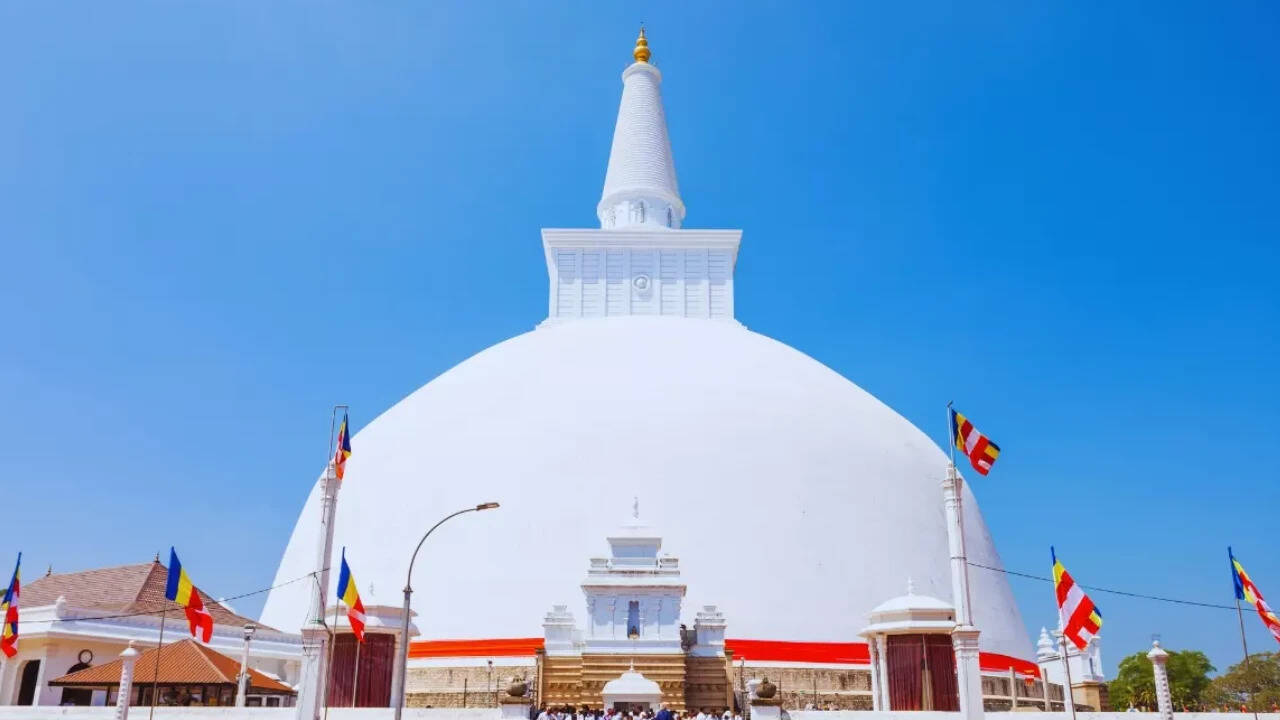
Sri Lanka’s ancient Buddhist sites are fundamentally different. Places like the Ruwanwelisaya in Anuradhapura or the Temple of the Tooth in Kandy are living, breathing religious institutions. The rituals performed there today follow liturgies that have continued without interruption for over two thousand years. The value of the site is inseparable from the monastic community that inhabits it and the devotees who worship there.
When redevelopment plans treat a living monastery like a static theme park, they destroy the very authenticity tourists travel across the globe to experience.
Monks who protest these projects frequently point out specific, practical failures in state-led renovations. They cite the use of inappropriate modern construction materials that clash with traditional architecture, the felling of ancient Bodhi or shade trees to make room for concrete parking lots, and the prioritization of foreign VIP access over local pilgrims during major religious festivals.
The Political Cost of Ignoring the Sangha
History in post-independence Sri Lanka offers a clear warning to any administration that underestimates monastic mobilization. From the watershed 1956 election—where politically active monks helped sweep S.W.R.D. Bandaranaike into power on a wave of Sinhala-Buddhist revivalism—to the mass protests that preceded the ouster of President Gotabaya Rajapaksa in 2022, the Sangha has consistently acted as a decisive political bellwether.
Monks are not monolithic. The Sangha encompasses conservative traditionalists, nationalist firebrands, progressive social reformers, and quiet forest ascetics who shun politics entirely. Yet when an issue touches directly on the physical integrity of sacred sites or the autonomy of temple administration, those internal divisions evaporate quickly.
A protest led by two dozen monks outside a ministry building in Colombo carries disproportionate media weight. Television networks broadcast the footage immediately. Opposition politicians seize on the images to paint the ruling party as anti-religious or beholden to foreign lenders. Within days, a localized dispute over a perimeter wall or a visitor center can snowball into a national political crisis.
The Gray Areas of Conservation
To be fair to state planners, leaving ancient sites entirely without modern infrastructure carries its own set of real risks. Unregulated pilgrimage traffic can cause severe physical damage to fragile stonework and ancient frescoes. Without proper waste management, sanitation facilities, and crowd routing, high-volume religious festivals leave behind environmental degradation that threatens the long-term survival of the monuments.
Furthermore, many smaller rural temples genuinely lack the technical expertise and financial capital required to execute complex structural restorations. When heavy monsoon rains threaten an ancient brick stupa or centuries-old timber carvings begin to rot, local donations rarely cover the specialized engineering required to save them. State intervention and international conservation grants often prevent irreversible collapse.
The legitimate need for physical preservation, however, does not excuse opaque governance.
How Heritage Redevelopment Can Actually Work
If Sri Lanka wants to modernize its cultural tourism infrastructure without triggering recurring street battles with its religious establishment, the state must fundamentally overhaul how these projects are conceived and governed.
First, co-governance must replace top-down planning. No architectural blueprint or zoning change affecting a religious precinct should advance past the conceptual stage without formal sign-off from a joint committee comprising the resident chief incumbent, senior archaeological officers, and local community representatives. Giving monks genuine veto power over commercial zoning within temple buffer zones eliminates the fear of stealth privatization.
Second, revenue-sharing mechanisms need transparent legal structures. When ticketed visitor zones or adjacent commercial facilities generate foreign exchange, a fixed, auditable percentage of those funds should flow directly into a temple-managed maintenance endowment rather than disappearing into general treasury accounts in Colombo. When resident custodians see tangible resources returning to support monastic education and local upkeep, resistance drops sharply.
Third, planners must separate commercial infrastructure from sacred space. Parking lots, souvenir markets, food courts, and ticketing plazas belong outside the historic perimeter, connected by low-impact pedestrian pathways or electric shuttles. Keeping commercial noise and retail clutter physically divorced from meditation halls and shrines preserves the spiritual atmosphere that defines the site.
Until Colombo stops treating sacred geography like underperforming real estate, the saffron robes will keep returning to the streets.