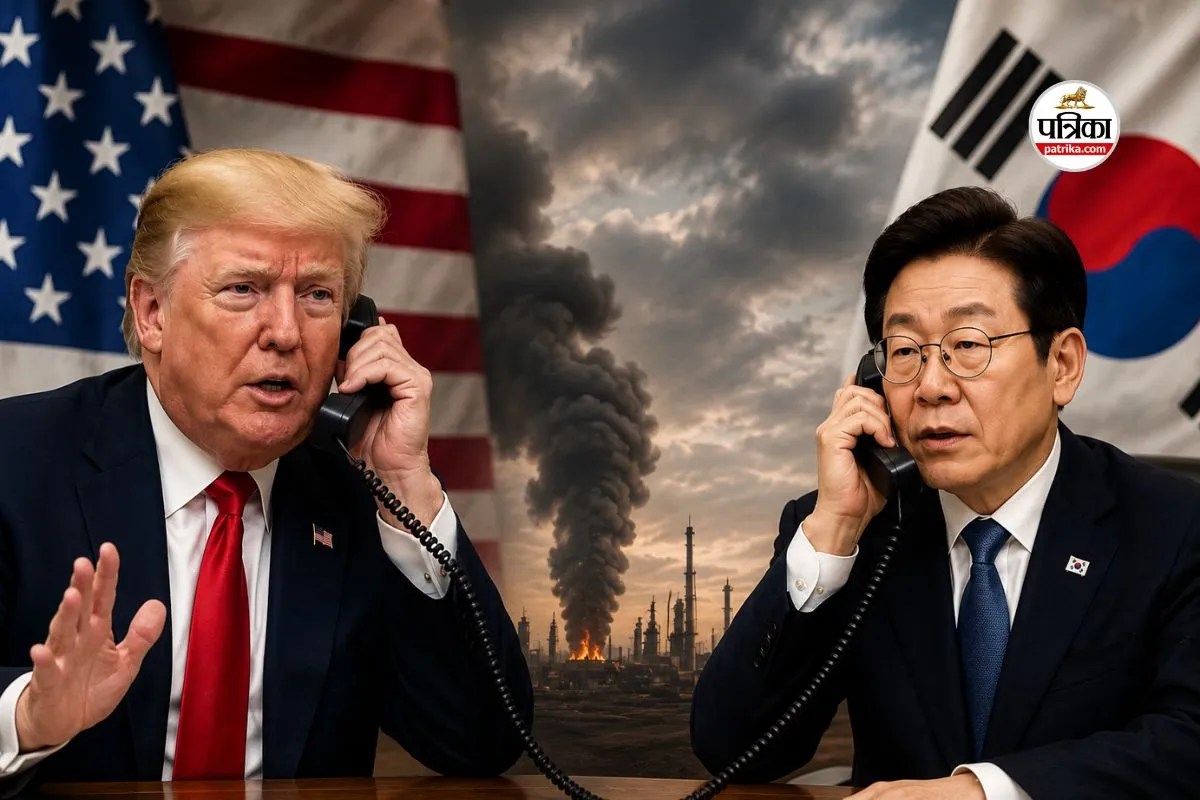
The modern architecture of international security is built on a cold, transactional ledger. When President Donald Trump publicly turned his ire toward Seoul over its refusal to assist in military operations against Iran, he exposed a structural fault line that diplomats have spent decades trying to paper over. The core dispute is simple in its brutality. Washington anchors tens of thousands of service members on the Korean Peninsula to deter North Korean aggression, yet when the White House calls upon Seoul to provide naval support in the volatile Strait of Hormuz, the answer comes back as a polite refusal.
That refusal has triggered immediate policy consequences. Trump ordered the Pentagon to substantially scale back upcoming joint military exercises with South Korea, explicitly tying the drawdown to Seoul’s reluctance to join the campaign against Tehran. It is a textbook manifestation of a foreign policy framework that views alliances not as permanent ideological brotherhoods, but as balance sheets. If American blood and treasure are being spent to secure one region, the expectation from Washington is that partners must share the burden elsewhere. Seoul's calculation, however, is governed by an entirely different set of geopolitical survival constraints. If you enjoyed this post, you should look at: this related article.
Understanding why South Korea balked at joining the Iran campaign requires looking past the rhetoric of ingratitude and examining Seoul's severe structural vulnerabilities. The South Korean economy runs on imported energy. A massive portion of its crude oil supply transits through the Middle East, leaving the country extraordinarily sensitive to regional disruptions. When the conflict in the Persian Gulf escalated, Seoul's immediate priority was not projecting power across continents, but securing alternative shipping lanes, protecting stranded commercial vessels, and preventing a domestic energy crisis. Dispatching warships to an active theater thousands of miles away when domestic energy security hangs in the balance is a luxury that a export-driven industrial power sitting next to a nuclear-armed adversary cannot easily justify to its public.
Yet, diplomacy is rarely just about logistics. It is about signaling. By rebuffing Washington's request, Seoul underestimated the personal nature of executive-level decision-making in the current administration. Trump views international relations through the lens of direct reciprocity. During public statements, he pointedly contrasted the reluctance of South Korea with the cooperation of Gulf states that host major American installations and face direct retaliation. The comparison stings in Washington, where lawmakers across the aisle have long argued that reducing joint war games undermines readiness against the very real and present danger posed by Pyongyang. For another angle on this event, check out the latest update from Associated Press.
The decision to scale down the military drills alters the strategic calculus along the Demilitarized Zone. For decades, exercises like Ulchi Freedom Shield have served as the ironclad operational glue binding the United States Armed Forces and the Republic of Korea Armed Forces together. These are not symbolic parades. They are complex, synchronized simulations involving live-fire exercises, logistical distribution of heavy equipment, and command-structure integration designed to manage a full-scale invasion. Diluting these drills to express political frustration introduces friction into an operational command chain that relies on absolute predictability.
At the same time, the White House has leaned into a contradictory diplomatic posture regarding North Korea itself. While expressing deep frustration with Seoul, Trump frequently highlights his personal rapport with Kim Jong Un, suggesting that his strong relationship with Pyongyang diminishes the immediate necessity of large-scale provocative drills. This creates a bizarre diplomatic inversion. A U.S. president is scaling back defensive preparations against an authoritarian nuclear state because an ally thousands of miles away declined to participate in a Middle Eastern naval campaign.
For South Korean policymakers, the situation highlights an uncomfortable reality. The decades-old security umbrella is subject to the shifting political whims of American leadership. The historical sentiment that sustained the bilateral partnership through the post-war era is giving way to a purely transactional ledger. Seoul is being forced to adapt quickly, balancing its absolute dependence on the American nuclear deterrent against the economic necessity of charting an independent course in energy diplomacy.
The friction over the Iran conflict is unlikely to dissolve the alliance overnight. The institutional ties run too deep, and the broader national security establishments in both capitals recognize the irreplaceable value of Indo-Pacific deterrence against rising regional superpowers. Defense bureaucrats and career diplomats will undoubtedly work behind the scenes to preserve the core infrastructure of the defense pact, insulating it from the sharpest edges of presidential rhetoric.
Still, the damage to the psychological bedrock of the partnership is real. When an American president openly questions the utility of stationing forces abroad because an ally failed to support a secondary theater of war, the terms of engagement change permanently. Seoul can no longer assume that historical loyalty exempts it from immediate demands for global burden-sharing. The era of unconditional security guarantees has quietly drawn to a close, replaced by an era where every ally must calculate the exact price of its defense in real time.