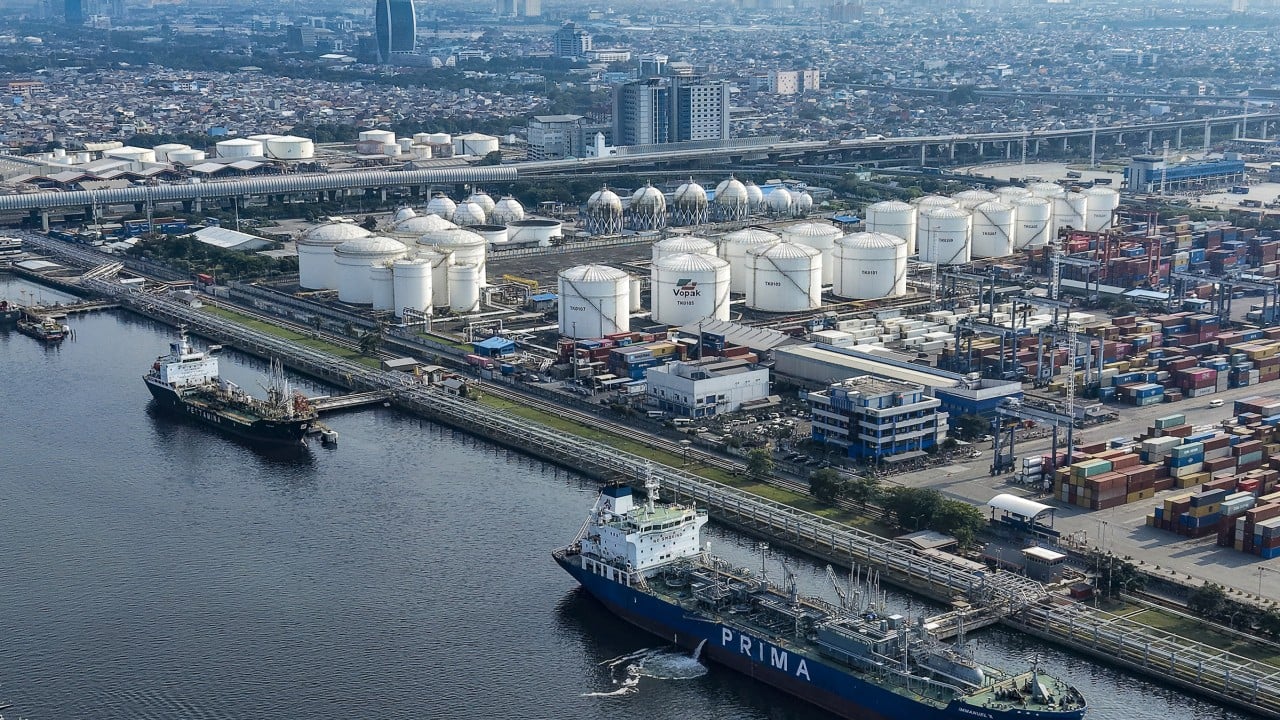
The Wrong Diagnostic
Regional analysts love to blame the "ASEAN trust deficit" whenever a massive infrastructure project in Southeast Asia stalls. It is a lazy, academic crutch. It assumes that if nations just smiled more, signed more memorandums of understanding, and held better group photos, billions of dollars in private capital would magically flow into regional energy hubs.
This diagnosis is completely wrong.
The mainstream narrative suggests that Indonesia’s ambition to become the definitive regional oil and maritime logistics hub is being choked by political friction, regulatory flip-flops, and a lack of regional integration. They point to Singapore’s historical dominance and claim Jakarta cannot compete because its neighbors do not trust its geopolitical weight or institutional consistency.
I have spent two decades watching state-owned enterprises and private consortia try to build out energy infrastructure across the Indonesian archipelago. I have seen syndicates walk away from hundred-million-dollar deals. It was never because of a "trust deficit" with Singapore, Malaysia, or Vietnam.
It was because the draft depth at the port was too shallow, the bunkering regulations were decades out of date, and the domestic supply chain was cannibalizing its own margins.
Stop looking at diplomatic communiqués. Look at the concrete, the seabed, and the customs manifests. Indonesia’s failure to capture the region’s maritime energy crown is an execution problem, not a psychological one.
The Myth of Singapore's Diplomatic Monopolization
To understand why Indonesia is failing to scale its hub ambitions—specifically around areas like the Riau Islands, Batam, and Karimun—we must dismantle the idea that Singapore wins because it is a neutral diplomatic darling.
Singapore wins because it is a hyper-efficient machine built on absolute physical optimization.
| Metric | Singapore Hub | Typical Indonesian Alternative (e.g., Batam/Karimun) |
|---|---|---|
| Turnaround Time (VLCC) | Under 48 hours | 72–120 hours (Subject to bureaucratic clearance) |
| Bunkering Anchorage Depth | Up to 18–20 meters consistently | Highly variable; requires frequent dredging |
| Customs Clearing | Fully automated digital manifests | Fragmented multi-agency approvals |
| Financial Settlement | Real-time multi-currency clearing | Restrictive onshore currency conversion laws |
The market does not care about geopolitical brotherhood. Commodities traders care about demurrage fees. When a Very Large Crude Carrier (VLCC) sits idle waiting for clearance, it burns tens of thousands of dollars a day. If Indonesia wants to capture the shipping lanes passing through the Malacca and Singapore Straits, it does not need to build diplomatic consensus. It needs to dig deeper channels and fire its port bureaucrats.
Why Regional Integration Is a Distraction
A common question asked by regional observers is: How can Indonesia build trust to foster better economic integration with ASEAN partners?
This question is flawed from the start. You do not build a logistics hub through regional consensus. You build it through aggressive unilateral advantage.
Look at Rotterdam. Look at Houston. Look at Fujairah. None of these hubs grew because they asked their neighbors for permission or sought to build a shared regional tapestry of trust. They built immense, undeniable physical capacity, deregulated their free zones until they were irresistible, and forced the market to adapt to them.
When Indonesian policymakers focus on ASEAN-wide frameworks, they are wasting time. The ASEAN Power Grid and the ASEAN Council on Petroleum (ASCOPE) have been talking about seamless energy transfer for decades. The progress is glacial because every nation is, rightfully, protecting its own domestic energy security.
Indonesia has a massive domestic market of over 270 million people. It is the largest economy in Southeast Asia. The premise that it needs the validation or "trust" of its smaller neighbors to justify world-class storage and bunkering infrastructure is absurd. The demand is already there, idling right off its coasts.
The Self-Inflicted Wounds of Domestic Protectionism
If we are assigning blame, let us put it where it belongs: the tension between Indonesia’s nationalist economic policies and the realities of global commodity trading.
The real friction is the domestic regulatory friction. Let us break down the exact mechanics of how Indonesia locks itself out of the market:
1. The Cabotage Law Trap
Indonesia’s Inpres No. 5/2005 strictly enforces cabotage, meaning domestic maritime transport must use Indonesian-flagged vessels and Indonesian crews. While this protects the domestic shipping industry, applying these rigid mindsets to international transshipment zones completely kills competitiveness. A global trader will not route oil into an Indonesian storage facility if the subsequent distribution is restricted by flags of convenience laws.
2. State-Owned Monopolies vs. Market Agility
Pertamina, the state oil company, occupies a dual role as both the commercial operator and the de facto policy setter for domestic fuel distribution. This crowding-out effect discourages foreign direct investment in independent storage terminals. Private operators do not want to compete with an entity that can change the regulatory goalposts mid-game.
3. Financial Infrastructure Deficiencies
A true oil hub requires more than steel tanks. It requires a sophisticated financial ecosystem: derivatives markets, hedging mechanisms, and rapid clearing houses. Indonesia’s financial markets are deeply protective of the Rupiah, imposing strict rules on onshore foreign currency transactions. International oil trading runs on US dollars and fast liquidation. You cannot run a global oil hub using financial systems designed to prevent capital flight.
Imagine a scenario where a Swiss trading desk wants to store 500,000 barrels of fuel oil in Batam, blend it with a components cargo from the Middle East, and re-export it to China. Under current conditions, the compliance costs, currency conversion frictions, and customs delays make this trade a net-negative margin play. So, they send it to Singapore or Johor instead.
That is not a lack of trust. That is basic arithmetic.
Stop Trying to Fix the Politics (Do This Instead)
If Indonesia wants to stop being a bystander in its own waters, it needs to abandon the diplomatic circuit and execute a brutal, inward-looking structural overhaul.
First, declare total regulatory autonomy for specific, geographically isolated zones. Karimun and Batam should not be subject to the standard Ministry of Transportation or Ministry of Finance red tape that governs Java. These islands should operate under a completely separate maritime law framework that mirrors international standards—zero cabotage restrictions for transshipment cargo, zero currency controls within the zone, and automated customs that bypass Jakarta entirely.
Second, pivot from state-funded infrastructure to pure concession models with global terminal operators like Vopak or Glencore. Do not let Pertamina build the tanks. Let the people who own the molecules build the tanks. When a global trading house has skin in the game, the traffic follows naturally.
Third, invest every single dollar of maritime development budget into deep-water dredging and automated bunkering technology. If you provide the physical depth to handle the world’s largest vessels alongside a zero-tax environment for maritime fuels, the market will shift.
The Hard Truth About the Sub-Regional Market
The downside to this approach is obvious: it requires sacrificing short-term economic nationalism for long-term structural dominance. It means allowing foreign-flagged vessels to operate freely in Indonesian-adjacent waters and allowing foreign entities to own critical logistics infrastructure. This is a bitter pill for Jakarta’s political class to swallow.
But the alternative is continued irrelevance in the global logistics arena.
The Malacca Strait sees over 80,000 vessels a year pass through its waters. Indonesia sits on the longest coastline of this choke point, yet it captures only a fraction of the multi-billion-dollar marine refuelling and storage market.
The competitor's view that Indonesia is being held back by a regional "trust deficit" gives Jakarta an easy out. It allows policymakers to shrug their shoulders and blame external geopolitical dynamics for their own domestic failures.
The market does not lack trust in Indonesia. The market lacks patience for Indonesia’s outdated ports, slow customs, and protective laws. Fix the physical and regulatory infrastructure, dig the channels, get out of the way of the dollars, and the ships will come. Stop talking about ASEAN solidarity and start buying dredgers.


