Everyone in Southeast Asian energy finance is currently wringing their hands over the wrong spreadsheet.
Look at the prevailing narrative surrounding Jakarta’s massive 100GW solar ambition. Analysts, policy wonks, and Western energy journalists are all asking the exact same lazy question: Indonesia needs Chinese hardware to build this, so who is going to foot the $73 billion bill?
That question is a distraction. It treats Indonesia like a cash-strapped startup begging for venture capital, rather than what it actually is: an archipelagic powerhouse sitting on an ocean of trapped capital, paralyzed by self-inflicted regulatory bottlenecks and an outdated utility monopoly.
The money is already there. Global infrastructure funds, sovereign wealth giants, and regional banks are practically tripping over each other to deploy green capital into emerging markets. They are not withholding $73 billion because solar panels are too expensive or because Jakarta lacks diplomatic alignment with Beijing. They are withholding it because Indonesia’s current market structure makes utility-scale solar an unbankable nightmare.
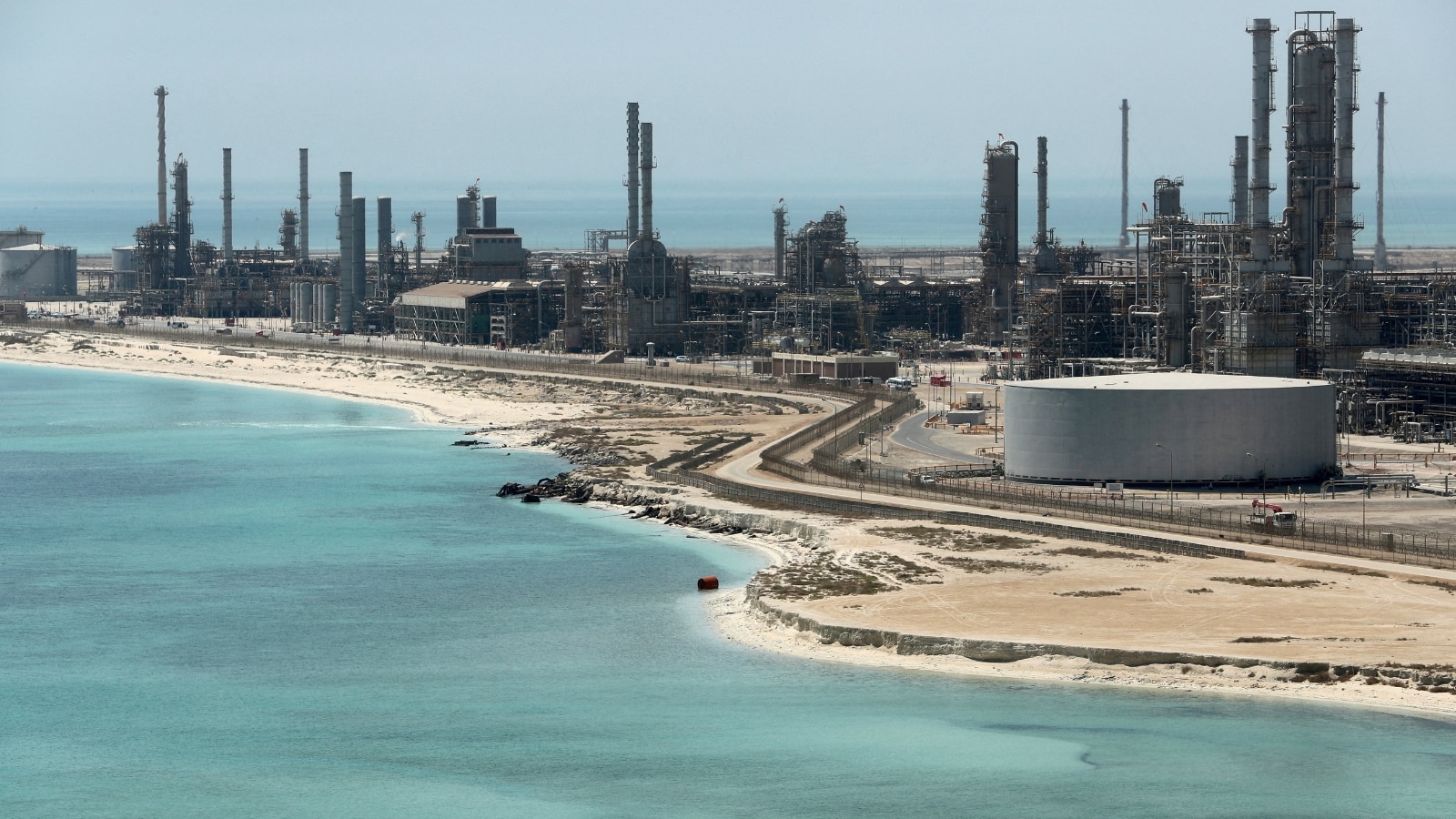
If you want to understand why a 100GW target risks becoming a multi-billion-dollar hallucination, stop looking at Chinese supply chains and start looking at PLN—Perusahaan Listrik Negara—the state-owned utility monopoly that controls the grid, sets the prices, and decides who gets to sell a single kilowatt-hour of electricity.
The Myth of the Financing Gap
I have sat in boardrooms in Singapore and Jakarta watching institutional investors walk away from perfectly viable Southeast Asian renewable projects. They rarely walk away over the cost of capital. They walk away over offtake risk, local content rules, and grid curtailment.
When commentators frame the 100GW target around a "$73 billion bill," they fall into the trap of static accounting. They take the target capacity, multiply it by an estimated capital expenditure per megawatt, and gasp at the total.
Here is what that napkin math misses:
- Capital is not a lump sum. Nobody writes a $73 billion check on a Tuesday morning. Grid buildouts happen in tranches over a decade or more, recycled through refinancing as early projects hit commercial operation and de-risk.
- Coal subsidies dwarf the solar bill. Indonesia spends billions every single year artificially suppressing domestic coal and fuel prices through Domestic Market Obligation (DMO) caps and direct state compensation to PLN. The capital isn't missing; it is simply being burned to keep thermal assets artificially cheap.
- Private balance sheets want in. Commercial and industrial (C&I) players—data center operators, nickel smelters, textile manufacturers—are desperate for clean power to meet global supply chain mandates. They would gladly fund gigawatts of behind-the-meter solar tomorrow if the state simply got out of their way.
Calling this a funding crisis lets policymakers off the hook. It turns a structural governance failure into an accounting problem.
The Real Bottleneck is the Single-Buyer Trap
To understand why international money stalls at the border, you have to understand how electricity is bought and sold in the archipelago.
PLN operates as a vertically integrated single-buyer monopoly. If an independent power producer (IPP) wants to build a 200-megawatt solar farm in Java or Sumatra, they cannot simply sign a direct corporate Power Purchase Agreement (PPA) with a nearby factory and wheel the power across the transmission lines. They have to sell it to PLN.
And PLN already has a massive oversupply problem on its flagship Java-Bali grid.
Over the past decade, Indonesia aggressively built out coal-fired power plants under "take-or-pay" contracts. Under these agreements, PLN must pay private coal operators for electricity whether the grid actually needs it or not. Adding 100GW of intermittent solar onto a grid contractually locked into paying for baseload coal isn't just an engineering challenge—it is an existential financial threat to the state utility.
Imagine a scenario where you own a restaurant with a rigid contract forcing you to buy 500 steaks every night, regardless of how many customers walk through the door. Even if a vendor offers you fresh salmon at half the price, buying that salmon means throwing away steaks you have already paid for. That is PLN’s exact dilemma. Until those legacy coal contracts are restructured or retired, every megawatt of new solar threatens to bleed the utility dry.
Why "Needing China" is a Feature, Not a Bug
The second half of the mainstream consensus focuses on geopolitical anxiety: Indonesia needs China to hit 100GW.
Of course it does. Everybody needs China to hit massive solar targets.
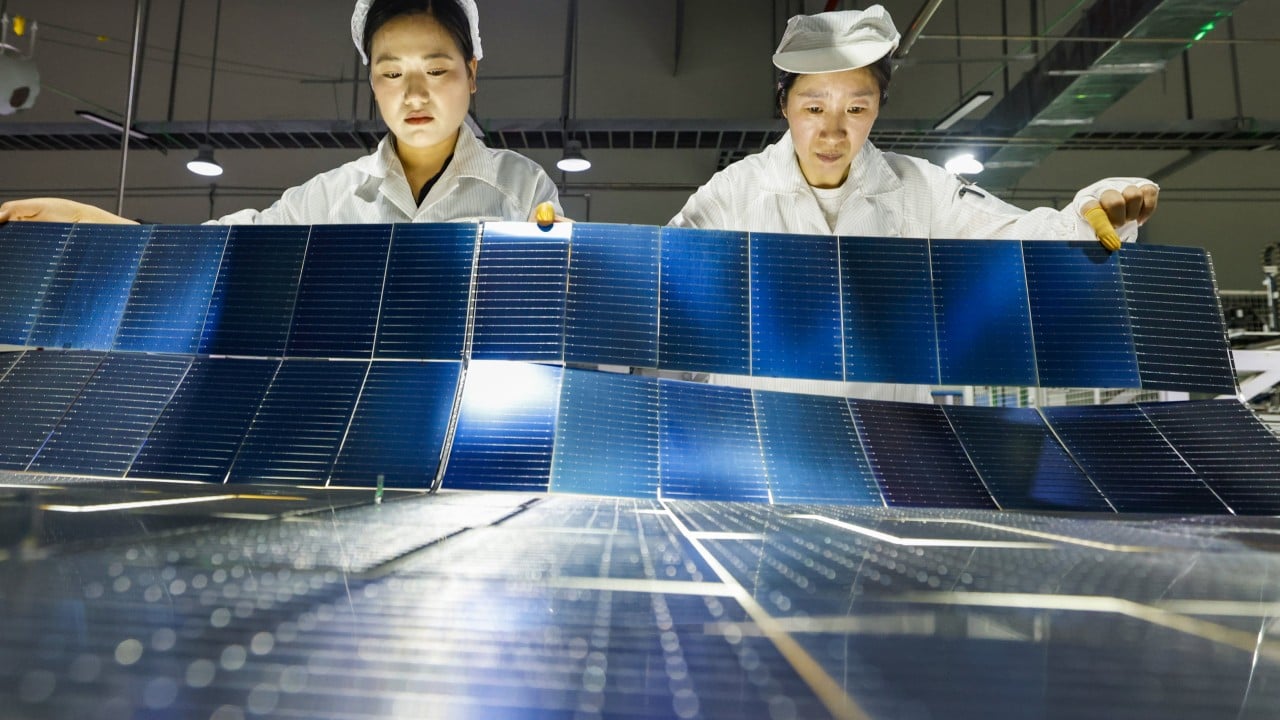
China controls over 80% of the global solar manufacturing supply chain across polysilicon, ingots, wafers, cells, and modules. Pretending that Southeast Asia can build 100GW of solar without Chinese hardware is pure fantasy. Even Western developers slapping "Made in America" or "Made in Europe" stickers on their projects are overwhelmingly relying on upstream Chinese wafers and processing equipment.
Where Jakarta has shot itself in the foot isn't by relying on China—it is by trying to force premature domestic manufacturing through rigid TKDN (Tingkat Komponen Dalam Negeri) local content rules.
For years, strict local content mandates required developers to source a high percentage of solar components locally in order to qualify for state-backed tariffs. The problem? Indonesia lacked tier-one domestic module manufacturing capable of producing panels at global scale and bankable efficiency standards. International development banks—institutions like the Asian Development Bank (ADB) and the World Bank—refused to finance projects forced to use overpriced, uncertified local modules that couldn't pass technical due diligence.
Jakarta eventually recognized this friction and began relaxing TKDN rules for projects backed by multilateral lenders, allowing Chinese tier-one manufacturers to set up shop locally while importing key components. That was a step in the right direction. Yet the lingering regulatory uncertainty still spooked private capital.
The real threat from Beijing isn't dependency on cheap panels. Cheap panels are a massive gift to an emerging economy. The real threat is allowing Chinese state-owned enterprises to dominate not just the hardware supply, but the downstream project equity and grid infrastructure through opaque bilateral debt, locking Indonesia into another generation of rigid, non-transparent infrastructure deals.
The Architecture Problem Nobody Talks About
Even if someone handed Jakarta $73 billion in grant money tomorrow morning and dropped 100GW of tier-one solar modules onto the docks of Tanjung Priok, the grid would collapse if they tried to plug them in.
Indonesia is not a single unified landmass. It is an archipelago of more than 17,000 islands spread across three time zones.
- Java and Bali hold the vast majority of the population and industrial electricity demand, yet they have limited open land for massive ground-mounted solar farms.
- Sumatra, Kalimantan, and Nusa Tenggara possess immense solar irradiance and open land, yet they lack the local industrial load to absorb tens of gigawatts of power.
Connecting high-yield solar zones in East Nusa Tenggara or Sumatra to demand centers in Java requires subsea high-voltage direct current (HVDC) interconnectors, massive grid digitization, and gigawatt-scale battery energy storage systems (BESS).
Solar without storage on a fragmented island grid is just voltage instability waiting to happen. When clouds roll over a 500MW solar array on a small island grid, frequency drops instantly. Without grid-forming inverters and utility-scale lithium-iron-phosphate (LFP) batteries to smooth out the curve, grid operators are forced to curtail—meaning they simply switch the solar farms off during peak sunlight hours to protect the transformers.
Nobody wants to finance a solar farm that gets switched off at noon.
Stop Asking Who Pays and Start Asking Who Profits
If you are an energy investor, developer, or policymaker looking at Indonesia’s 100GW ambition, stop obsessing over sovereign debt capacity and start demanding market liberalization. The transition will only happen when the economics work for private balance sheets without requiring a sovereign bailout.
1. Kill the Single-Buyer Monopoly for Industrial Zones
Indonesia does not need to privatize its entire national grid overnight. It simply needs to legalize power wheeling for commercial and industrial off-takers. Allow private solar developers to build utility-scale plants in Sumatra or West Java, pay PLN a fair, transparent transmission toll to use the wires, and sell clean electrons directly to multinational factories, data centers, and smelters. Overnight, billions in private corporate PPA capital will flood the market without adding a single rupiah of debt to PLN’s balance sheet.
2. Ditch Blanket Megawatt Targets for Storage Mandates
Chasing an arbitrary 100GW nameplate solar number is vanity metrics. Ten gigawatts of dispatchable solar-plus-storage that actually delivers power during the evening peak is worth infinitely more than 50 gigawatts of unbuffered daytime solar that crashes the grid. Regulatory incentives must shift from rewarding raw megawatts installed to rewarding firm, dispatchable capacity.
3. Use Blended Finance to Buy Out Coal, Not Subsidize Panels
Solar panels are already the cheapest form of bulk electricity generation in human history. They do not need capital subsidies. Where concessional capital from mechanisms like the Just Energy Transition Partnership (JETP) actually belongs is in buying out and early-retiring PLN’s toxic take-or-pay coal contracts. Clear the coal overhang from the grid, and private solar capital will rush into the vacuum automatically.
The Hard Truth About Moving Fast
There is a catch to this approach, and ignoring it is intellectually dishonest.
Breaking up a state utility’s monopoly and allowing private power wheeling will inevitably cause short-term financial pain for PLN. When high-paying industrial customers leave the utility’s standard tariff base to buy cheaper, cleaner power directly from private solar developers, PLN is left holding the bag for residential customers whose tariffs are subsidized by the state. That is the classic "utility death spiral" that grid operators across Europe, Australia, and California have fought tooth and nail to prevent.
Furthermore, rapid grid decentralization creates genuine technical coordination headaches. Managing hundreds of independent renewable generators feeding into aging distribution networks requires sophisticated SCADA systems and automated dispatch protocols that take years to deploy.
It is messy. It is politically fraught. And it strips power away from entrenched state bureaucracies.
Yet the alternative is far worse: pretending that a $73 billion check from Beijing or Western development banks will magically fix a broken market design. Money cannot buy electrons onto a grid that is legally and physically engineered to reject them. Fix the market rules, open the transmission lines, and you won't have to ask who is paying the bill—you will have to fight off the crowd trying to write the check.