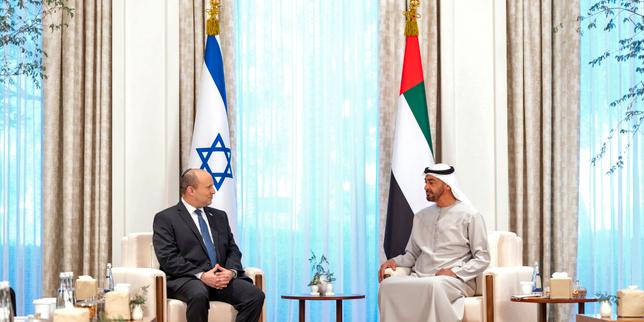
Mainstream diplomatic analysis has fallen into a comfortable, superficial trap. The prevailing narrative insists that the strategic partnership between the United Arab Emirates and Israel hangs entirely on the political survival or behavior of Benjamin Netanyahu. Commentators watch Knesset coalitions like meteorological reports, tracking every shift in right-wing rhetoric to predict the imminent freezing of Gulf-Israeli relations.
This view is profoundly wrong. It mistakes political theater for structural geopolitics. You might also find this similar story insightful: Inside the International Institution Crisis Nobody Is Talking About.
The bilateral relationship initiated by the Abraham Accords does not depend on whoever happens to occupy the Prime Minister’s Office in Jerusalem. To believe so is to misunderstand how modern statecraft operates in the Gulf. The partnership between Abu Dhabi and Jerusalem is not a fragile diplomatic experiment born of temporary political alignment; it is a cold, calculated transaction rooted in permanent regional realities.
The Myth of Personalist Diplomacy
Geopolitical analysts love to focus on personalities. It makes for compelling headlines. When Benjamin Netanyahu makes a controversial domestic move or takes an aggressive stance on regional security, Western commentators immediately look to Abu Dhabi for signs of a break. They interpret diplomatic silence or standard boilerplate statements from the UAE Ministry of Foreign Affairs as evidence of a structural fracture. As reported in recent reports by The Washington Post, the effects are notable.
This reveals a fundamental misunderstanding of Emirati foreign policy. The UAE operates on long-term strategic horizons, often looking decades ahead, whereas Western-style democracies pivot every election cycle. Abu Dhabi did not sign the Abraham Accords as a favor to a specific Israeli political faction, nor did it sign them under the illusion that Israeli politics would suddenly become tranquil.
The partnership was forged on two immovable pillars: regional security alignment and economic integration.
Consider the security architecture. Both nations face identical structural threats regarding regional stability and non-state actors disrupting maritime trade routes. These geographic and strategic realities do not change whether the Israeli government is led by the right, the center, or a broad coalition. The intelligence sharing, technology transfers, and defense cooperation are handled by deep-state institutions, military commands, and intelligence agencies. These channels do not stop operating because of a press conference in Tel Aviv or Abu Dhabi.
The Economic Iron Curtain
While political commentators analyze speeches, the business community looks at the balance sheets. The economic integration between the UAE and Israel has already crossed the point of easy reversal.
Look at the Comprehensive Economic Partnership Agreement (CEPA) signed between the two nations. This treaty removed or reduced tariffs on over 96% of goods traded between them. Trade volume has consistently broken records year after year, moving past billions of dollars in non-oil commerce.
Imagine a scenario where a corporation invests hundreds of millions of dollars into cross-border logistics infrastructure, venture capital funds, and joint research initiatives in agricultural technology. Do these entities liquidate their assets because of a change in political rhetoric? They do not. Capital seeks returns, stability, and market access. The economic infrastructure built since 2020 serves as a structural shock absorber. It insulates the core bilateral relationship from the inevitable friction of public politics.
Furthermore, the UAE has positioned itself as the primary financial and logistical gateway connecting the Middle East to global markets. Israel offers unparalleled access to deep-tech innovation, water scarcity solutions, and medical advancements. This complementarity is commercial, not ideological.
Dismantling the Public Versus Private Fallacy
A frequent question raised in diplomatic circles is: "How can the UAE maintain this relationship when regional public opinion is intensely critical?"
The question itself contains a flawed premise. It assumes that Gulf foreign policy is driven by public opinion polling in the same manner as a European democracy. Gulf statecraft is technocratic, centralized, and transactional. The leadership prioritizes national interest, economic diversification, and long-term stability above all else.
When the UAE criticizes specific Israeli policies or actions in multilateral forums like the United Nations, mainstream media outlets label it a crisis. In reality, it is standard diplomatic hedging. It is entirely possible—and indeed standard practice—to condemn a state’s specific military or political action on the international stage while simultaneously expanding bilateral trade agreements and intelligence sharing behind closed doors.
The separation of public diplomacy from private strategic interest is a feature of Middle Eastern statecraft, not a bug. To view public statements as an indicator of an imminent diplomatic breakup is to misread the basic grammar of regional relations.
The Real Risk Is Not Political Risk
If the relationship faces a true threat, it will not come from the ballot box or a coalition collapse in Jerusalem. The real risk lies in execution failure within the economic and technological spheres.
The downsides of this contrarian reality are clear. By decoupling strategic partnerships from political values or leadership behavior, both states risk creating a purely transactional alignment that lacks institutional resilience during unprecedented global systemic shifts. If global supply chains fracture completely, or if major global powers force a hard binary choice on trade and technology standards, the UAE and Israel may find their strategic space constrained.
But as long as the current international system functions, the transaction stands. The alliance is anchored in concrete, hardware, and capital flows.
Stop analyzing the tweets of politicians to determine the health of regional treaties. Look instead at the container ships docking in Jebel Ali, the venture capital flowing into Silicon Wadi, and the quiet coordination of air defense networks.
The partnership is structural. The leadership is merely temporary.