The mainstream media loves a simple narrative. Whenever a right-wing populist boards a flight to Warsaw or Rome, political commentators rush to print the same predictable headline: the grand unification of the European right is finally happening.
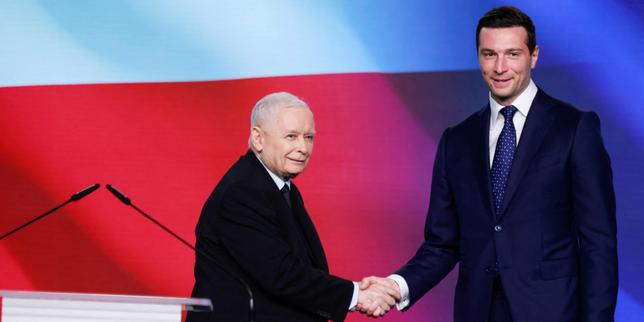
They look at Jordan Bardella, the face of France’s National Rally (RN), traveling to Poland to rub shoulders with Law and Justice (PiS) heavyweights, and they see a master strategist building a monolithic bloc capable of shattering Brussels. Recently making headlines recently: The Anatomy of a Fragile Silence.
It is a comforting fantasy for some, and a terrifying bogeyman for others. It is also completely wrong.
The lazy consensus ignores a fundamental law of political gravity. You cannot build a durable, supra-national empire out of movements whose core, defining ideology is radical nationalism. The very chemistry of these parties ensures that any deep alliance will eventually self-combust. Bardella is not building an army; he is trying to herd cats that are hardwired to scratch each other’s eyes out. Further details into this topic are explored by NPR.
The Fatal Flaw of Nationalist Internationalism
The premise of the competitor narrative is that shared anger equals shared goals. Because these parties all dislike the European Commission’s centralization, the press assumes they want the same alternative.
They don't.
Look beneath the surface of the Warsaw meetings. The National Rally and PiS are fundamentally incompatible on the most critical geopolitical and economic realities of our time.
Take Russia. For Poland, Moscow is an existential threat. PiS, even out of formal government, views European security through a lens of absolute deterrence against Vladimir Putin. Bardella’s party, despite recent attempts to moderate its stance for domestic respectability, carries decades of baggage regarding its historic leniency toward the Kremlin and its skepticism of NATO. You can gloss over that difference during a 45-minute press conference, but you cannot govern a continental voting bloc with it.
Then look at the economy. French nationalism is deeply protectionist, rooted in state intervention and safeguarding domestic industries from foreign competition—including competition from Eastern Europe. Polish nationalism, while socially conservative, has historically relied on the benefits of the EU single market and the free movement of labor to fuel its economic miracle.
When Bardella talks about protecting French workers, he is directly targeting the economic interests of the Polish electorate. The moment these parties move from vague rhetoric about "a Europe of nations" to actual policy votes on agricultural subsidies, industrial strategy, or posted workers, the alliance fractures.
The Sovereignty Paradox
I have spent years analyzing how legislative mechanics function within the European Parliament. The biggest mistake outsiders make is looking at raw seat totals and assuming they translate into raw power.
Even if Bardella successfully brokers a marriage of convenience between the Patriots for Europe group and the European Conservatives and Reformists (ECR), the math does not add up to cohesive governance.
Why? Because of the Sovereignty Paradox.
In a traditional coalition—say, between center-left social democrats and green parties—members are willing to sacrifice a degree of local interest to achieve a shared, centralized legislative goal. They believe in the institution.
Nationalist parties do not believe in the institution. Their entire brand relies on telling voters back home: "We answer to no one but you."
Imagine a scenario where a unified right-wing bloc needs to vote on a unified border policy. The Italian delegation demands a mandatory redistribution of migrants to relieve pressure on Mediterranean ports. The Polish and Hungarian delegations, fiercely opposed to taking in a single migrant under Brussels' orders, reject the plan outright. The French delegation, terrified of looking weak on border control ahead of a domestic presidential election, takes a third, separate stance.
The vote fails. The bloc collapses into infighting. The center-left and center-right establishment, which actually understands how to trade favors and build majorities, wins by default.
The Branding Exercise Misunderstood as Strategy
If the policy alignment is a myth, why does Bardella bother with the international tour?
Because the media is playing right into his hands. This trip is not about Brussels. It is entirely about Paris.
To win a presidential election in France, a candidate must look "presidential." For the National Rally, that means shedding the image of a fringe, provincial protest movement and projecting the aura of a government-in-waiting. Standing in front of foreign flags alongside former prime ministers and European statesmen is a cheap, effective way to manufacture gravitas.
It is a branding exercise, not a structural shift in European geopolitics. The mainstream press reports on the optics because optics are easy to film. Policy alignment is hard to analyze.
Stop Asking if the Right Will Unite
The standard question dominating political journalism right now is: "Can Jordan Bardella unite the European right?"
It is the wrong question. It accepts a false premise.
The real question we should be asking is: "How long can these parties pretend to agree before their domestic voters notice the contradictions?"
The uncomfortable truth for the establishment is that the European right does not need to unite to disrupt the system. They are highly effective as localized, disruptive forces pulling their respective national governments to the right. The danger they pose to the status quo is decentralized, not centralized.
By focusing on a mythical "grand union," commentators are looking for a massive, conventional army while ignoring the highly effective guerrilla warfare happening in individual member states.
Bardella’s dream of leading a unified European right is an illusion designed for French television consumption. The structural realities of national ego, conflicting economic interests, and irreconcilable geopolitical worldviews mean that any such union is dead on arrival.
Stop buying the hype. The nationalist international is an oxymoron that cannot survive the harsh light of governance.