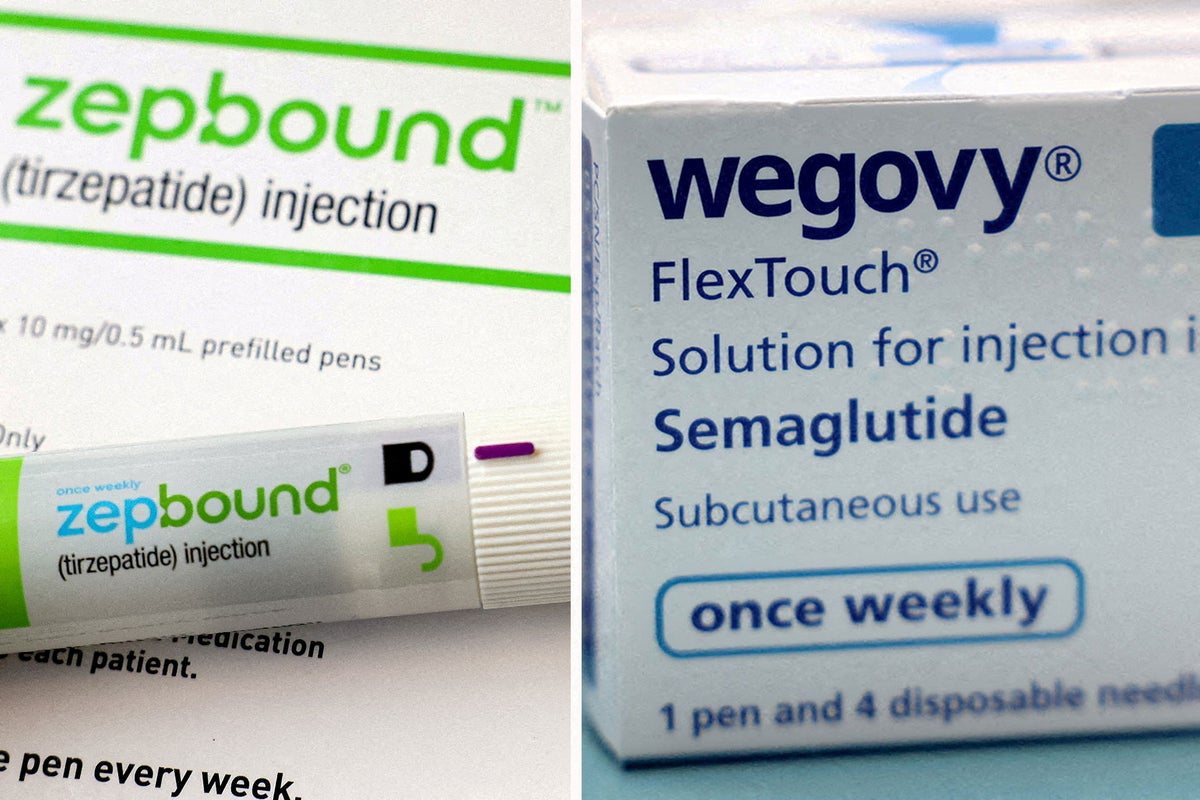
The federal government has officially crossed a line it swore it would never breach. On July 1, 2026, the Centers for Medicare & Medicaid Services (CMS) launched the Medicare GLP-1 Bridge program. For the first time in the history of the modern program, taxpayers are funding medications used strictly to shed pounds. The surface narrative is highly seductive. A flat $50 monthly copayment gives millions of American seniors immediate access to blockbusters like Wegovy, Zepbound, and the newly approved oral option Foundayo.
But do not let the low price tag fool you. Behind this unprecedented pivot lies a highly complex, temporary demonstration program that introduces a dangerous financial trap for the unwary.
This is not a permanent upgrade to standard Medicare Part D. It is a high-stakes legislative experiment with an expiration date of December 31, 2027. More critically, because the Bridge program operates entirely outside the statutory structure of Part D, those $50 payments do absolutely nothing to help seniors reach their annual out-of-pocket spending limits.
The systemic reality is messy. The implementation details are brutal, and the long-term fiscal cliff is entirely unaddressed.
The Secret Bureaucracy Behind the Fifty Dollar Cap
For decades, standard federal law expressly prohibited Medicare from covering weight-loss drugs. Lawmakers feared that treating obesity as a chronic condition would instantly bankrupt the trust fund. To bypass this legislative brick wall without waiting for acts of Congress, policy architects utilized an administrative loophole: a short-term demonstration pilot.
The operational mechanics are distinct from how you normally fill a prescription. Usually, your insurer negotiates with a pharmaceutical giant, and your costs count toward your annual deductible. Under the Bridge model, the infrastructure bypasses your commercial Part D insurance plan entirely.
[Doctor Submits Prior Auth] ──> [CMS Central Processor] ──> [Approval to Pharmacy]
                                                                  │
 [Beneficiary Pays $50] <─────────────────────────────────────────┘
The standard insurance plans carry zero financial risk here. Instead, your doctor transmits clinical documentation directly to a central processor run by federal administrators. If the request is verified, Uncle Sam uses a secondary network to pay the drug manufacturer the remaining thousands of dollars per month directly out of public funds.
This hidden plumbing creates the first major barrier for patients. Because the approval process operates retrospectively and outside standard channels, pharmacies must verify individual eligibility manually via specific billing networks. If your medical records do not precisely line up with the clinical algorithms, the system drops the request.
The Fine Print of Medical Eligibility
You cannot simply ask your doctor for a prescription because you want to fit into old clothes. The clinical gates are aggressively narrow, specifically designed to exclude millions of mildly overweight individuals and protect the federal treasury from immediate depletion.
Medical qualifications follow a strict hierarchy based on your Body Mass Index (BMI) and the precise compounding of your existing ailments.
The Strict BMI Thresholds
- BMI of 35 or higher: Automatic entry, provided you have a documented medical need for pharmacological weight management from a licensed provider.
- BMI of 30 to 34.9: Access is restricted unless you also suffer from severe, specific comorbidities: heart failure with preserved ejection fraction, chronic kidney disease (at least stage 3a), or completely uncontrolled high blood pressure.
- BMI of 27 to 29.9: You are completely barred from the program unless you possess a documented history of a major cardiovascular catastrophe, such as a heart attack, a stroke, blocked peripheral arteries, or clinical pre-diabetes.
The system contains an absolute exclusionary rule that is catching thousands of seniors by surprise. If you have already been diagnosed with Type 2 diabetes, moderate-to-severe sleep apnea, or metabolic dysfunction-associated steatohepatitis (MASH), you are completely ineligible for the Bridge program.
This is not because the government wants to deny you treatment. It is because standard Part D plans are already legally required to cover GLP-1 medications for those specific underlying conditions. The Bridge exists exclusively for the regulatory gray area: people who suffer from severe obesity but do not yet possess the specific diseases required for standard insurance coverage.
The Financial Loophole That Disadvantages Seniors
The true trap of the Bridge program hides in the accounting rules. Under the modern Part D overhaul, senior out-of-pocket prescription costs are strictly capped at $2,100 per year. Once a patient spends that amount on their heart medications, blood thinners, or insulin, their remaining covered prescriptions drop to zero dollars for the rest of the calendar year.
Because the Bridge program operates parallel to, rather than inside, the Part D benefit system, those $50 monthly copayments are completely invisible to the ledger.
| Feature | Standard Part D Covered Drugs | Medicare GLP-1 Bridge Drugs |
|---|---|---|
| Monthly Copay | Varies by tier and phase | Fixed at $50 |
| Counts Toward Deductible | Yes | No |
| Counts Toward $2,100 Cap | Yes | No |
| Smoothing Plan Eligible | Yes (Spread costs over months) | No (Must pay upfront at pharmacy) |
If you fill a Bridge prescription for 18 months, you will spend $900 out of your own pocket. Not a single penny of that money will lower the costs of your other medications. Furthermore, you cannot utilize the popular installment payment smoothing options to break up the costs. You either produce the cash at the register, or you walk away empty-handed.
The Fine Print of Drug Selection
The pharmaceutical industry has turned this pilot into a vicious corporate turf war. Not every weight-loss drug on the market is part of the deal, and missing a minor distinction in a brand name could stick you with a multi-thousand-dollar bill at the pharmacy counter.
Consider the case of Tirzepatide, the highly effective molecule manufactured by Eli Lilly. Under the Bridge rules, the program explicitly covers the drug under its weight-loss brand name, Zepbound. But there is an operational catch: it only covers the KwikPen formulation. If your physician mistakenly writes a prescription for the single-dose vials or the standard single-dose pens, the federal central processor will instantly reject the claim.
Meanwhile, Novo Nordisk has secured massive placement by including every single dose strength of Wegovy, available in both its classic subcutaneous injection format and the newly introduced oral tablet variant. The addition of Foundayo, an aggressive new oral competitor, shows that the government is trying to encourage cheaper pill options to lower its own massive procurement costs.
The Impending 2028 Fiscal Cliff
What happens when the music stops? The Bridge program is explicitly designed to self-terminate on December 31, 2027. The long-term plan was to seamlessly transition patients into a permanent, structured framework known as the BALANCE model.
However, federal officials have already delayed the integration of the BALANCE framework into standard Part D plans. The mathematical reality is terrifying to budget analysts. An estimated 3.8 million Medicare beneficiaries instantly qualify for these $50 doses under the current rules. If even half of them maintain their prescriptions, the federal government will be subsidizing billions of dollars a month in purely cosmetic and preventative metabolic therapy.
GLP-1 medications are designed for lifelong biological management. If a patient stops taking them, their metabolic signals reset, and the lost weight quickly returns. By launching an 18-month bridge program without a finalized, permanent funding mechanism to succeed it, the government has essentially invited millions of seniors onto a medical platform that could vanish at the end of next year.
Patients who normalize their metabolic health on Wegovy or Zepbound over the next year face a harsh reality: come 2028, they may have to choose between paying the full retail price of over $1,000 a month out of pocket or abandoning the therapy entirely, watching their health metrics reverse. Before signing up for a $50 silver bullet, every senior must ask their physician a fundamental question: what is the exit strategy when the federal bridge collapses?