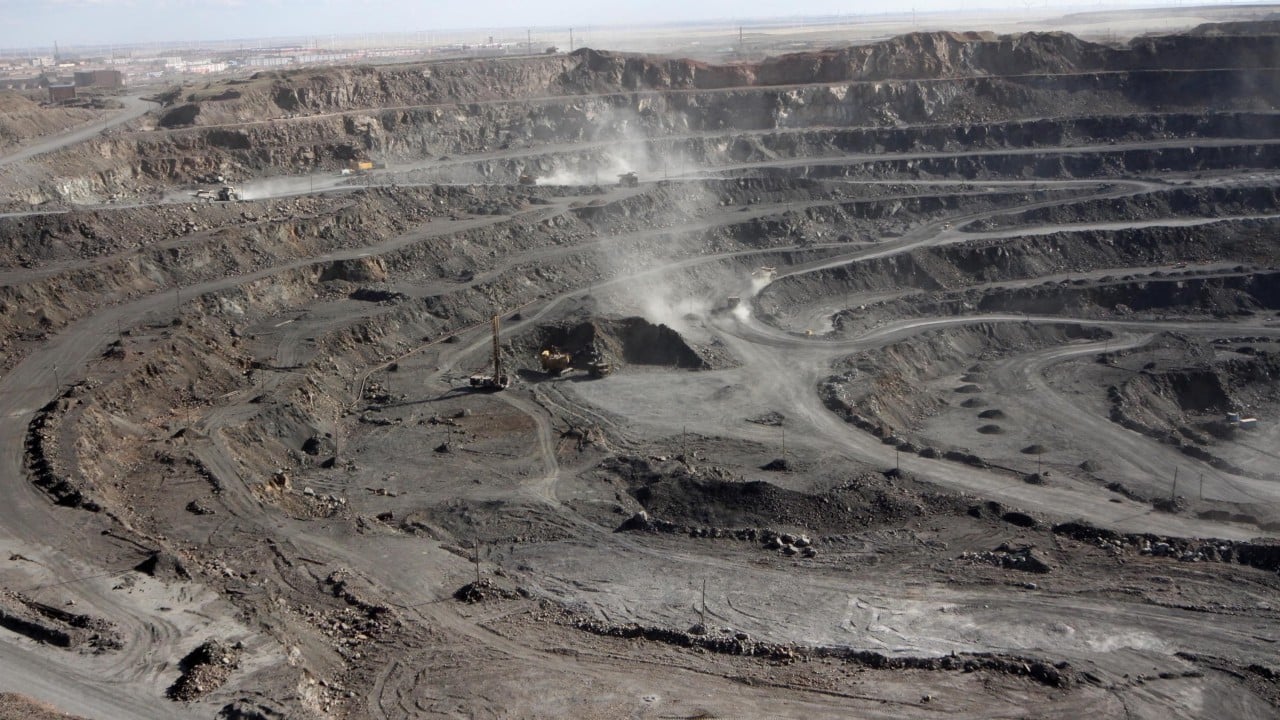
The Geopolitical Panic Button is Broken
Geopolitical analysts love a good monopoly narrative. When news broke regarding a substantial rare earth element (REE) discovery in China's northeastern region, the predictable chorus of alarmism immediate flared up. The consensus view was instant: China just locked down its monopoly for another fifty years, and the West is officially out of time.
It is a neat, terrifying story. It is also fundamentally wrong.
I have spent two decades watching commodity markets react to "groundbreaking" discoveries. Investors routinely pour tens of millions into mining projects based on the sheer volume of dirt in the ground, completely ignoring the brutal chemical reality of extraction. The panic surrounding this new northeastern find relies on a flawed premise: that possessing raw resources in the crust equals market dominance.
It does not. The global rare earth struggle is no longer a mining race. It is a chemical processing race. Until western commentary separates geology from metallurgy, it will continue to misread the situation.
The Illusion of Scarcity
Let us clear up the most basic misconception in supply chain optics. Rare earth elements are not rare.
Cerium is more abundant in the Earth's crust than copper. Thulium, the rarest of the heavy rare earths, is more common than gold. The term "rare" is an artifact of 19th-century chemistry, back when these elements were difficult to isolate from one another.
The mainstream narrative treats these deposits like oil fields. With oil, you drill a hole, pump the crude, refine it through relatively standardized thermal cracking, and sell it. If you own the biggest field, you swing the biggest stick.
Rare earths do not behave this way. They are found clustered together in complex mineral matrices like bastnäsite, monazite, and xenotime. Winning the rare earth game requires breaking those mineral bonds, separating fifteen nearly identical elements from one another, and doing so without creating an environmental dead zone.
China does not dominate because its geology is miraculous. It dominates because it spent forty years builds out a massive, highly toxic chemical infrastructure while the rest of the world outsourced the dirty work to avoid strict environmental regulations. Discovering a massive new deposit in the freezing northeast changes nothing about this fundamental dynamic. It just gives China more raw feedstock for an infrastructure it already owned.
Why More Raw Ore Doesn't Equal More Control
Imagine a scenario where you discover a mountain of high-grade iron ore, but you do not possess a single blast furnace. Your discovery is economically meaningless until you build the furnace or ship the rock to someone who owns one.
This is the trap facing new mining ventures globally, and it is why China's new find is being misinterpreting. The bottleneck is not the rocks; it is the separation lines.
[Raw Ore Extraction] -> [Beneficiation (Concentrate)] -> [Cracking & Dissolution] -> [Solvent Extraction (100s of Stages)] -> [Individual Pure Oxides] -> [Metallurgy & Magnet Making]
The critical stage is solvent extraction. To separate neodymium from praseodymium, you must mix the dissolved ore with organic solvents in hundreds of consecutive liquid-liquid extraction stages. The chemical properties of these elements are so similar that each stage only purifies the target element by a fraction of a percent.
- The Western Approach: Focus on opening mines (Mountain Pass in the US, Mount Weld in Australia) to secure the raw ore.
- The Structural Flaw: Much of the concentrate produced historically still had to be shipped to Chinese facilities for final separation into high-purity oxides.
By focusing on the discovery of more raw material in China, analysts are looking at the intake valve of a factory and ignoring who owns the machinery inside. China already has surplus extraction capacity. Adding more raw ore to their ledger does not increase their leverage over the West; it merely creates an internal supply buffer.
Dismantling the Global Supply Chain Questions
When market observers analyze this sector, they consistently ask the wrong questions. Let us address the most common inquiries with the brutal reality of chemical engineering.
Can the West replicate China supply chain by opening more mines?
No. Opening ten new mines in North America or Europe will not dent Chinese dominance if those mines lack domestic, scaled toll-separation facilities. You are merely generating more rocks that require Chinese processing to become useful components. The strategy must shift from extraction funding to chemical plant construction.
Will strict environmental regulations prevent Western independence?
Yes, if we stick to legacy processing methods. Legacy solvent extraction requires millions of gallons of hazardous acids and produces radioactive toxic waste, primarily thorium and uranium byproducts. Western regulatory frameworks make scaling this specific process prohibitively expensive. True independence requires leapfrogging the Chinese chemical model entirely through alternative separation technologies, such as continuous ion chromatography or bio-engineered bacterial separation. Trying to out-heavy-industrialize China at their own game is a guaranteed fiscal failure.
Aren't permanent magnets the real prize?
Precisely. The panic over raw elements ignores the value-add step. Neodymium-Iron-Boron (NdFeB) magnets are the components that power electric vehicle motors and wind turbines. Turning a rare earth oxide into a metallic alloy, and then into a sintered magnet, requires precise manufacturing capabilities. China controls roughly 90% of global permanent magnet production. Even if a Western mine successfully separates its own neodymium oxide, it often sells that oxide right back into the Asian manufacturing ecosystem because Western magnet-making facilities are virtually nonexistent.
The Downside of Western Hubris
If the counter-intuitive truth is that China's new discovery does not change the playing field, the inverse is equally uncomfortable. The West's current plan to counter this dominance is failing because it relies on subsidized market interference rather than process innovation.
Governments are throwing hundreds of millions of dollars at junior mining companies that possess impressive geological drill cores but zero metallurgical expertise. I have reviewed the pitch decks of companies claiming they will build a fully integrated "mine-to-magnet" supply chain in three years. It is a fantasy.
The capital expenditure required to build a compliant, modern rare earth refinery in a regulated jurisdiction is staggering. The ramp-up periods are plagued by chemical imbalances, corrosion of equipment, and yield failures. By subsidizing companies to build inefficient versions of 1980s Chinese separation plants, the West is ensuring it will always remain a high-cost, non-competitive producer.
The True Vulnerability China Faces
Here is the twist that the standard reporting completely overlooked regarding the northeastern discovery: China is hunting for new deposits not out of strength, but out of impending domestic exhaustion of specific, critical elements.
China's historic dominance was built on the back of its ionic clay deposits in southern provinces like Jiangxi. These clays are unique because they are rich in heavy rare earths (Dysprosium and Terbium), which are vital for high-temperature permanent magnets.
Unlike the hard-rock deposits in the north (like Bayan Obo), ionic clays are incredibly easy to leach using crude, environmentally devastating techniques. Decades of unregulated, illegal mining have severely depleted these southern clay reserves. Furthermore, the Chinese government has been forced to crack down on these operations due to catastrophic regional water pollution.
China has increasingly relied on importing rare earth concentrates from Myanmar to feed its southern processing plants. That reliance introduces geopolitical vulnerability into their own system.
The discovery in the icy northeast is likely a hard-rock deposit, which typically skews heavily toward light rare earths (Lanthanum, Cerium, Neodymium). If it is a hard-rock asset, it does not solve their long-term structural deficit in heavy rare earths. It just gives them more of what they already have in excess.
Stop Looking at the Earth, Look at the Lab
The fixation on China's new geographical asset obscures the real theater of war: material science labs.
The ultimate way to break a monopoly is not to find a rival supply of the material, but to render the material obsolete. Tesla made waves by announcing their next-generation drive units would eliminate rare earths entirely. They are aiming for a permanent magnet motor that utilizes non-regulated materials, potentially leveraging advanced ferrite blends or iron-nitrogen compounds.
Old Strategy: Find Mine -> Build Separation Plant -> Build Magnet Factory -> Fight Monopoly
New Strategy: Material Science Innovation -> Eliminate REE Dependence -> Bypass Monopoly
While the media panics over new drilling projects in the Chinese wilderness, forward-thinking engineers are optimizing induction motors and switching to synchronous reluctance motors that require zero neodymium or dysprosium.
The country that develops a commercially viable, high-efficiency magnet completely free of rare earths wins. The country that discovers another five million tons of bastnäsite in the frozen tundra simply wins the right to manage a massive chemical processing liability. Stop counting the rocks. Start counting the patents.