Winning an election is the easy part. Tearing down a entrenched regime from the inside is where things get messy.
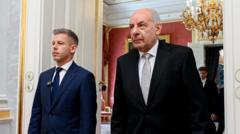
Hungarian Prime Minister Péter Magyar is finding this out the hard way. Fresh off a historic, stunning election victory that shattered Viktor Orbán’s 16-year grip on power, Magyar is running straight into a wall of institutional resistance. At the center of the gridlock stands Tamás Sulyok, the country's president and a staunch remnant of the old Orbán era.
Magyar wants him out. Sulyok refuses to leave. What is playing out right now in Budapest isn't just a political spat over a largely ceremonial office. It is a high-stakes constitutional war that will determine whether Hungary can actually transition away from autocracy or remain trapped in the legal web its former leader spent nearly two decades spinning.
The Puppet Argument
Magyar did not mince words after walking out of a tense, one-hour meeting with Sulyok at the presidential Sándor Palace. He directly labeled the president an Orbán puppet who spent years helping dismantle the rule of law.
For Magyar and his Tisza party, the issue is straightforward. They secured a massive 138-seat supermajority out of 199 parliamentary seats. They believe the public handed them a mandate not just to change the government, but to completely overhaul the regime. Leaving Orbán’s hand-picked loyalists in control of powerful state bodies makes real reform impossible.
Sulyok sees it differently. A former constitutional court judge, he argues that his mandate runs until 2029 and that political shifts shouldn't affect his legal status. He claims calls for his resignation are purely partisan and legally irrelevant. To show he isn't a total obstructionist, Sulyok promised he won't block the urgent laws needed to unlock $17 billion (€16 billion) in frozen EU funds. But he won't quit.
The strategy from the new government is getting aggressive. Ahead of a recent cabinet appointment ceremony, Magyar ordered his ministers to skip the traditional joint photos and congratulations with the president. State media even cropped Sulyok out of official event photographs.
Weapons of Mass Delay
If the presidency is mostly ceremonial, why does Magyar care so much?
Because in the hands of a skilled constitutional lawyer, a ceremonial presidency can become a massive roadblock. The Hungarian president holds two distinct powers that could cripple Magyar’s legislative blitz:
- The Political Veto: The president can send legislation back to parliament for reconsideration.
- The Constitutional Veto: The president can forward bills to the Constitutional Court for judicial review before signing them into law.
This matters because the Constitutional Court is still completely packed with Orbán appointees. If Magyar passes a law to reclaim allegedly stolen state assets or restructure the judiciary, Sulyok can kick that law to a friendly court. The court can tie it up in legal knots for months or strike it down entirely.
Magyar's entire political brand relies on fast, decisive action. He promised voters he would introduce the euro by 2030, clean up corruption, and restore democratic checks immediately. He simply cannot afford to have every major piece of legislation bogged down in judicial limbo for the next three years.
Weaponizing the Supermajority
Since Sulyok ignored the government's May 31 deadline to resign, Magyar is pivoting to a nuclear option. He intends to use Tisza’s two-thirds parliamentary majority to amend the constitution and legally force the president out.
The irony here is thick. Orbán spent 16 years rewriting Hungary's Fundamental Law to protect his power. Now, Magyar is using those exact same constitutional manipulation tools to dismantle Orbán's legacy.
But rewriting the text is only half the battle. Under current Hungarian law, a president is technically required to sign and promulgate the very constitutional amendments passed by parliament. Can a president refuse to sign an amendment specifically designed to fire him? We are entering uncharted legal territory.
If parliament passes the amendment, Sulyok will almost certainly challenge its validity before the Constitutional Court. Because Fidesz still holds more than a quarter of the seats in parliament, they have the numbers to trigger an immediate judicial review.
The Broader Institutional Purge
Focusing only on the president misses the true scale of what Magyar is attempting. Sulyok is just the first domino. The prime minister has explicitly called for a sweeping clearance of senior public officials across the state apparatus, including:
- The Chief Prosecutor (Péter Polt, a long-time Orbán ally)
- The Head of the Constitutional Court
- The Leadership of the State Audit Office
- The Head of the Media Regulator
There is one notable exception to this purge. Magyar confirmed he will keep central bank governor Mihály Varga in his post, calling central bank independence sacrosanct. This exception is a pragmatic nod to international markets, keeping the economy stable while the government wages war on the rest of the state apparatus.
Critics from the displaced Fidesz party accuse Magyar of issuing unlawful ultimatums and orchestrating a coup against democratic institutions. They warn that forcing out legally appointed officials will trigger a deep societal crisis and wreck Hungary's international reputation.
Magyar’s supporters counter that you cannot use normal democratic etiquette to fix a system that was systematically rigged to prevent rotation of power. They view these drastic steps as a painful, necessary surgery to extract a deep-seated political network.
What Happens Next
The legislative process to amend the constitution and initiate dismissal proceedings will take about a month. Expect an incredibly volatile few weeks in Budapest as the government drafts the proposals and the opposition prepares its legal defense.
If you want to understand how this fight unfolds, watch these specific pressure points:
- Monitor the draft text of the constitutional amendment: Look closely at how broadly Tisza defines the mechanism for removing a sitting president. If the wording is too vague, it will trigger massive alarm bells in Brussels.
- Watch the frozen EU funds legislation: Sulyok claims he will sign these specific bills to help the economy. If he blinks or delays on even one rule-of-law reform package, Magyar will use it as massive leverage to turn public opinion further against him.
- Track the public sentiment: Public opinion polls indicate that nearly two-thirds of Hungarian voters believe Sulyok should step down. If the government can maintain high public pressure through street protests or rallies, Sulyok's institutional backing may begin to crack from the inside.
This isn't a minor bureaucratic dispute. It is a fundamental test of power. Magyar has the raw votes in parliament, but Orbán’s allies still hold the keys to the legal architecture. Whoever wins this standoff will dictate the terms of Hungary's future for the next decade.
For a closer look at the unfolding situation directly from the ground in Budapest, check out this Euronews report on the Hungarian government's constitutional plans, which details the press briefing outside the presidential palace.