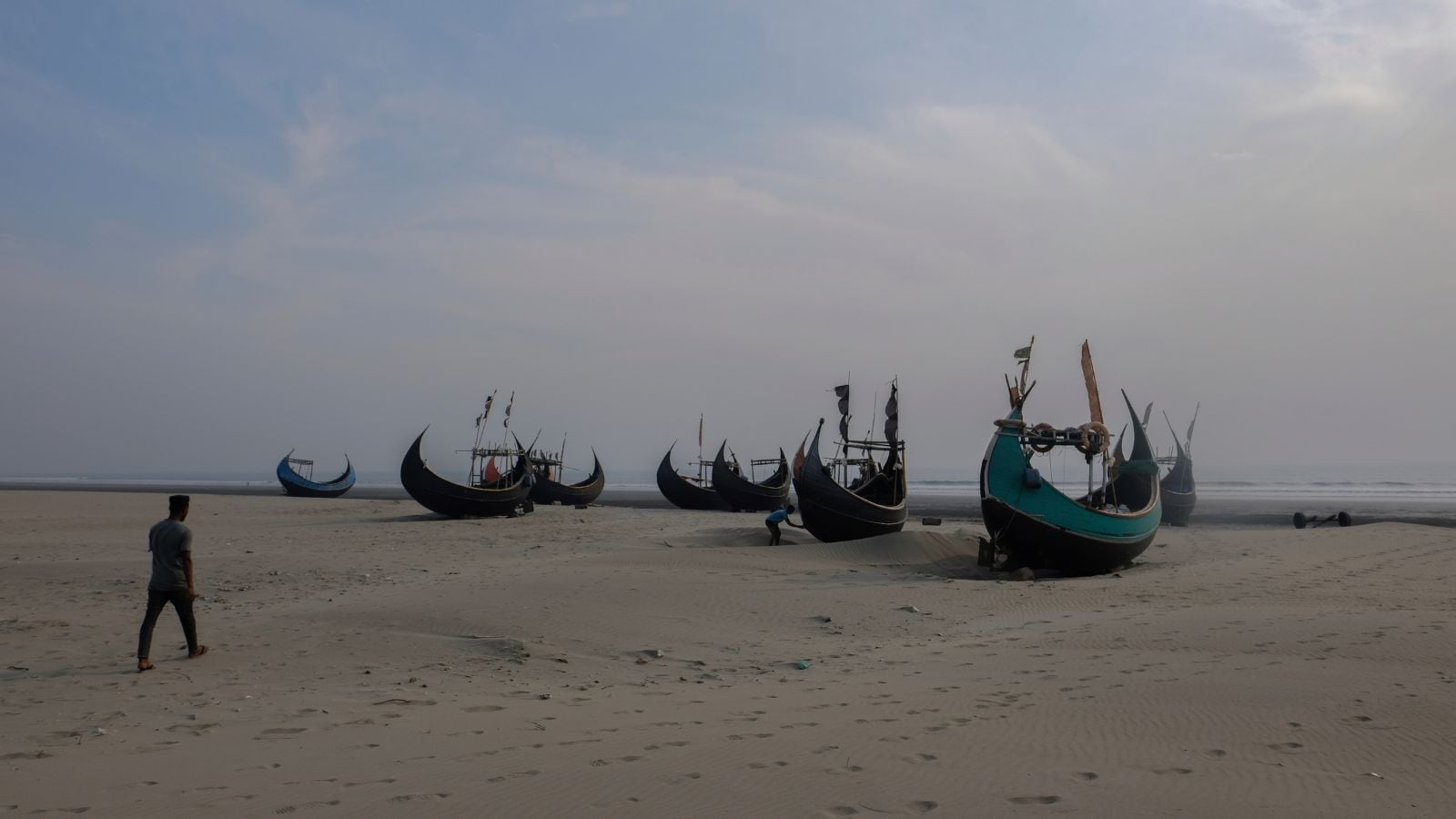
Over 250 people are missing. Think about that for a second. That's not just a statistic on a news ticker or a rounding error in a government report. It's 250 families waiting for a phone call that won't ever come. These were Rohingya refugees and Bangladeshi nationals who felt so trapped by their current reality that a rickety, overcrowded boat on a volatile sea looked like a better option than staying put. The boat was headed toward Myanmar when it capsized, and the aftermath is a grim reminder of a crisis that the world seems to have moved on from, even though the bodies are still washing up.
Why people keep getting on these boats
You might wonder why anyone would risk their life on a vessel that looks like it would struggle in a swimming pool, let alone the open ocean. It's easy to judge from a distance. But if you're stuck in a camp in Cox’s Bazar, you aren't living; you're just existing. Rations are being cut. Violence is rising within the camps. There’s no legal way to work. So, when a smuggler promises a way out—even a way back into Myanmar despite the risks there—people jump at it.
This latest tragedy involved a mix of people. Some were Rohingya fleeing the squalor of Bangladeshi camps, and others were Bangladeshis seeking better economic prospects. They were reportedly heading toward the Rakhine State in Myanmar. The irony is staggering. People are fleeing to a conflict zone because their current situation is that's just how desperate things have become.
The mechanics of a maritime disaster
The Bay of Bengal is a graveyard. During the monsoon transitions, the weather patterns are wildly unpredictable. These boats are almost always overloaded. Smugglers care about headcounts and cash, not weight limits or life jackets. When a boat carrying over 250 souls hits a rough patch of water or suffers an engine failure, there is zero margin for error.
According to local reports and survivor accounts, the vessel encountered trouble shortly after departure. In these scenarios, panic sets in fast. People move to one side, the center of gravity shifts, and the boat flips. Once you're in that water, the current does the rest. Search and rescue operations in these regions are often slow and under-resourced. By the time help arrives, the "missing" are usually gone.
The failure of regional policy
We have to stop pretending this is just a series of "accidents." It's a systemic failure. The international community has failed to put enough pressure on the Myanmar military to create a safe environment for return. Simultaneously, the funding for refugee relief in Bangladesh is drying up. When the World Food Programme has to trim the value of food vouchers, the desperation spikes.
Governments in the region often play a game of "human ping-pong." They push boats back into international waters or refuse to let them dock. This creates a terrifying incentive for smugglers to take even more dangerous routes to avoid detection. We've seen this play out in the Andaman Sea and the Bay of Bengal for years. 2024 and 2025 were some of the deadliest years on record for these crossings, and 2026 is shaping up to be no different.
What happens to the survivors
The lucky few who get pulled from the water don't find a warm welcome. They often face detention or immediate deportation back to the very camps they tried to escape. They've lost their money, their belongings, and often their family members. The psychological trauma is immense.
I’ve seen how these stories play out. The news cycle moves on in 48 hours. The families of the 250 missing people will spend months, maybe years, hoping for news. Some will never get a definitive answer. They’ll just have to live with the silence.
Common misconceptions about the crossings
- It’s only for "economic" reasons. Many are fleeing targeted violence or a complete lack of legal status.
- The boats are "seaworthy." They are almost never built for the open sea. They’re coastal fishing boats repurposed for human trafficking.
- The crisis is over. It's actually intensifying as camp conditions worsen and regional conflicts evolve.
Hard truths about the search and rescue efforts
The truth is that search and rescue is often more about "search and recover." Once 250 people go into the water without flotation devices, the window for saving lives is measured in minutes. The Bangladeshi Coast Guard and local fishermen do what they can, but the scale of the Bay of Bengal makes it a needle-in-a-haystack situation.
We need better regional cooperation. The Bali Process and other diplomatic frameworks haven't done enough to mandate proactive search and rescue. Until there is a coordinated, well-funded effort to patrol these routes and provide safe disembarkation, these tragedies will keep happening.
Moving beyond thoughts and prayers
If you want to actually do something about this, stop looking at it as an isolated tragedy. Support organizations that are on the ground in Cox’s Bazar providing the basics—food, protection, and education. When people have a modicum of hope and safety where they are, they’re less likely to hand their life savings to a human trafficker.
Pressure your representatives to maintain or increase humanitarian aid to the Rohingya response. The cuts to food aid are a direct driver of these boat departures. It’s a simple equation: less food equals more risk-taking. Don't let the 250 missing people become just another footnote in a long history of maritime disasters. Demand accountability for the smugglers and better protection for the vulnerable. The sea doesn't have to be a death trap if the world decides to actually pay attention.