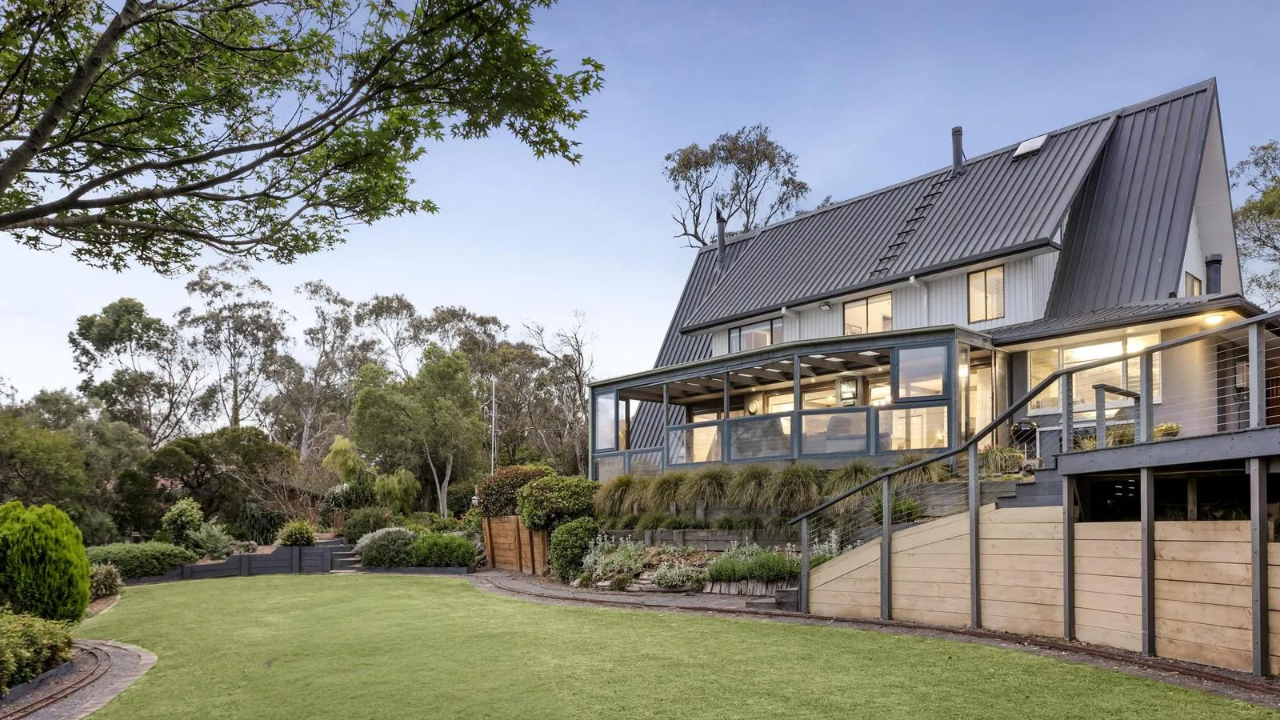
The paint on the front door was a specific shade of eucalyptus, scuffed at the bottom where small shoes had kicked it in frustration and wet dog paws had scratched it in joy.
In the winter of 2005, a young couple stood in the hallway of that Australian home, holding a thick folder of mortgage documents that felt heavier than bricks. The air smelled of fresh plaster, faint turpentine, and the cold promise of a future they could barely afford. The purchase price was four hundred and twenty thousand dollars. To them, it felt like an impossible summit, a mountain scaled through sheer stubbornness, overtime shifts, and scraped-together deposits.
They bought walls and a roof. They received time.
Two decades later, the keys changed hands once more. The neighborhood had altered; the dirt track at the end of the street was now smooth asphalt, and the corner eucalyptus trees towered over rooftops they once looked down upon. When the hammer fell at one million three hundred and seventy-five thousand dollars, the financial ledger celebrated a triumph.
The bank accounts smiled. The humans caught their breath.
Real estate transactions are rarely just about lumber, drywall, and square footage. They are quiet testaments to the passage of time, the inflation of hope, and the peculiar way an address becomes a repository for human history. To understand how a modest suburban property nearly triples in value over twenty years is to understand the slow, shifting tectonic plates of modern life, housing markets, and the relentless march of urban gravity.
Consider what happens when a city breathes outward.
In 2005, the suburb was an afterthought. It was a place where people moved when they were priced out of the inner rings, willing to trade a longer commute for a patch of grass and a kitchen big enough for a dining table. The mortgage rate was a constant hum of anxiety in the background of Sunday dinners. Every paycheck was portioned out with surgical precision.
Let us introduce a hypothetical neighbor, Sarah, who lived three doors down during that same era. She watched the original owners move in with their station wagon packed with cardboard boxes and a half-built IKEA bookshelf poking out of the trunk. Sarah remembers the sound of their lawnmower sputtering to life every Saturday morning at nine sharp. She remembers the year they ripped up the front lawn to plant hydrangeas, and the afternoon they brought home a howling newborn wrapped in a blue blanket.
Houses do not age in a vacuum. They accumulate the echoes of slammed doors, muffled arguments in the hallway, late-night exams studied for under a single desk lamp, and the quiet, heavy grief of empty nests.
When the Australian property market began its long, uneven ascent, it did not do so in a neat, predictable line. It stuttered. It dipped during global financial tremors. It surged during periods of sudden migration and structural housing shortages. Yet, through every economic storm, properties within commuting distance of major employment hubs retained a strange, gravitational pull.
The math of the jump from A$420,000 to A$1.375 million over twenty years translates to an average annual compounding growth rate that outpaced standard wage inflation by a wide margin. For economists, this is a data point in a broader conversation about housing affordability, wealth inequality, and the divergence between earned income and asset appreciation. For the family who lived there, it is something entirely different.
It is the cost of staying put.
By the tenth year, the mortgage had stopped feeling like a monster under the bed. It had shrunk into a manageable monthly habit, like a utility bill or a subscription service. The neighborhood had filled in. Cafes opened where mechanical repair shops used to be. The local school added portable classrooms to handle the influx of children.
Value is not created in a spreadsheet. It is constructed out of convenience, proximity, and the collective desire of thousands of people who want the exact same thing: a safe place to sleep, a reliable school district, and a sense that they belong to a place that is heading somewhere good.
When the owners finally decided to sell, the decision was not born of cold investment strategy. It was prompted by creaking knees, empty bedrooms upstairs, and the realization that the garden required more maintenance than their energy permitted. They called an agent. They painted over the scuff marks on the eucalyptus door.
On auction day, a crowd gathered on the front lawn. Strangers in linen shirts and sunglasses stood where tricycle wheels had once left tracks in the mud. Bids climbed in increments of twenty-five thousand dollars, spoken into the humid air with casual detachment. To the bidders, the house was a blank canvas, an investment vehicle, a foot in the door of a desirable postcode.
To the woman who stood inside the kitchen, drinking one last glass of tap water from a mug she had owned since the day she moved in, every bid was a spectral reminder of everything that had happened within those walls.
The final figure—A$1.375 million—landed like a punctuation mark at the end of a very long sentence.
Numbers tell us what a thing is worth on a specific Tuesday morning. They tell us nothing about the weight of the air inside the master bedroom when the rain hits the corrugated iron roof at midnight. They tell us nothing about the marks pencil-drawn on the inside of a pantry door, charting the millimeter-by-millimeter growth of children who are now taller than their parents.
The market giveth. The market taketh away. But the walls simply absorb the story and wait for the next chapter to begin.
As the new owners walked through the empty rooms with their own set of moving boxes, the afternoon sun cast long, amber rectangles across the bare timber floors. Somewhere out there, the old owners were sitting in a smaller, quieter place, surrounded by fewer things and a different view.
They had traded their history for liquidity. The house traded hands, resetting its value for the next twenty-year cycle.
The eucalyptus door remains. Freshly painted, waiting for new scuffs.